Item: Complete guide to fiber-reinforced concrete pots for the garden and terrace
Complete guide to fiber-reinforced concrete pots for the garden and terrace
The fiber-reinforced concrete pot has established itself as a benchmark for designing gardens, terraces, and balconies. More manageable than traditional concrete, frost-resistant without special treatment, and available in distinctly contemporary designs, it meets the expectations of demanding gardeners as well as outdoor decorators.
Are you wondering which fiber-reinforced concrete pot to choose for your terrace, balcony, or garden? This guide provides you with all the keys: understanding the material, choosing the right size, selecting plants, maintenance, and decorating tips.

What is fiber-reinforced concrete?
Fiber-reinforced concrete, also known as fiber cement, is a mixture of cement, resin, and fiberglass. It is sometimes referred to as glass fiber cement pot because of this composition.The fibers, integrated into the mass, reinforce the structure and significantly reduce the weight compared to conventional concrete.
Result: a fiber-reinforced concrete pot can weigh up to 50% less than a traditional concrete pot of the same size. The thinner walls also provide more volume for the substrate and roots.
The manufacturing process allows for a variety of shapes (round, square, conical, rectangular), with smooth or slightly textured finishes. The material is dyed throughout or painted with high-resistance industrial paints, ensuring excellent color retention even after several years of UV exposure.
The advantages of fiber-reinforced concrete pots
Fiber-reinforced concrete is primarily valued for its lightness.Even in XXL size, a pot remains movable without heavy equipment, making it a major asset for terraces, balconies, or simply for rearranging your decor throughout the seasons.
It is also a material that is remarkably resistant to frost. The fibers integrated into the mass prevent the spread of microcracks caused by freeze-thaw cycles. A frost-resistant fiber-reinforced concrete pot can stay outside all year round, even in regions where temperatures drop well below zero, without treatment or protection.
On the aesthetic side, its mineral surface and clean lines fit into all styles of design. The available colors (light gray, dark gray, matte black, beige, brown, dark green) allow it to adapt just as well to a modern garden as to an industrial loft-style interior.
Durability is another strong point.Unlike plastic, which yellows under UV light, fiber-reinforced concrete ages well. Its natural patina evolves over time and enhances the character of the pot. With minimal maintenance, a fiber cement pot retains its integrity for many years.
Finally, fiber-reinforced concrete is remarkably versatile. Quality pots are delivered pre-drilled, allowing them to be used as cachepot or to be converted into a direct drainage pot with a simple hole saw.
The material also absorbs shocks better than terracotta or ceramic, making it a safe choice for high-traffic areas such as restaurant terraces, building entrances, or hotels.
Fiber-reinforced concrete, terracotta or ceramic: the comparison

|
Criteria |
Fiber-reinforced concrete |
Terracotta |
Glazed ceramic |
|
Weight |
Lighter than traditional concrete |
Medium |
Heavier (great stability) |
|
Frost |
Excellent resistance |
Variable depending on firing |
Excellent (without treatment) |
|
Maintenance |
Minimal |
Moderate |
Minimal |
|
Style |
Contemporary, mineral |
Traditional, warm |
Diverse, colorful |
|
Shock resistance |
Very good |
Fragile |
Fragile |
|
Price |
Moderate |
Variable |
Premium |
Each material has its strengths.Fiber-reinforced concrete stands out for its weight-to-strength ratio, ideal when lightness is a priority. Glazed ceramic offers a richness of colors and an incomparable high-end finish. Terracotta appeals with its traditional character and natural porosity.
Fiber-reinforced concrete pot vs terracotta: the details
Terracotta is porous, which naturally regulates the moisture of the substrate. However, this porosity is also a weakness in cold climates: water absorbed by the walls can freeze and cause cracks. Unglazed terracotta pots often need to be brought indoors or protected in winter.
Fiber-reinforced concrete is frost-resistant without protection and remains lighter. However, it is less porous: ensure proper drainage (clay pebbles at the bottom, draining substrate) to avoid water stagnation.
Why choose a fiber cement pot for outdoor use?
Fiber-reinforced concrete pot in winter: precautions and advice
The pot is frost-resistant, but the plant may be sensitive to cold. Here is how to get through winter with peace of mind.
In winter, stagnant water at the bottom of the pot is the main enemy. Be sure to check that the drainage holes are not blocked and to raise the pot on feet or wedges to promote drainage.
The container is resistant to cold, but some plants are sensitive to it. A winter cover around the foliage or a thick mulch on the surface of the substrate effectively protects the roots.
Also remember to reduce watering: plant growth slows down in winter and soil that is too wet increases the risk of root freezing.
Good news: unlike unglazed terracotta, a winter-resistant fiber-reinforced concrete pot does not need to be brought indoors. You can leave it outside with complete peace of mind.
The ideal plants for a fiber-reinforced concrete pot
Fiber-reinforced concrete accommodates a wide range of plants. Whether you are looking for plants for an outdoor concrete pot or an indoor cachepot, the choice depends on the exposure, the size of the pot, and the local climate.Here is how to plant in a concrete pot according to the type of plant.
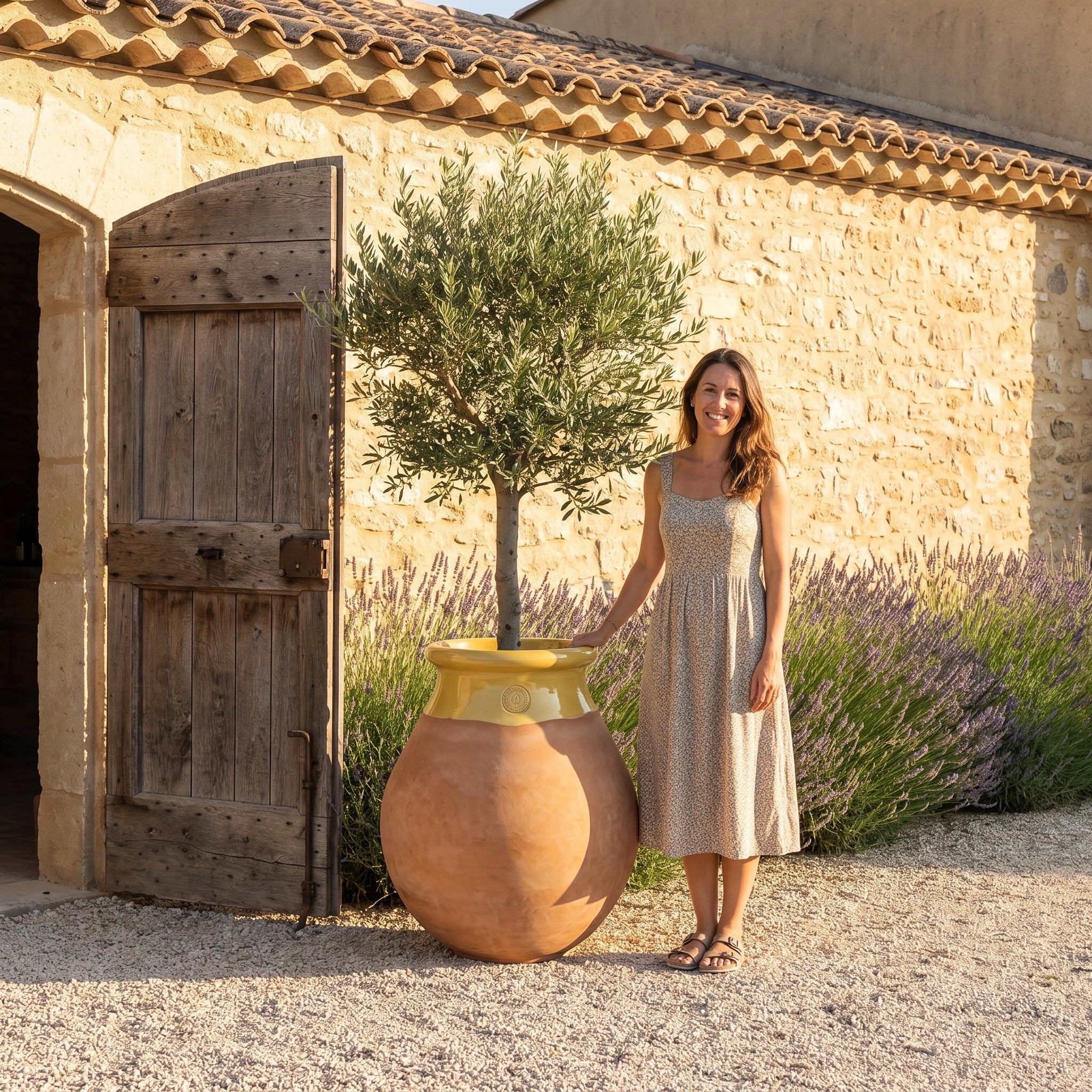
Shrubs and small trees: olive tree, Japanese maple, oleander, photinia. Choose a large outdoor concrete pot of at least 50 liters. The lightness of fiber-reinforced concrete makes these large formats much easier to handle.
Ornamental grasses: miscanthus, pennisetum, stipa. Their airy movement contrasts beautifully with the mineral texture of concrete. Well-drained substrate, sunny exposure.
Mediterranean plants: lavender, rosemary, santolina, agapanthus. Low water requirements. Use a draining mix: potting soil, sand, and perlite in equal parts.
Perennials and seasonal flowers: hydrangeas, heucheras, gauras for structure, complemented by petunias, bidens, or verbenas for color. Adapt the potting soil: ericaceous for hydrangeas, universal for others.
Indoor plants in a decorative pot: ficus, monstera, indoor palm. A fiber-reinforced concrete pot adds a raw and contemporary touch to a living room or entrance.
How to choose the size of your fiber-reinforced concrete pot?
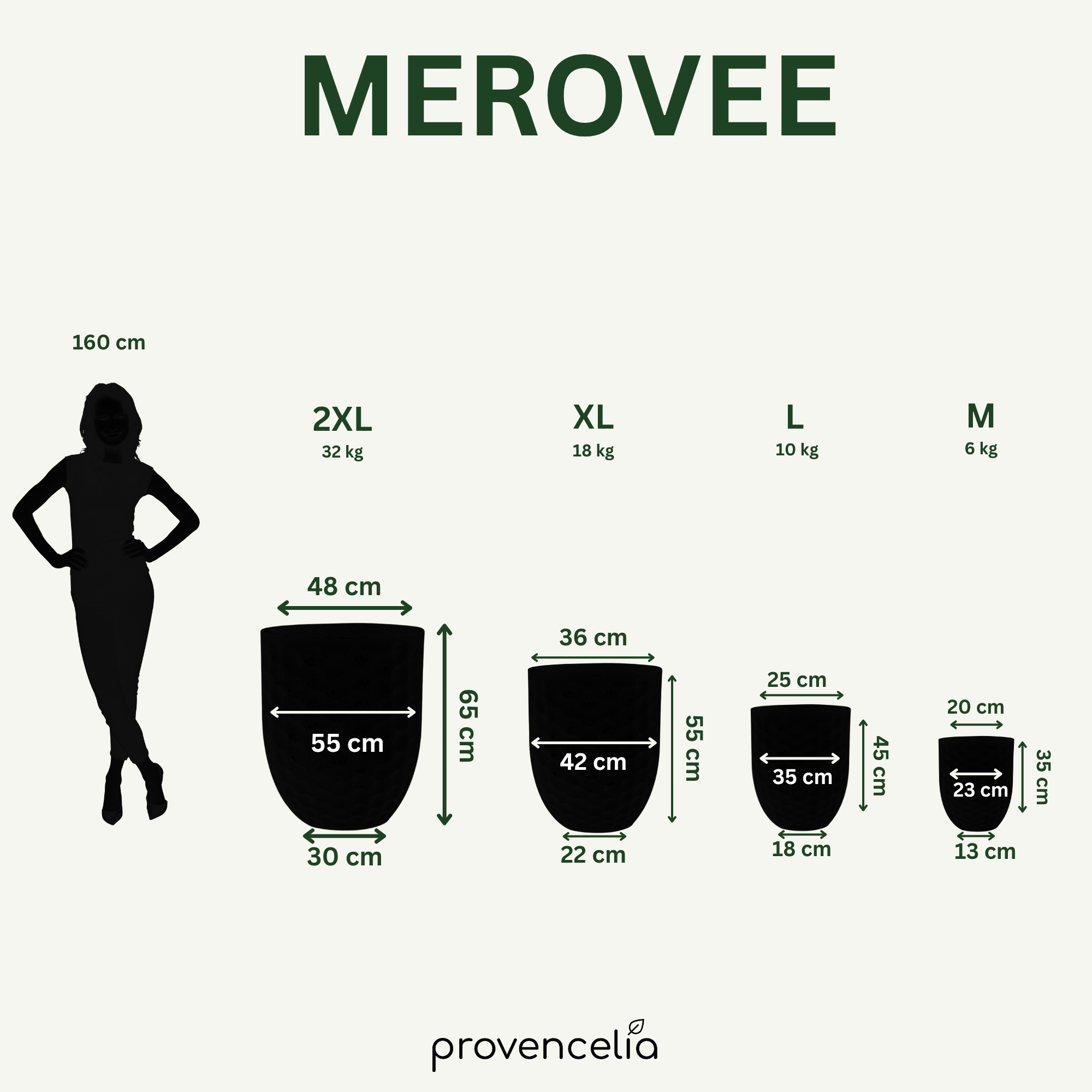
The size of the pot directly affects the well-being of the plant. A container that is too small limits root development; an oversized pot retains too much moisture. When repotting, choose a diameter 4 to 6 cm larger.
|
Plant type |
Minimum volume |
|
Aromatics, small flowers |
5 to 15 liters |
|
Perennials, grasses |
15 to 30 liters |
|
Medium shrubs |
30 to 50 liters |
|
Small trees, large shrubs |
50 liters and + (XXL pots) |
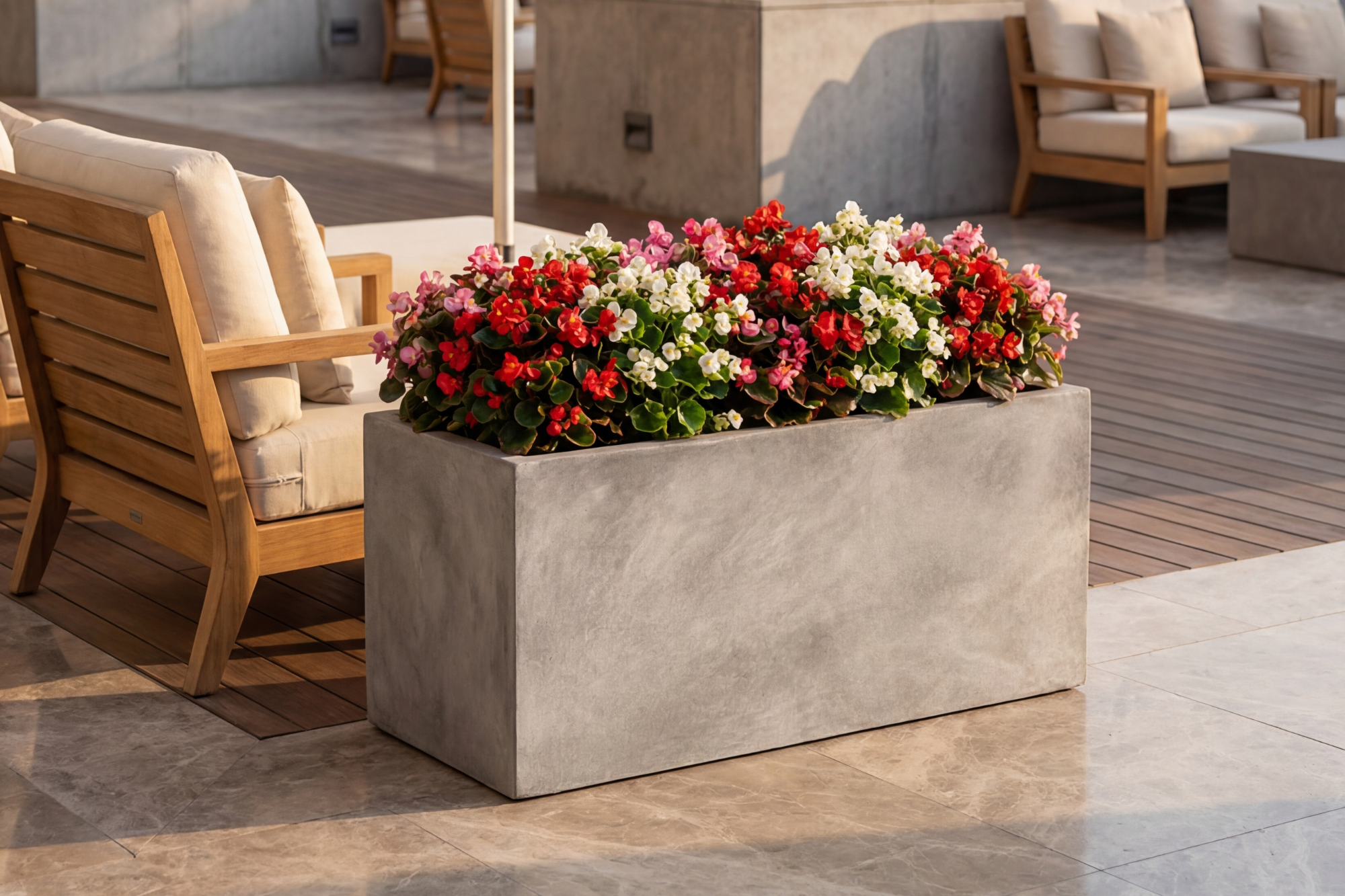
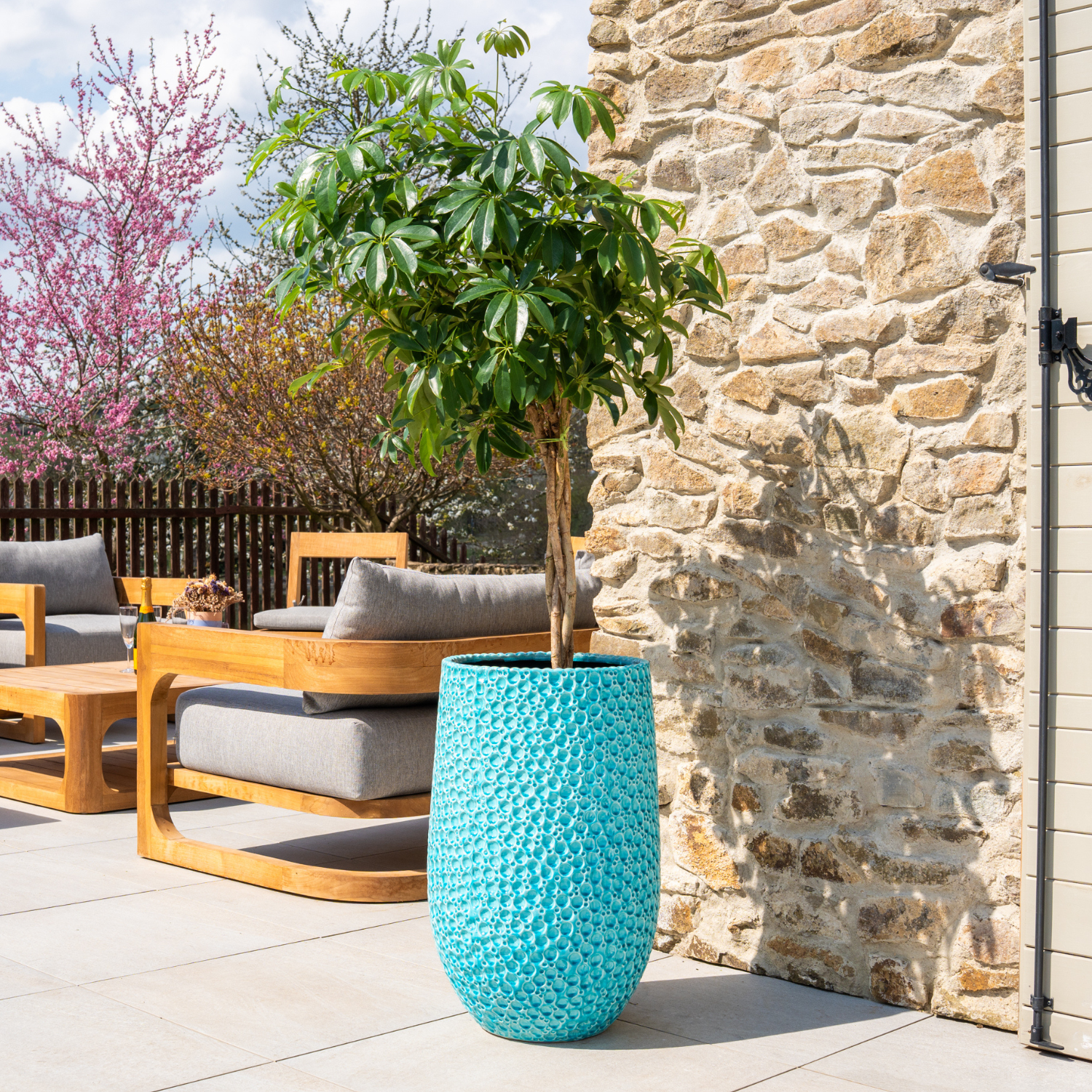
On a balcony, opt for tall and narrow pots.On a spacious terrace, low and wide shapes (bowls, rectangular fiber-reinforced concrete planters) structure the space and serve as a plant divider.
Maintaining your fiber-reinforced concrete pot
For daily care, a wipe with a sponge or soft brush and clear water is enough to remove dust and limescale marks. Avoid harsh detergents and high-pressure cleaners, which could damage the surface.
In shaded areas, moss or lichens may appear over time. A little diluted white vinegar, applied in spring, will naturally remove them without damaging the material.
Before each planting season, make sure the drainage holes are not blocked by roots or compacted substrate.
Unlike wood (which requires stain) or metal (which is prone to rust), fiber-reinforced concrete does not require any protective product. It is one of the easiest materials to maintain over the long term.
Drilling a fiber-reinforced concrete pot: adding drainage
Quality pots are delivered pre-drilled and can be used directly as cachepots. To create direct drainage, the recommended method is to use a hole saw suitable for concrete. Proceed at a moderate speed, without forcing, and lightly moisten the area to avoid overheating.
Plan for two to three holes for a medium-sized pot, more for an XXL format. Good drainage is the number one condition for healthy plants.
Decorate your terrace with fiber-reinforced concrete pots
The designer concrete garden pot lends itself to numerous arrangements. Here are the key principles for creating a harmonious outdoor space.
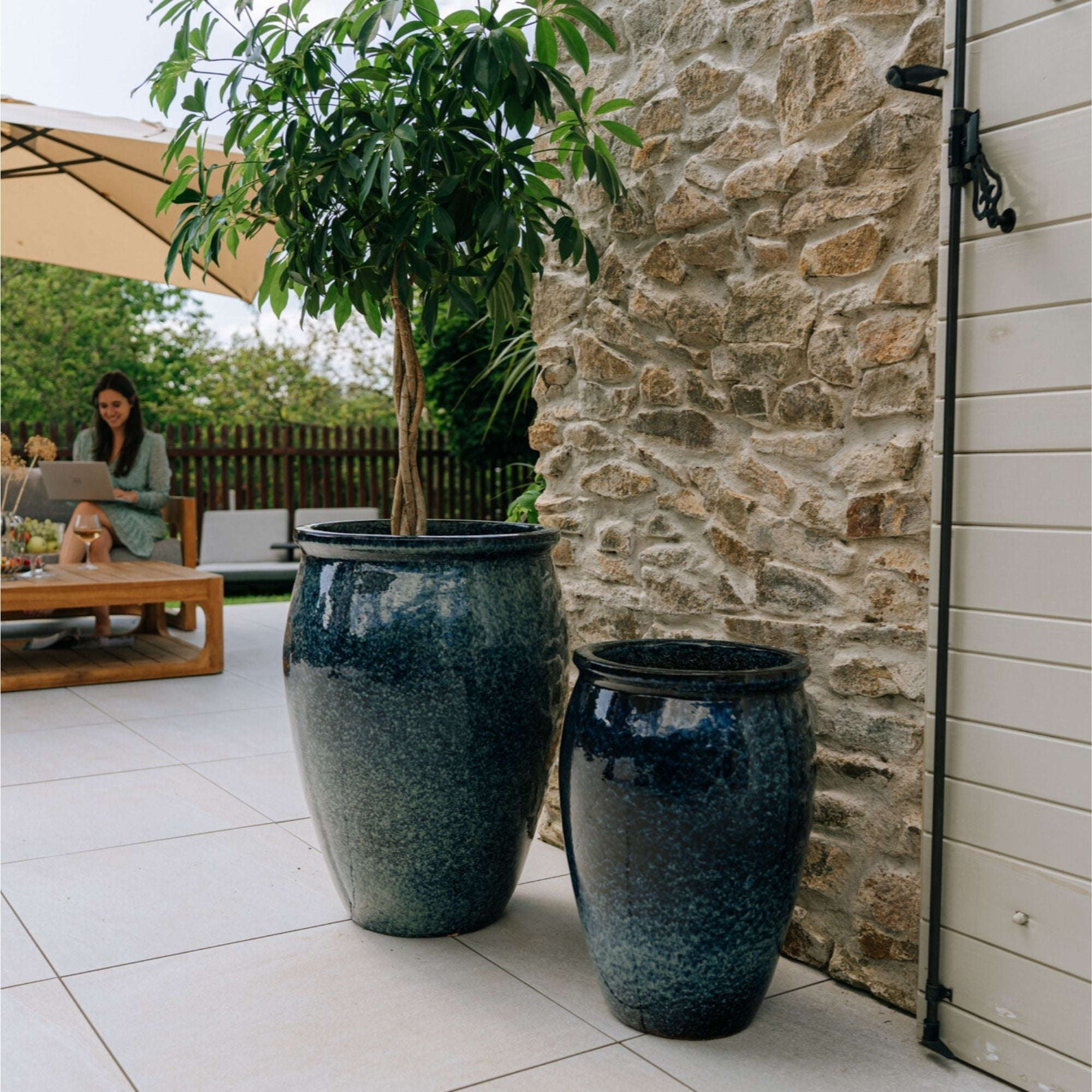
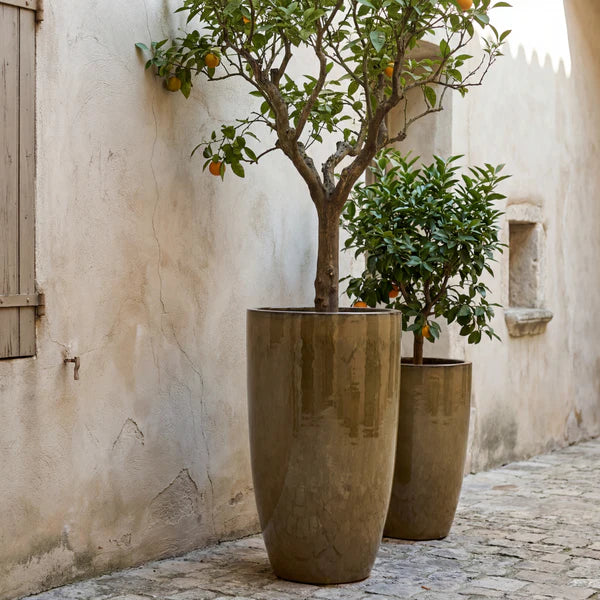
To create rhythm, combine pots of different sizes: the largest in the background, the smallest in the foreground. This play on heights adds depth to your terrace.
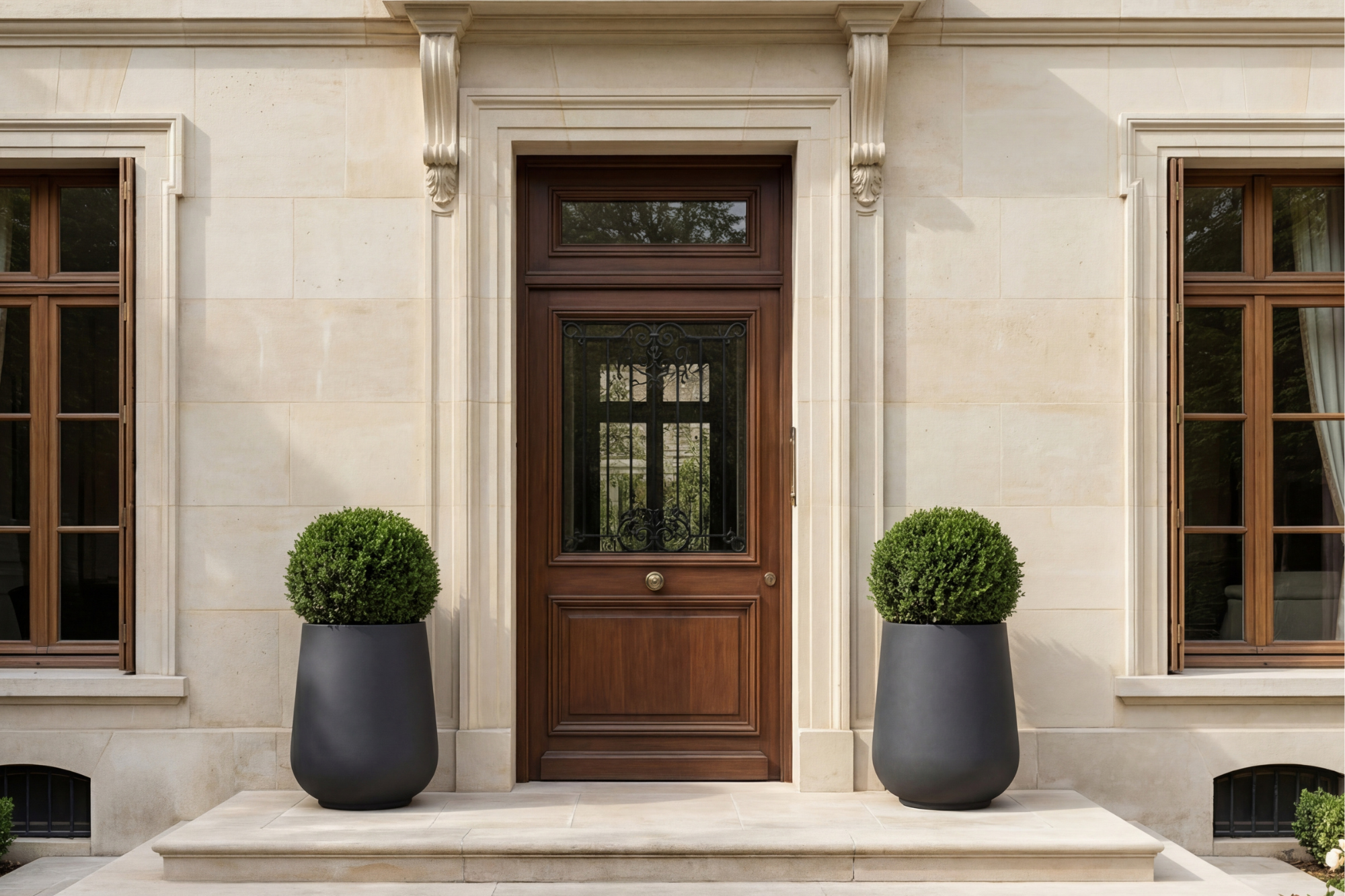
An alignment of identical fiber cement planters along a pathway or at the edge of the terrace structures the space and naturally guides the eye.
Also play with plant contrasts: airy grasses, dense foliage, and colorful flowers create a beautiful effect against the mineral surface of the concrete.
Finally, limit yourself to a maximum of two pot colors in the same space.Dark grey works well with silvery foliage (lavender, santolina), beige matches wooden terraces, and dark green blends into very lush spaces.

How to combine fiber-reinforced concrete pots together?
For outdoor decoration, groupings of 3 or 5 pots are visually more balanced than even numbers. Group three pots of different sizes for a dynamic trio.
Feel free to mix shapes: a round pot, a rectangular planter, and a conical pot, for example. Unity is ensured by the common material and color palette.
Also vary the planting heights: a tall shrub in the large pot, a medium perennial in the second, a trailing plant in the smallest. This layering creates depth and volume.
Leave 15 to 30 cm between the pots for air and light circulation.
Mistakes to avoid with a fiber-reinforced concrete pot
The first and most common mistake is planting directly without a drainage layer. Always place clay pebbles at the bottom of the pot before the substrate to prevent water stagnation.
Choosing a pot that is too small is also a common pitfall. An undersized container hinders growth and dries out too quickly in summer. Always allow for 4 to 6 cm more in diameter than the previous pot.
Also remember to repot every 2 to 3 years to renew the substrate and provide more space for the roots.
Another common oversight: placing the pot directly on the ground.Place pads or feet under the pot to promote aeration and prevent moisture marks on the terrace.
Finally, never use garden soil in a pot: it is too heavy and poorly drained. Always opt for a potting mix suited to the type of plant.
How to properly fill a fiber-reinforced concrete pot?
Start by placing a layer of clay pebbles at the bottom of the pot, about 15 to 20% of the total volume. They prevent water from stagnating in contact with the roots.
Then place a geotextile fabric over the pebbles to prevent the substrate from clogging the drainage layer.
Fill with a suitable potting mix: universal for perennials, well-draining (potting mix + sand + perlite) for Mediterranean plants, ericaceous for hydrangeas and Japanese maples.
Lightly tamp the substrate around the root ball and leave 2 to 3 cm between the surface of the potting soil and the edge of the pot to facilitate watering.
Finally, add a surface mulch (slate, gravel, or pine bark). It limits evaporation in summer, protects against frost in winter, and enhances the composition.
Fiber-reinforced concrete pot on a balcony: what you need to know

Before installing large sizes, check the maximum load allowed on your balcony (indicated in the co-ownership regulations). Fiber-reinforced concrete offers a decisive advantage here: for the same volume, it is significantly lighter than a stone or ceramic pot.
Opt for tall and slender pots, which optimize floor space while providing sufficient substrate volume for compact shrubs or grasses.
At height, the wind can be strong: choose stable shapes, flared at the base, and avoid plants that are too tall if your balcony is very exposed.
Finally, remember to place saucers under the pots to prevent watering water from flowing down to your neighbors.
Which color should you choose for a fiber-reinforced concrete pot?
Each shade creates a different atmosphere.
The light gray and dark gray are timeless classics. They highlight any plant and suit all styles.
The matte black creates a striking contrast with light foliage, but be careful in direct sunlight: it absorbs more heat.
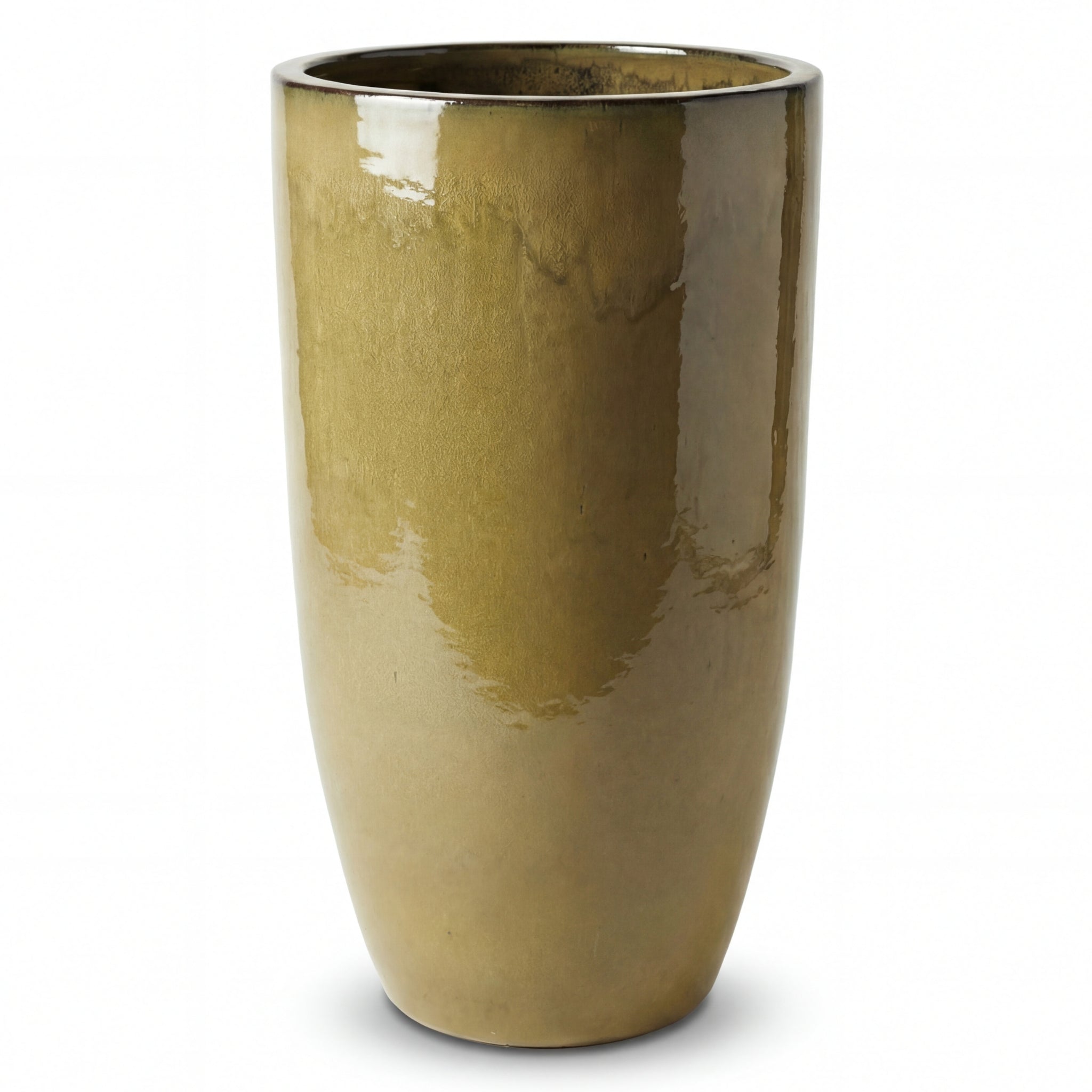
The beige and brown are warm shades, perfect for wooden decks and Mediterranean gardens.
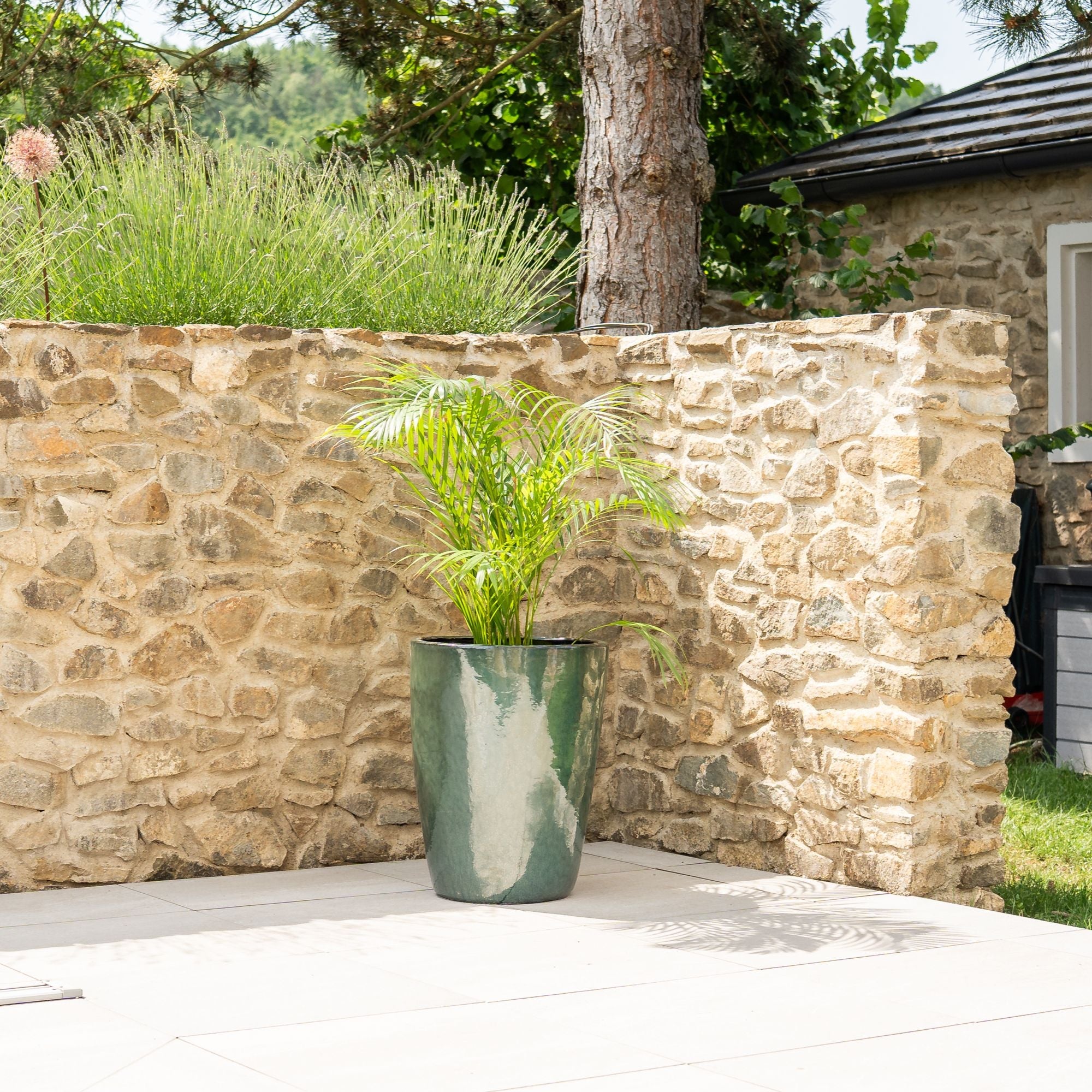
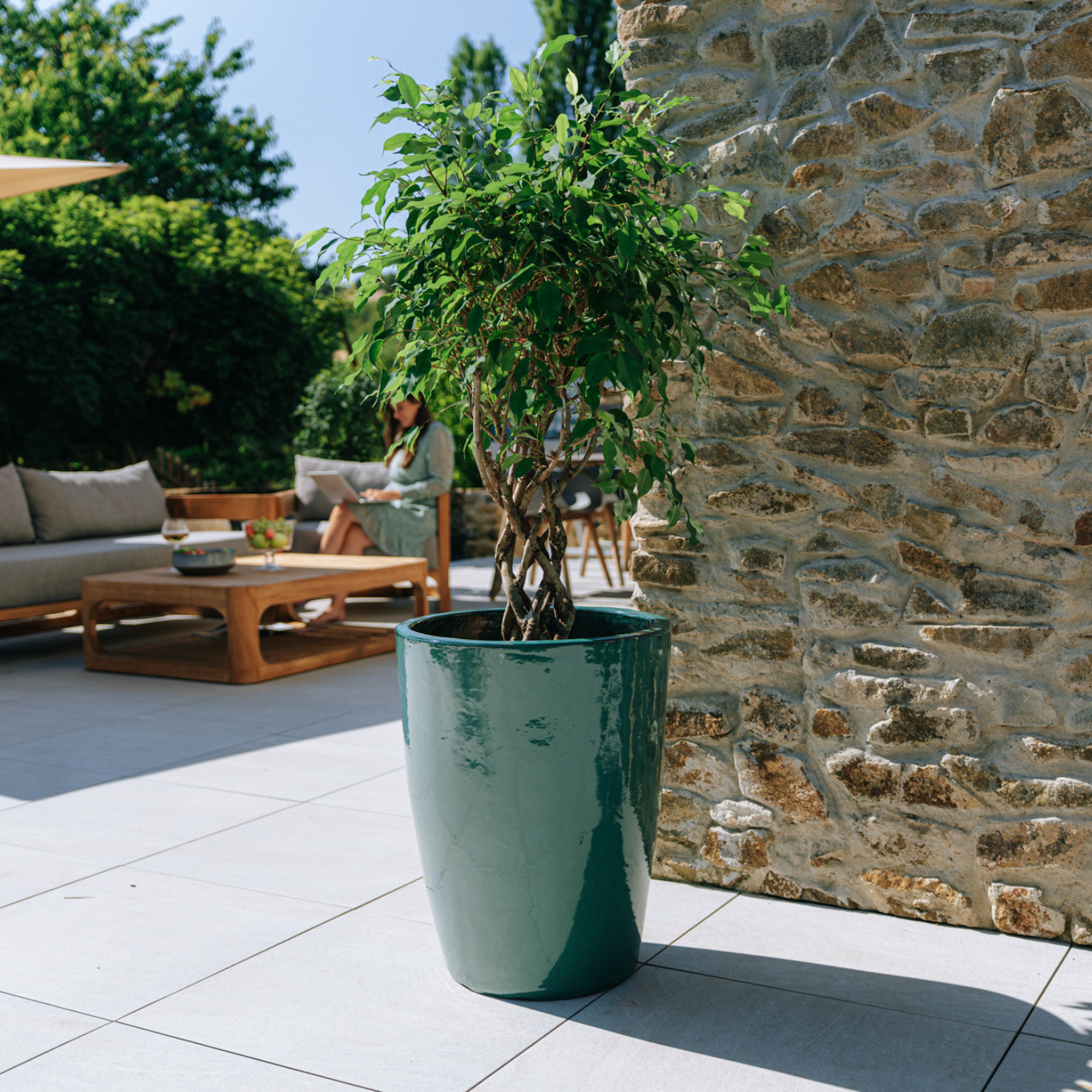
The dark green, more original, blends into very lush spaces where the pot disappears into the greenery.
Tip: limit yourself to a maximum of two colors in the same space. Alternating sizes in the same shade is more effective than multiplying colors.
Moving a large fiber-reinforced concrete pot
The most practical solution is to use a wheeled trolley placed under the pot. Choose a model with brakes to prevent unintentional movement.
For a major rearrangement, it is preferable to first remove the plant and move the empty pot. Your back will thank you.
If you need to slide the pot, place an old piece of cardboard or a rug underneath rather than dragging it directly on a wooden or stone terrace.
Our fiber-reinforced concrete pots

At Provencelia, our fiber-reinforced concrete pots are made from a blend of cement, resin, and fiberglass. Frost, shock, and UV resistant, they are lighter than traditional concrete and make it easier to install large containers.
All our models are pre-drilled and can be used as a decorative cover pot or as a direct drainage pot (hole saw).The collection is available in six ranges with clean lines (OPUS, SPIRIT, KUBIX, SOLSTICE, ZENITH, AERIS) and six colors: light gray, dark gray, matte black, beige, brown, and dark green.
FAQ: your questions about fiber-reinforced concrete pots
Is fiber-reinforced concrete really frost-resistant?
Yes. The fibers integrated into the mass prevent the spread of microcracks caused by freeze/thaw cycles. A quality fiber-reinforced concrete pot can stay outside all year round, even in regions where temperatures drop below -15°C, without any treatment.
What is the difference between fiber-reinforced concrete and fiber cement?
It is the same thing. "Fiber-reinforced concrete" and "fiber cement" refer to the same material: a mixture of cement, resin, and fiberglass.The name varies depending on the manufacturers and regions.
How to plant in a fiber-reinforced concrete pot?
Place a layer of clay pebbles at the bottom (15-20% of the volume), add a geotextile fabric, then fill with soil suitable for the plant. Leave 2-3 cm below the rim for watering and add mulch on the surface.
Can a fiber-reinforced concrete pot be used indoors?
Absolutely. Used as a cachepot (without drilling holes), fiber-reinforced concrete brings a mineral and contemporary touch to an interior. Protect the floor with a felt pad under the pot to avoid scratches.
Which fiber-reinforced concrete pot to choose for an olive tree?
An XXL pot of at least 50 liters, with good drainage. The olive tree needs space for its roots and a well-draining substrate (potting soil + sand + perlite). Fiber-reinforced concrete is ideal because it is light enough to be moved if necessary.
Is fiber-reinforced concrete lighter than ceramic?
Yes, for the same volume, fiber-reinforced concrete is significantly lighter than traditional concrete and generally lighter than glazed ceramic. This is a decisive advantage for balconies and XXL pots.
How long does a fiber-reinforced concrete pot last?
With minimal maintenance (cleaning with water, checking drainage), a quality fiber-reinforced concrete pot retains its structural integrity for many years. The material does not yellow under UV and does not crack with frost.
Does a fiber-reinforced concrete pot need to be treated?
No.<|endoftext|>Unlike wood or metal, fiber-reinforced concrete requires no protective treatment. No stain, no rustproofing, no varnish. Simple cleaning with water is sufficient.
Conclusion
The fiber-reinforced concrete pot has now established itself as a reliable choice for outdoor landscaping. Lightweight, frost-resistant, aesthetic, and easy to maintain, it fits just as well on a large terrace as on a city balcony or at the entrance of a house. Its timeless style allows it to adapt to any setting.
To remember the essentials: always choose a pot slightly larger than the previous one (about 4 to 6 cm), ensure good drainage with clay pebbles at the bottom, use soil suitable for your plants, and add mulch on the surface to limit evaporation.
In terms of maintenance, fiber-reinforced concrete is particularly easy to care for. Occasional cleaning with water is sufficient, with no specific treatment required. It can remain outdoors all year round without fear of frost, making it a durable choice that improves over time.
By following these tips, you can choose your pots with complete peace of mind and enjoy a harmonious outdoor arrangement for many years to come.Explore our entire collection.🌿