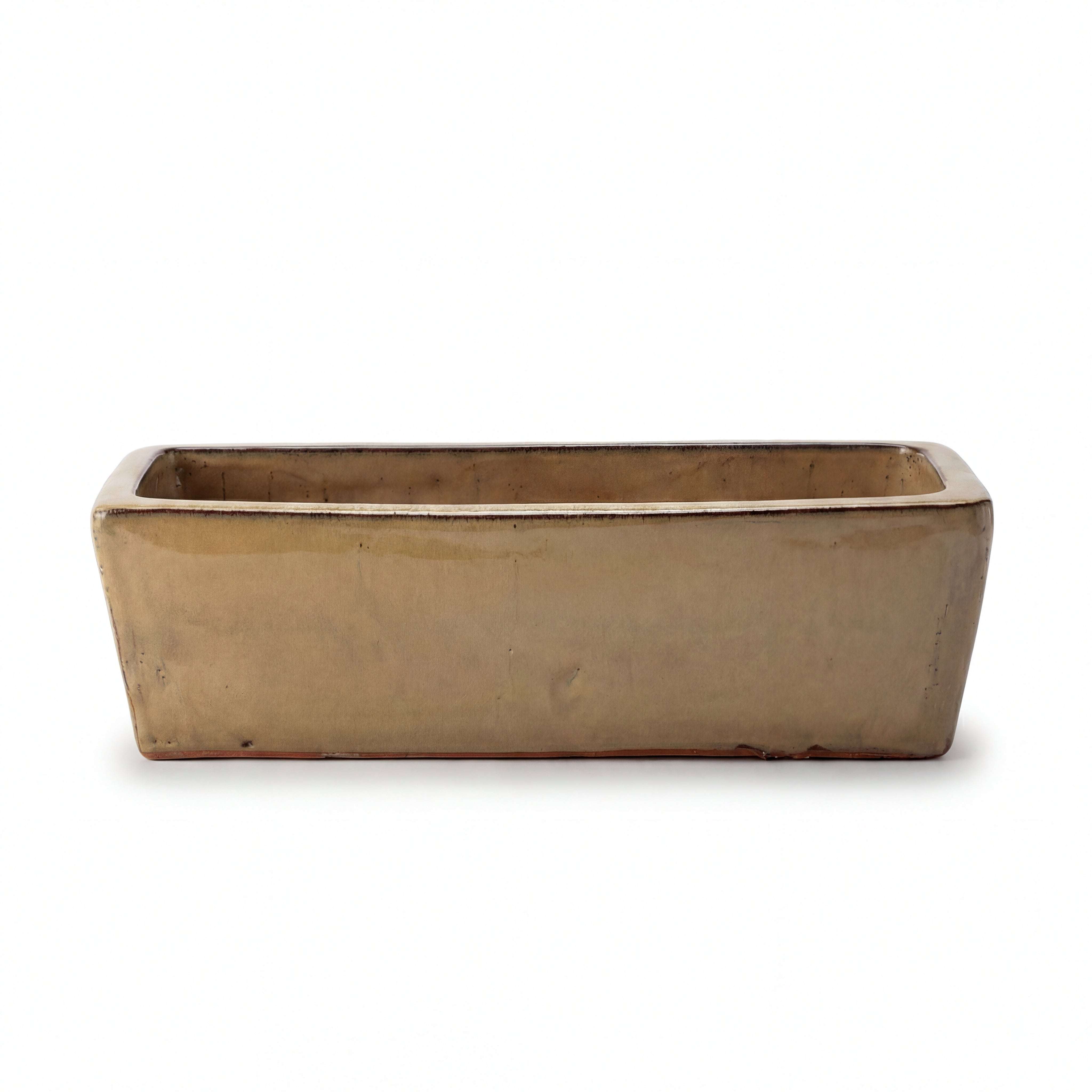
Item: How to Choose the Right Flower Pot for Your Plants: Complete Guide

How to Choose the Right Flower Pot for Your Plants: Complete Guide

Choosing a flower pot, is much more than a matter of aesthetics. It is the first decision that determines the health, growth, and longevity of your plants. A pot that is too small suffocates the roots, too large encourages diseases, and if poorly chosen, it cracks at the first winter. In this comprehensive guide, discover how to choose the right flower pot according to your plant, your space, and your budget, from selecting the material to seasonal maintenance.
Why choosing the right flower pot is important
The flower pot plays a fundamental role far beyond being a simple container. A poorly chosen pot can lead to water stagnation, root stress, or dangerous instability.Here are the five criteria to keep in mind:
Root growth:
A pot that is too small suffocates the roots; too large, it retains too much moisture and encourages fungal diseases.
Drainage:
Without drainage holes, water stagnates and causes root rot, the leading cause of death for potted plants.
Stability:
A pot that is too light tips over in the wind, especially for tall plants on a terrace or balcony.
Thermal regulation:
The material influences the temperature of the roots—a dark plastic pot can overheat in full sun and burn the roots.
Aesthetics:
The pot is an integral part of the decoration and must harmonize with the plants and the environment.
|
🌿 Key points The flower pot is a miniature ecosystem that determines the water, thermal, and nutritional balance of your plant. Never choose it lightly. |
The different flower pot materials
There are five main materials for flower pots. Each has its advantages depending on use, climate, and the desired aesthetics.
Glazed ceramic
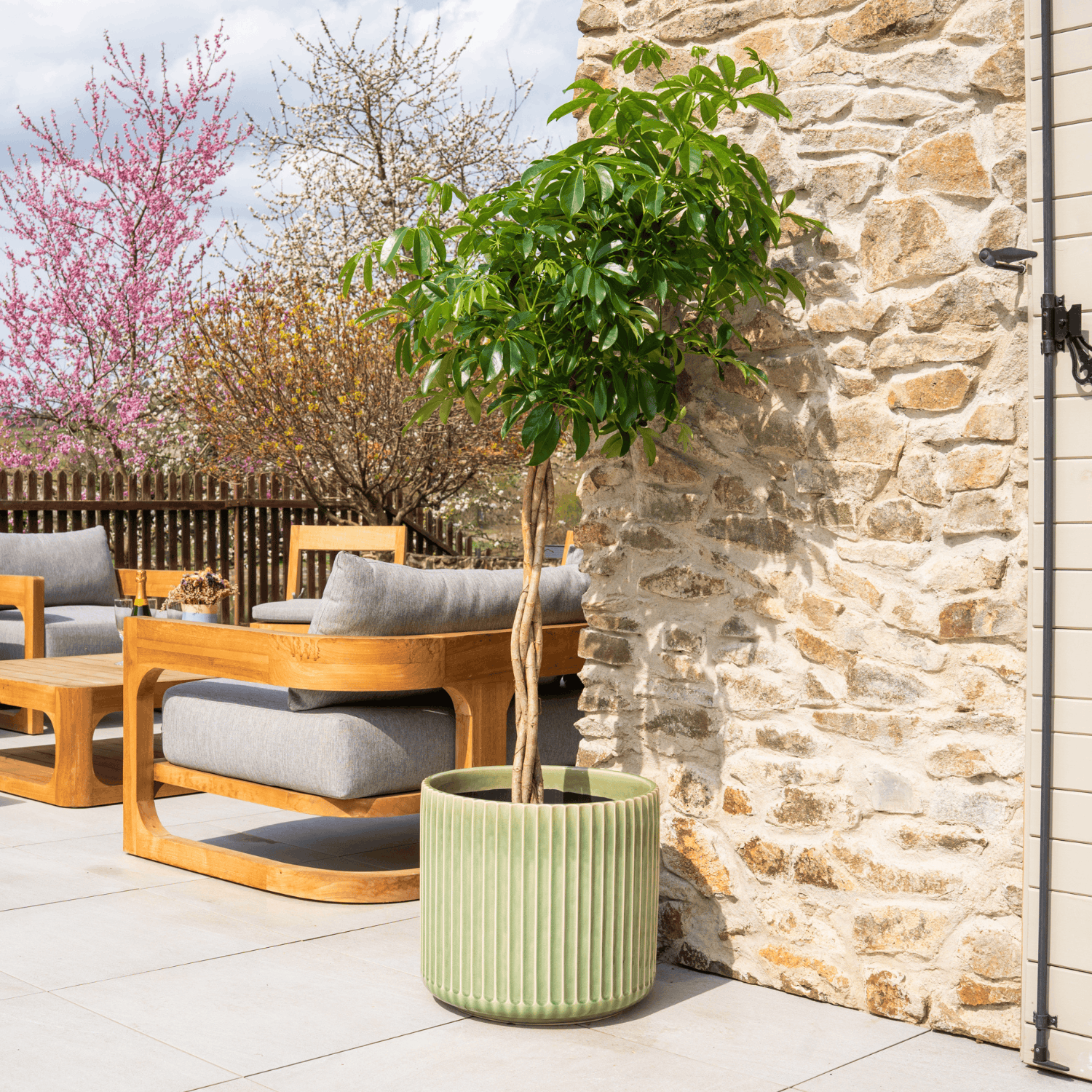
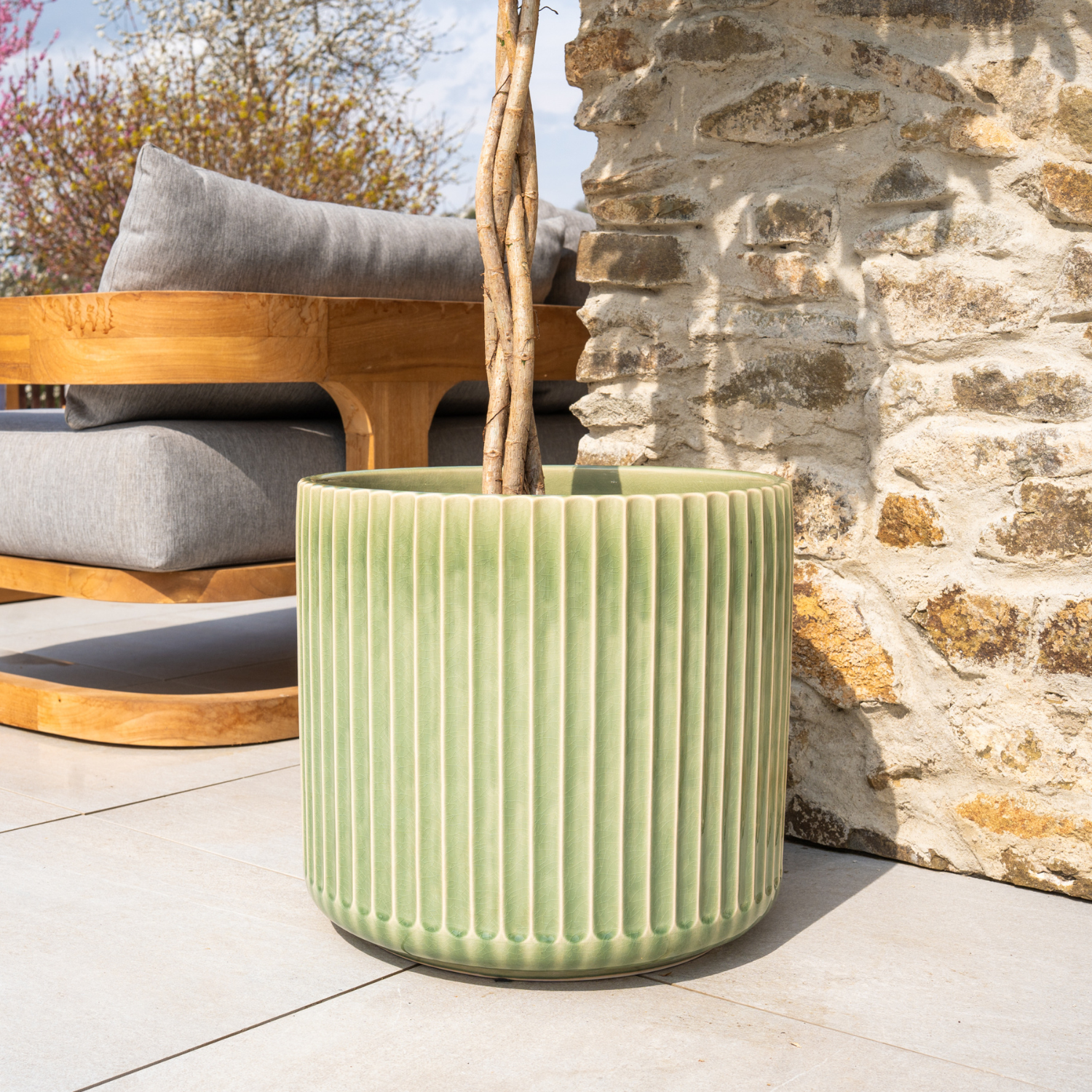
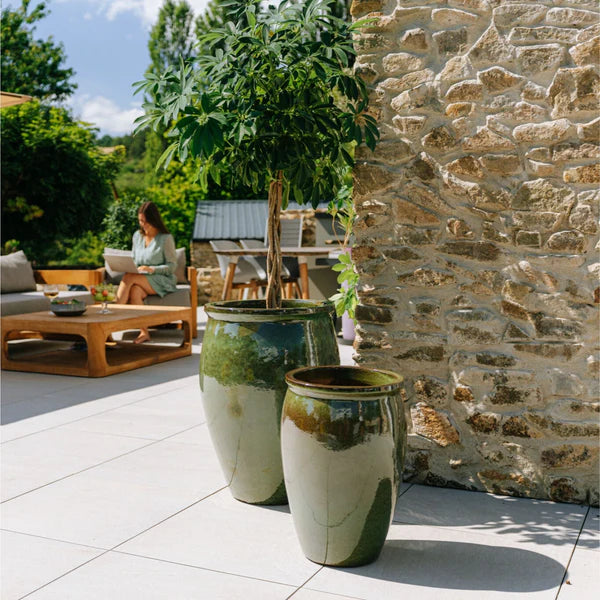
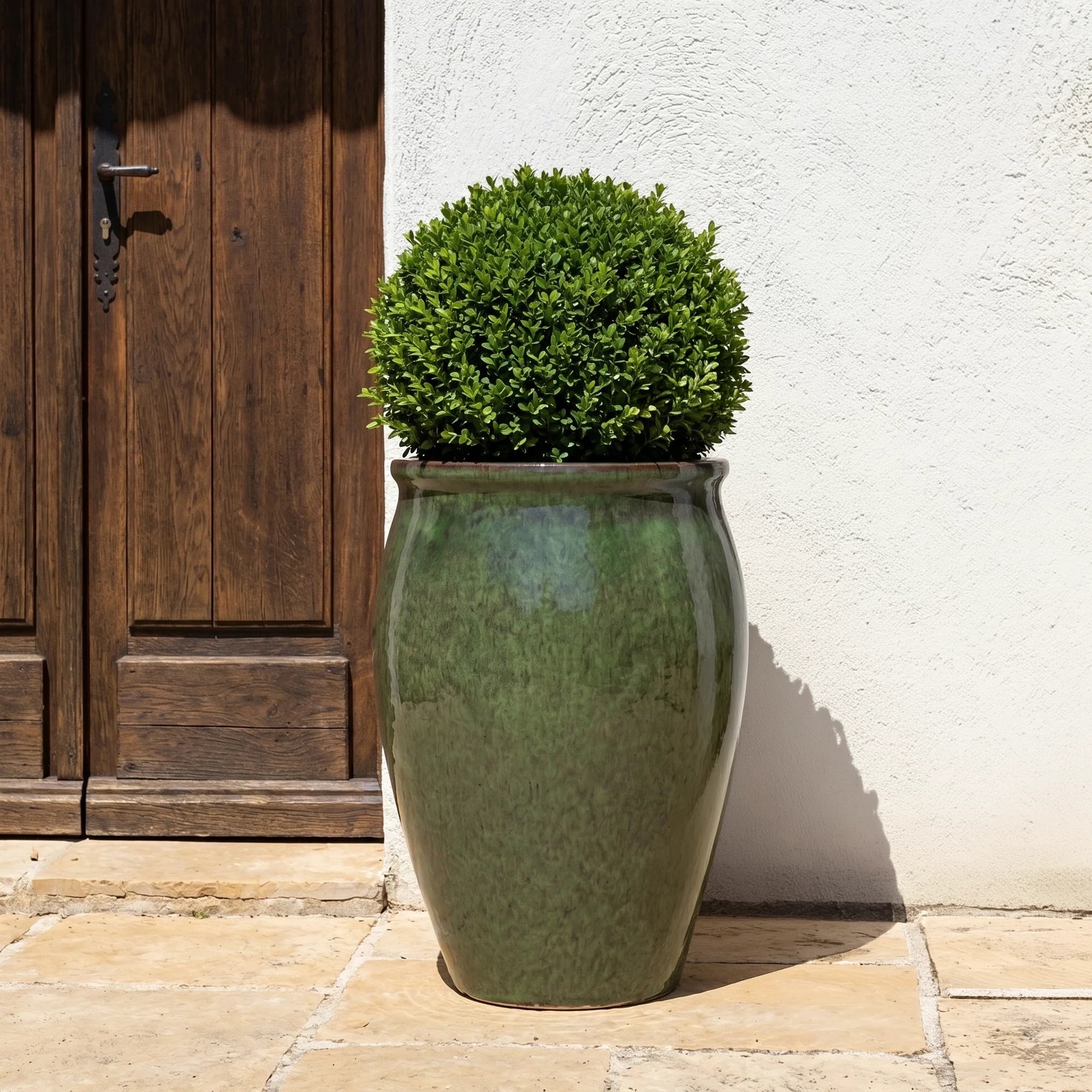
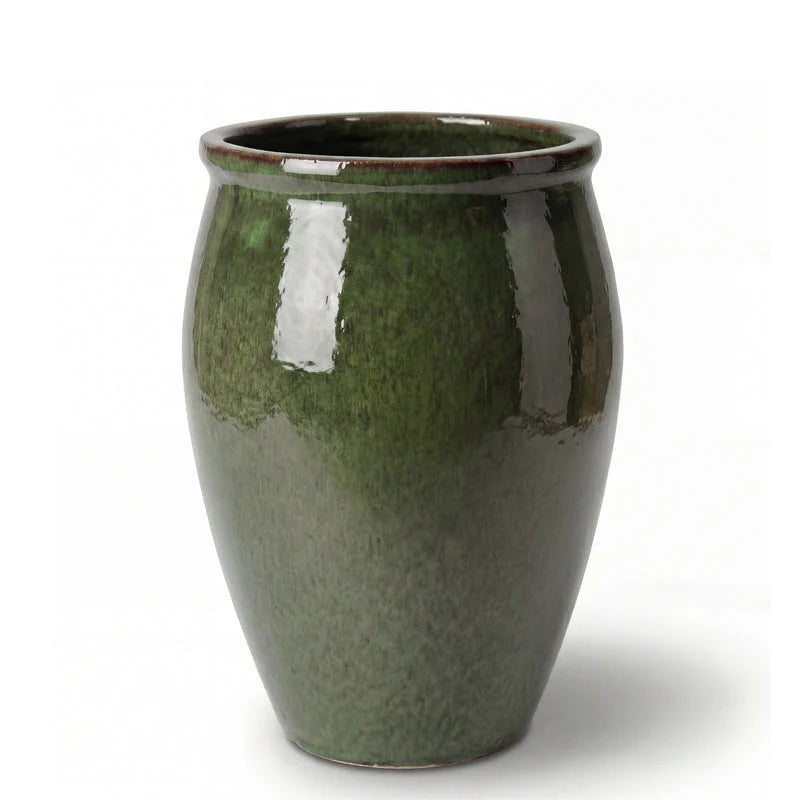
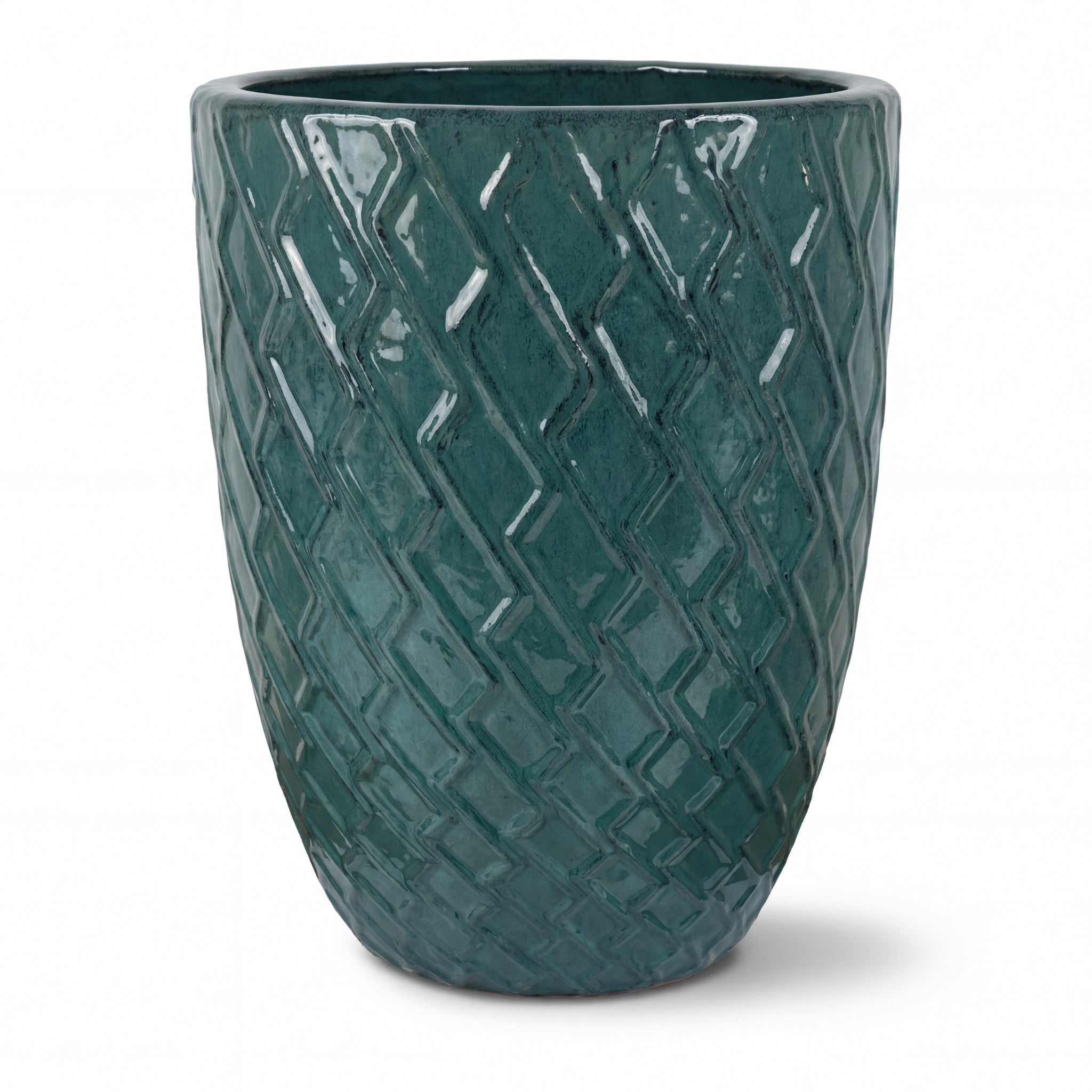
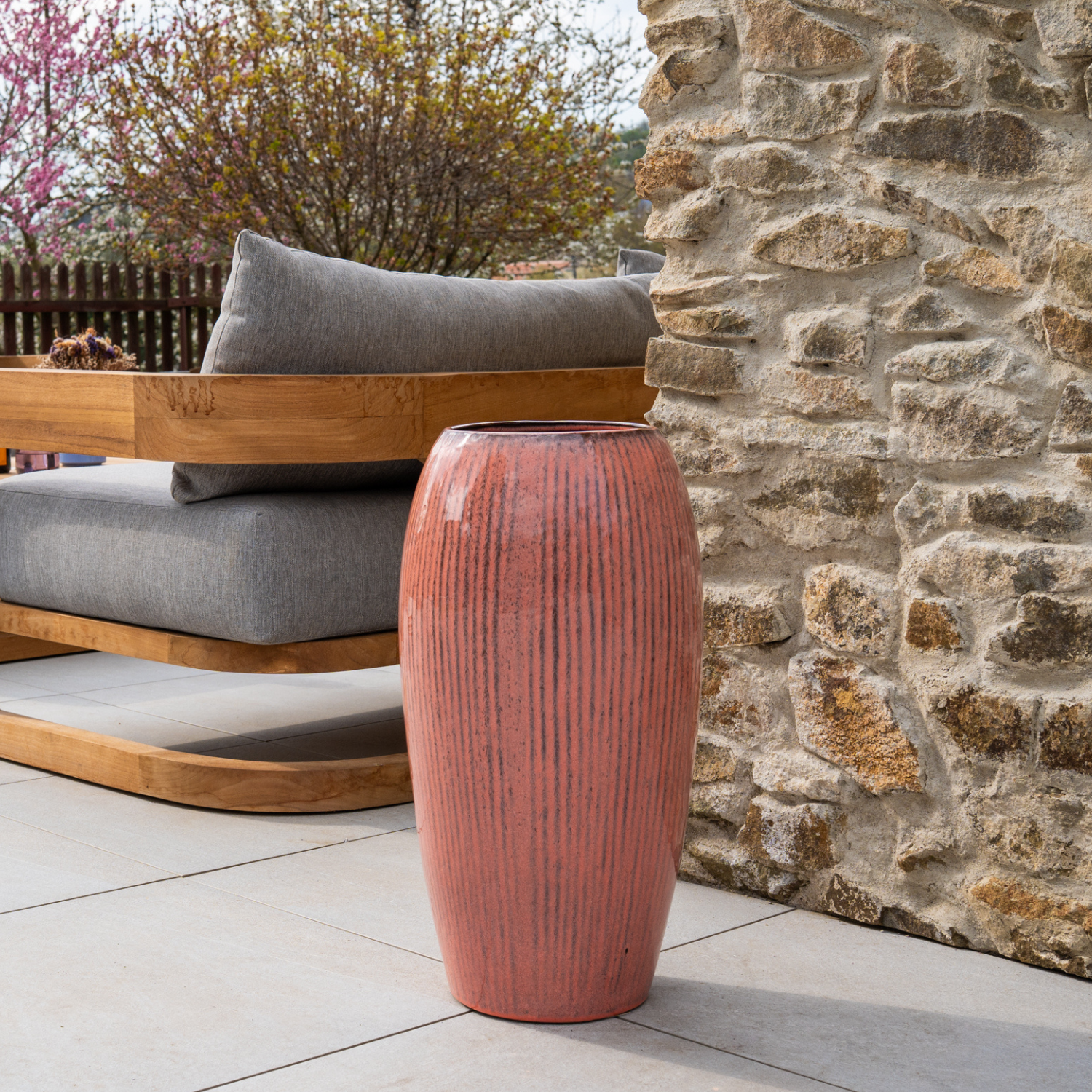
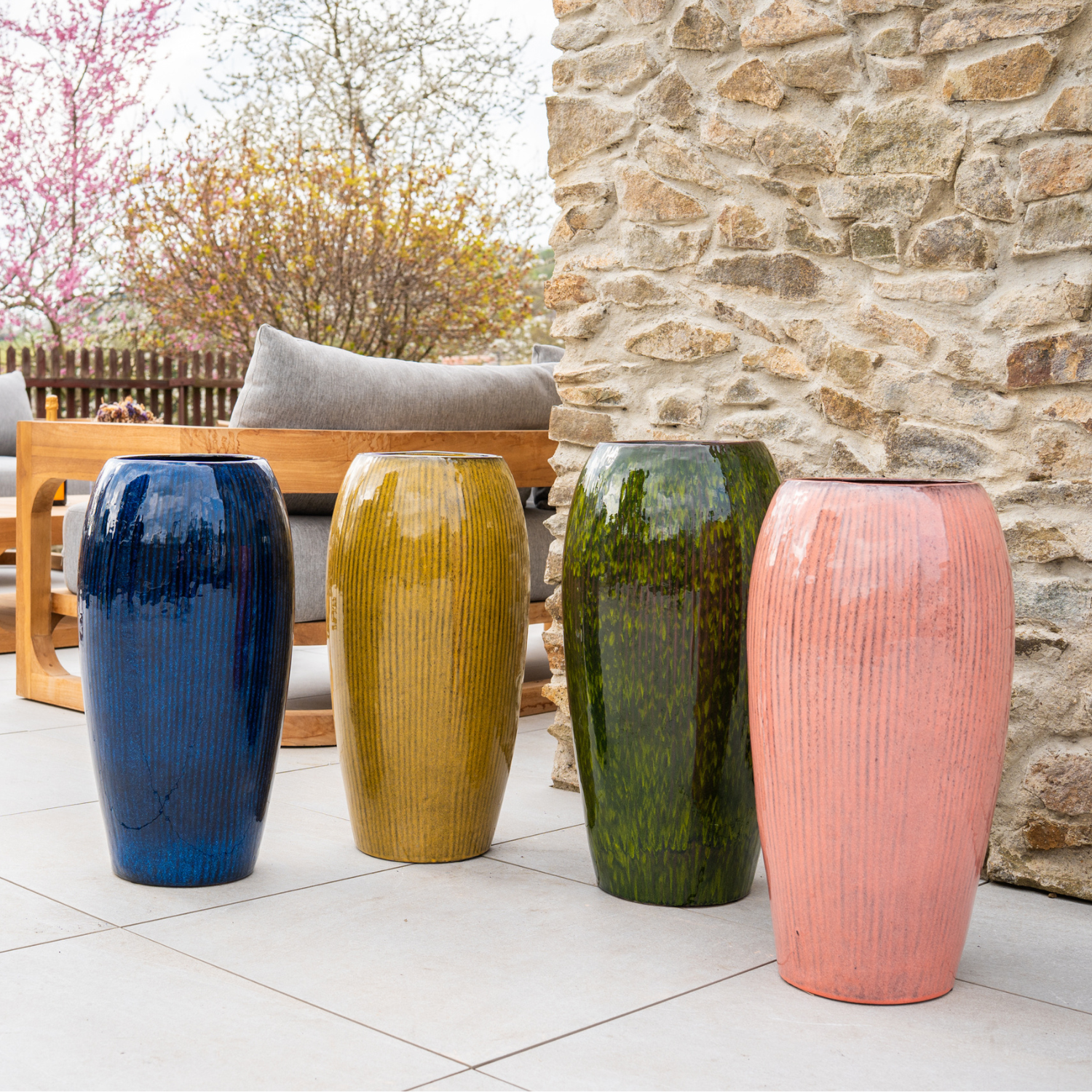
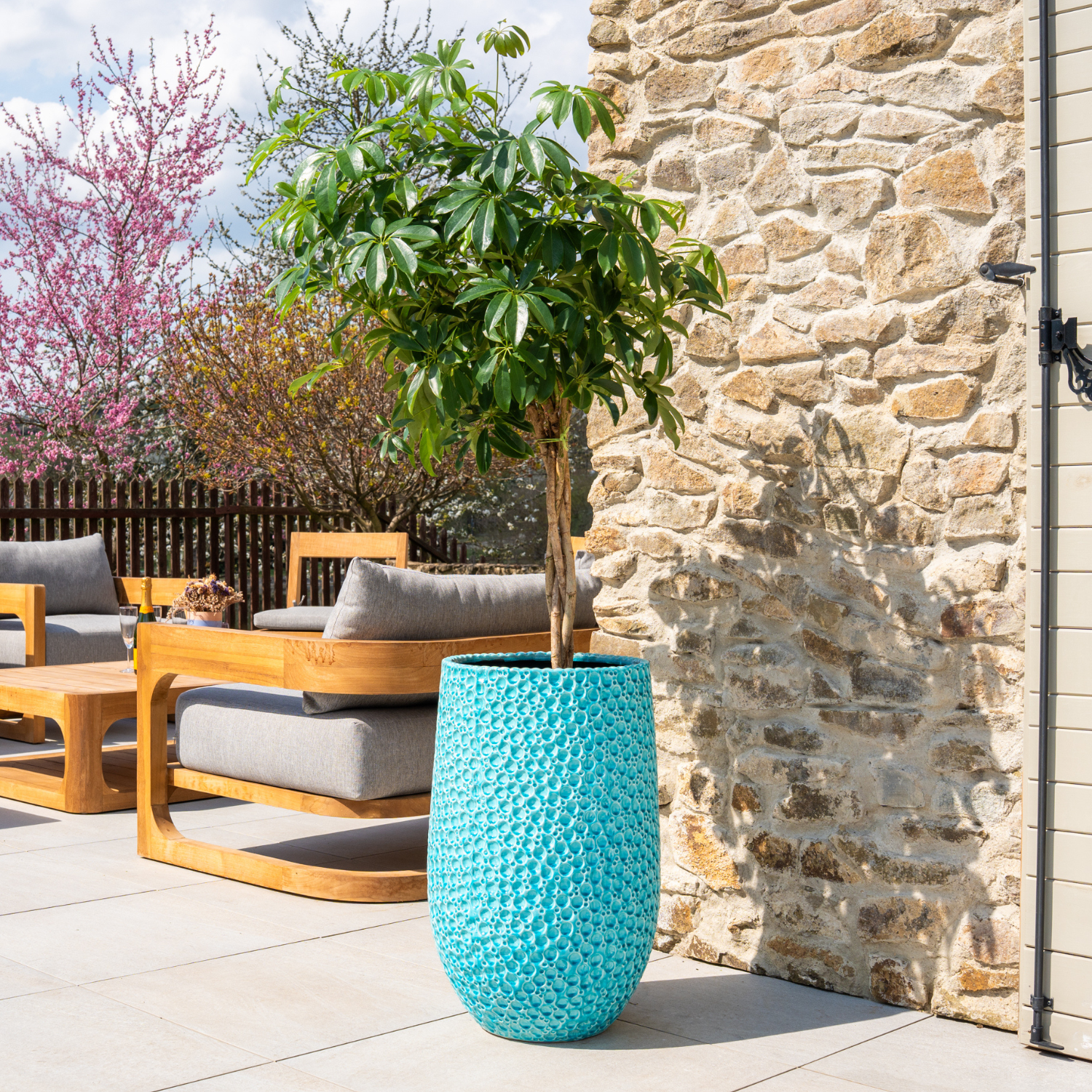
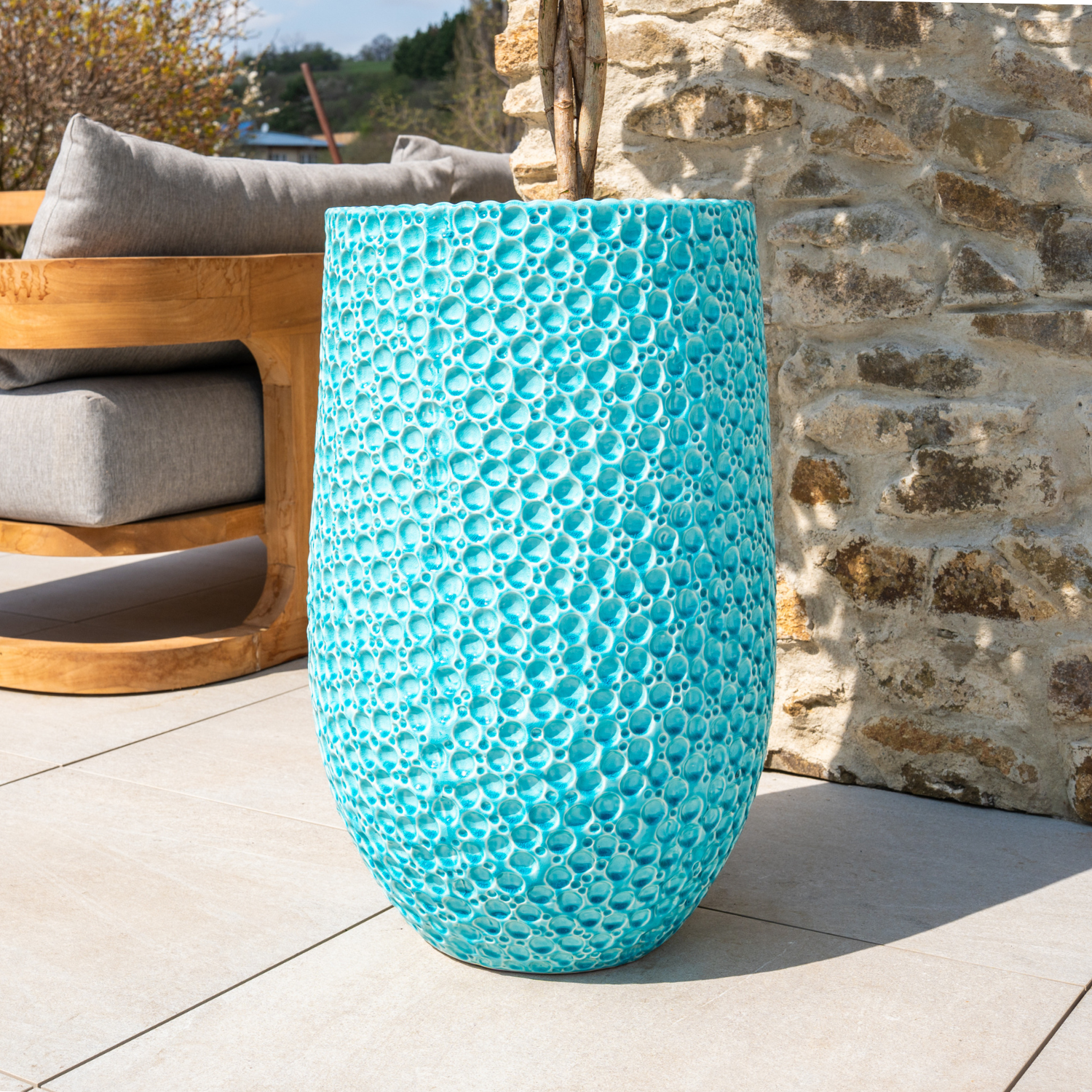
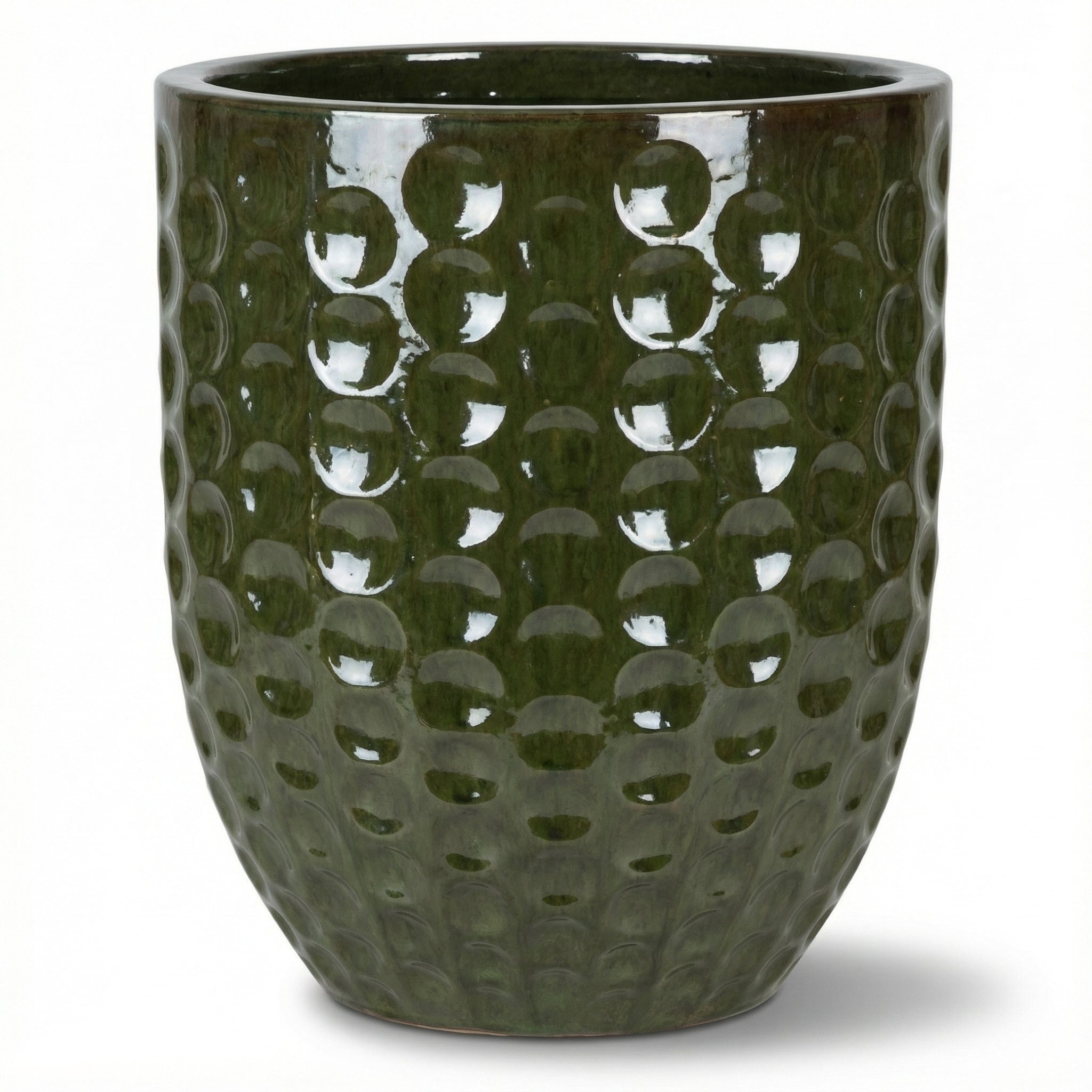
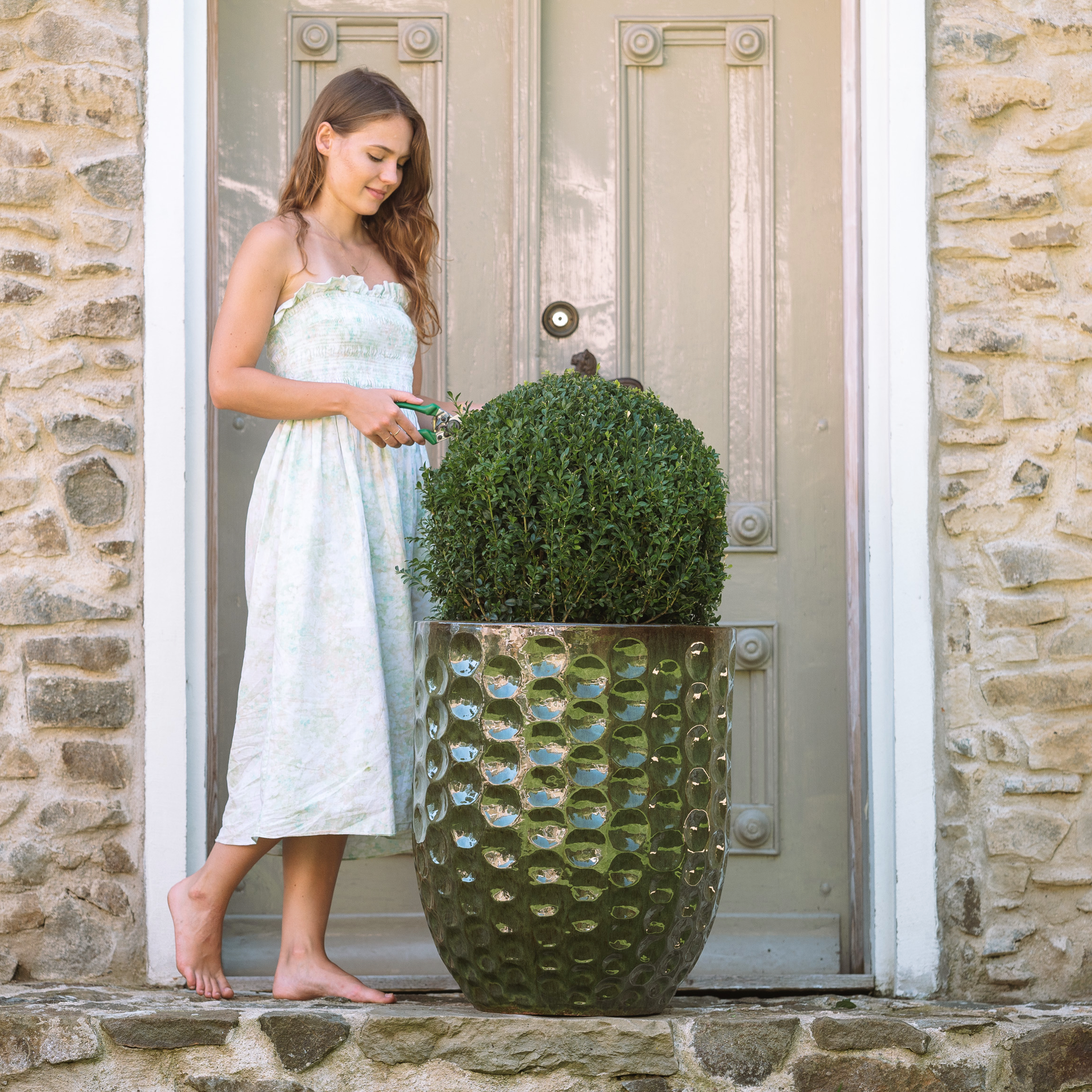
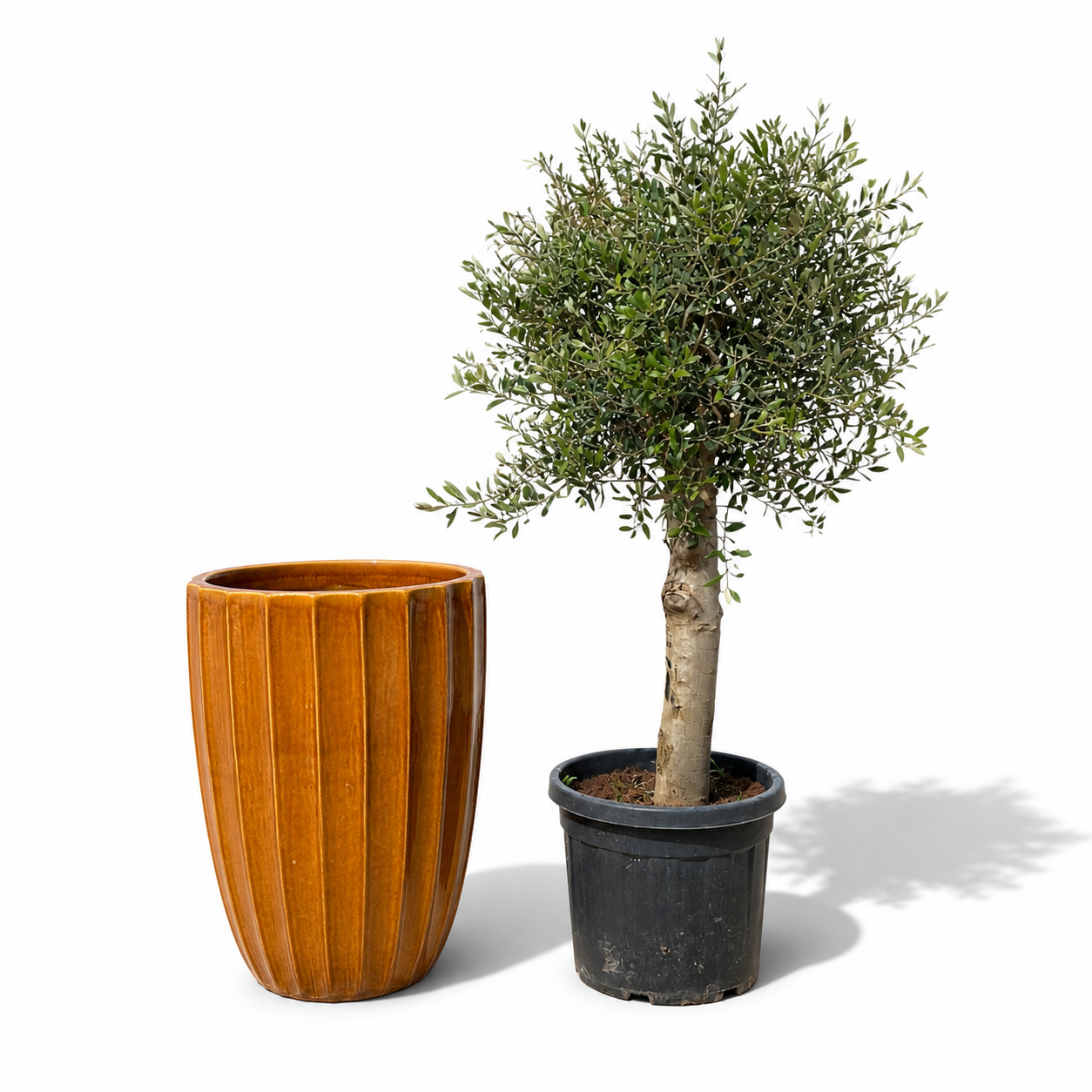
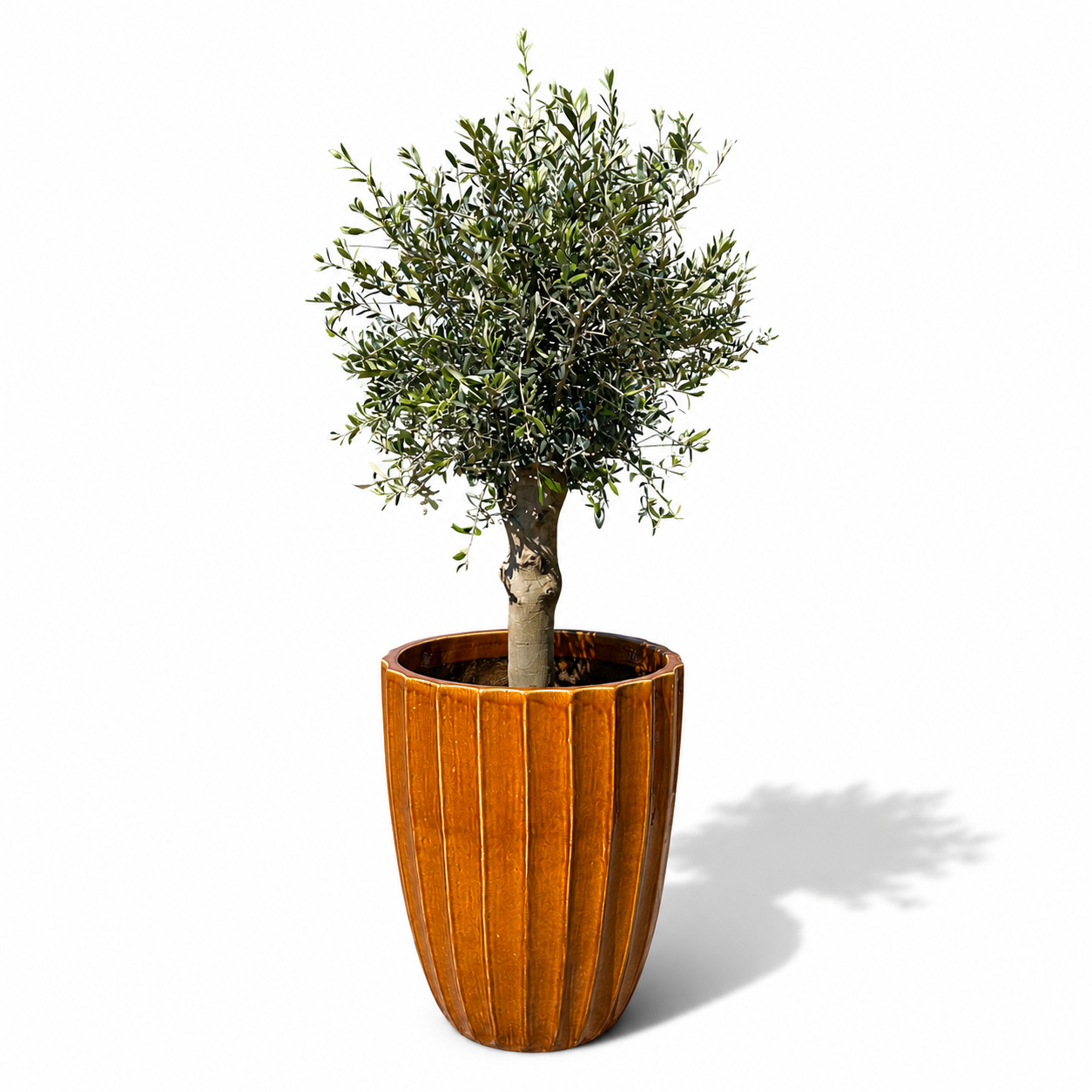
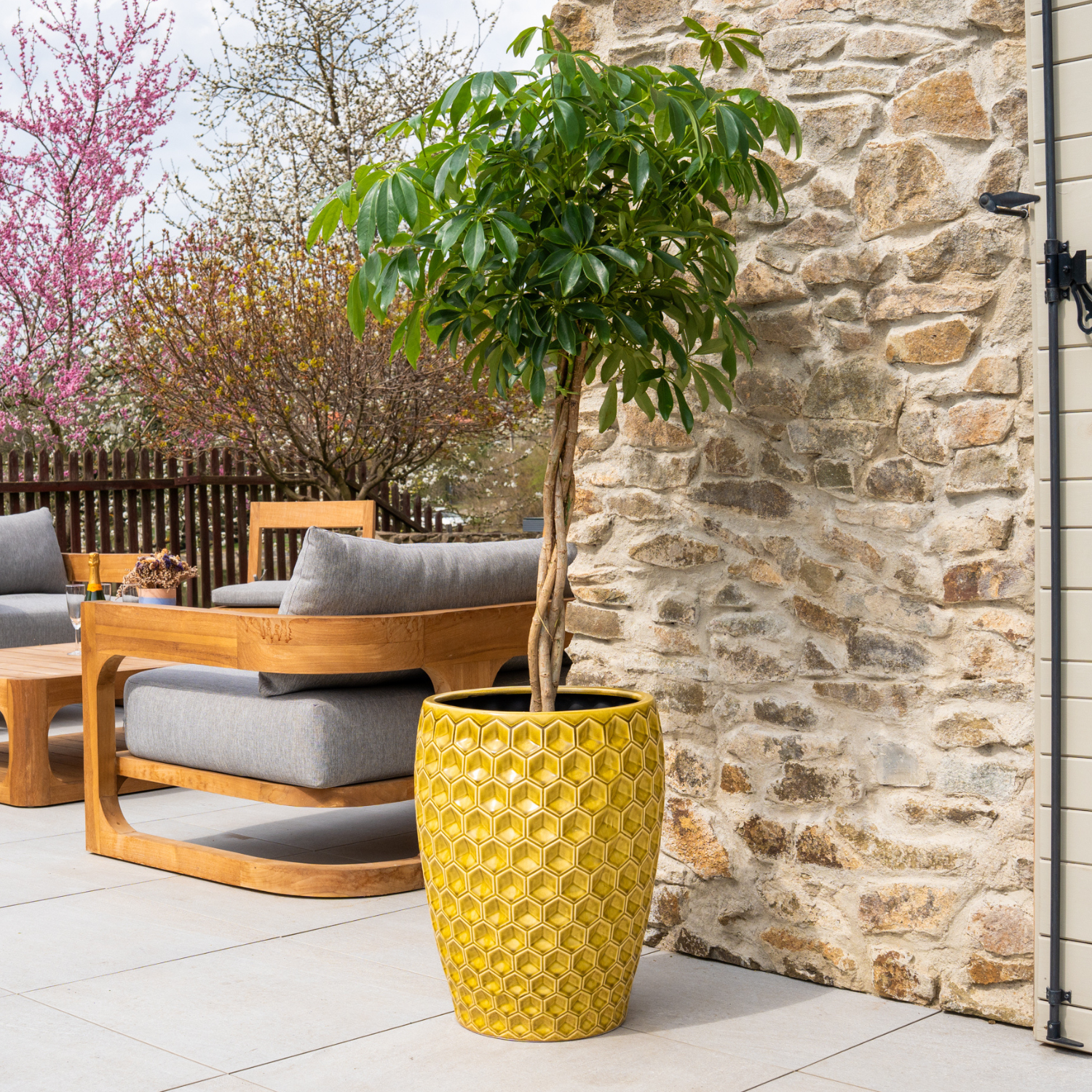
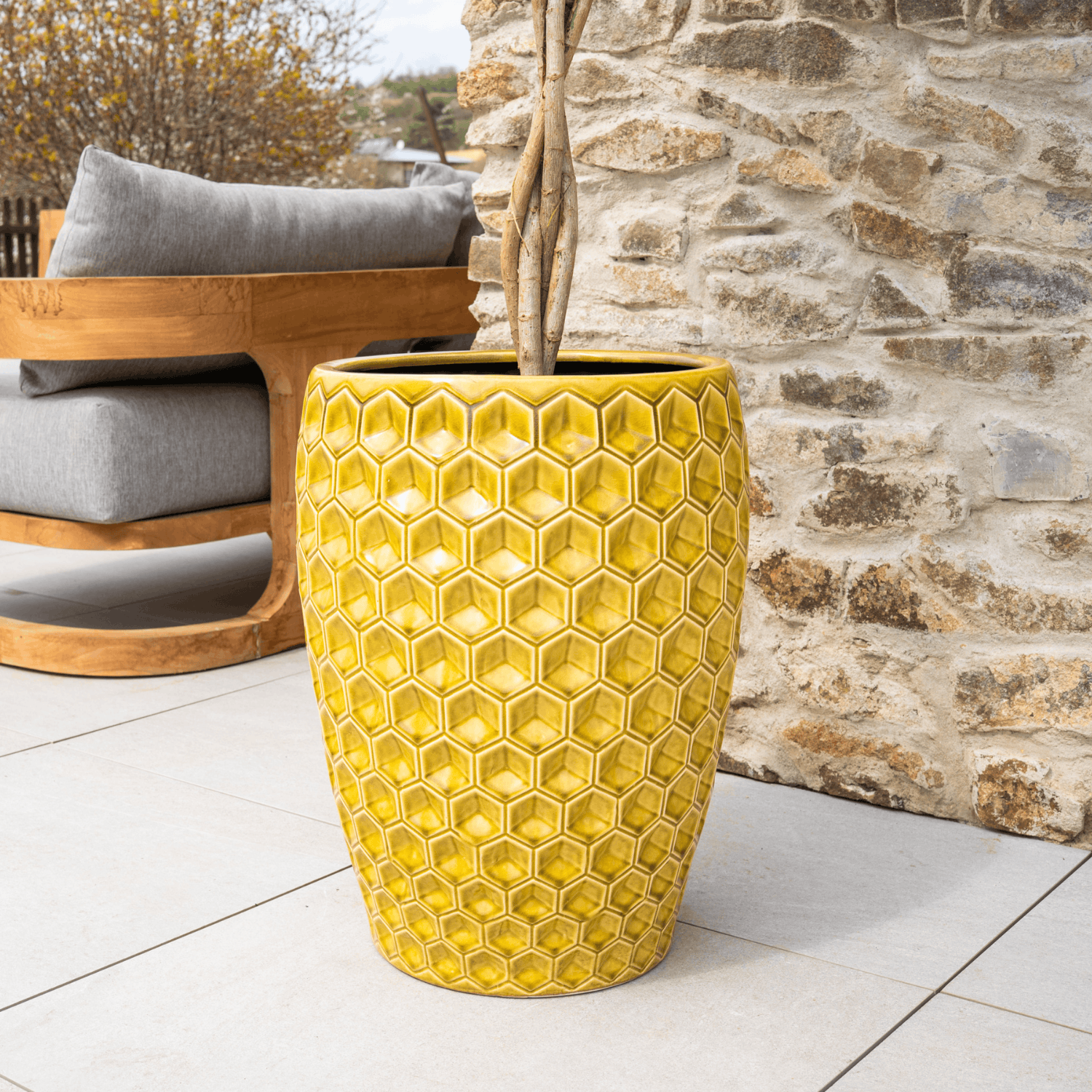
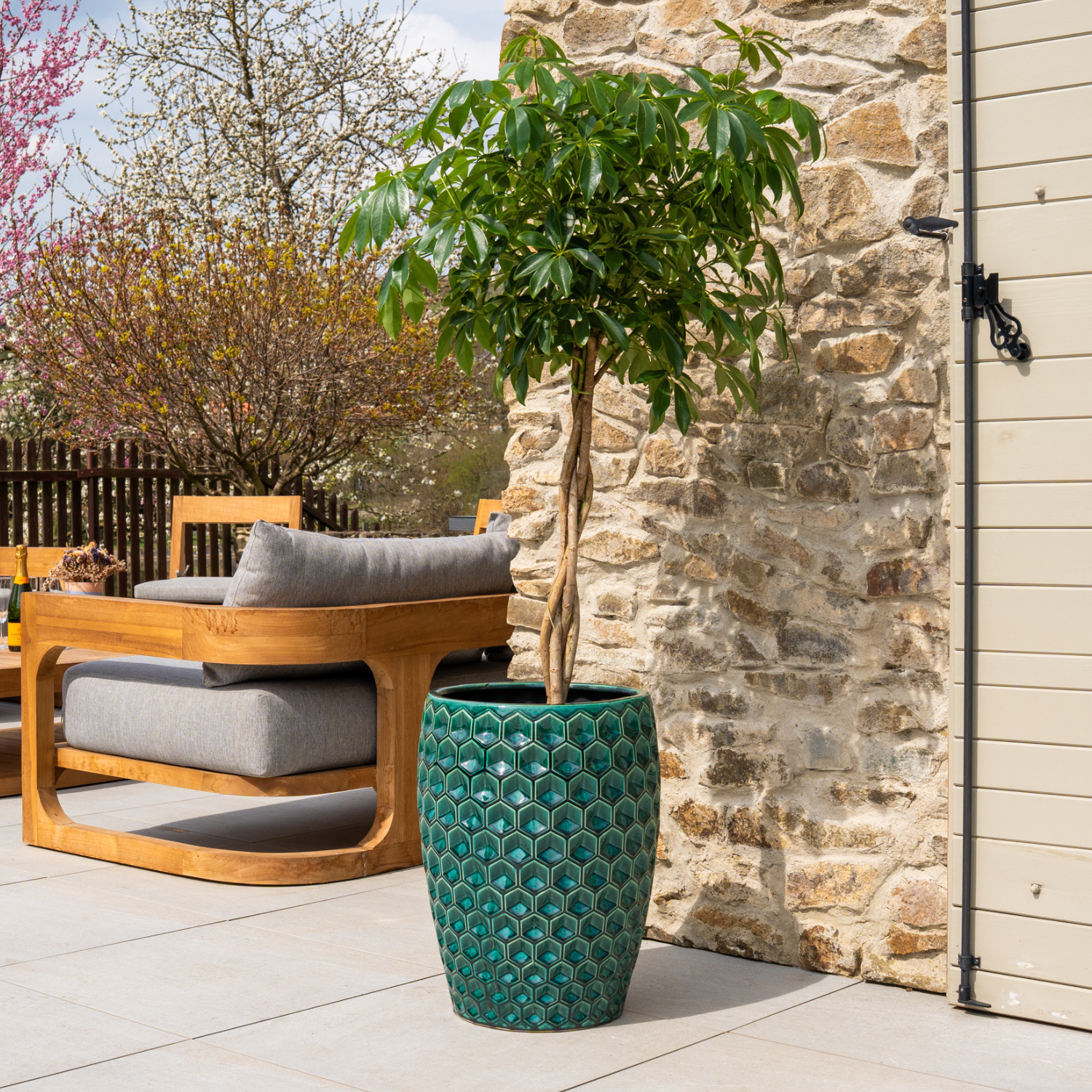
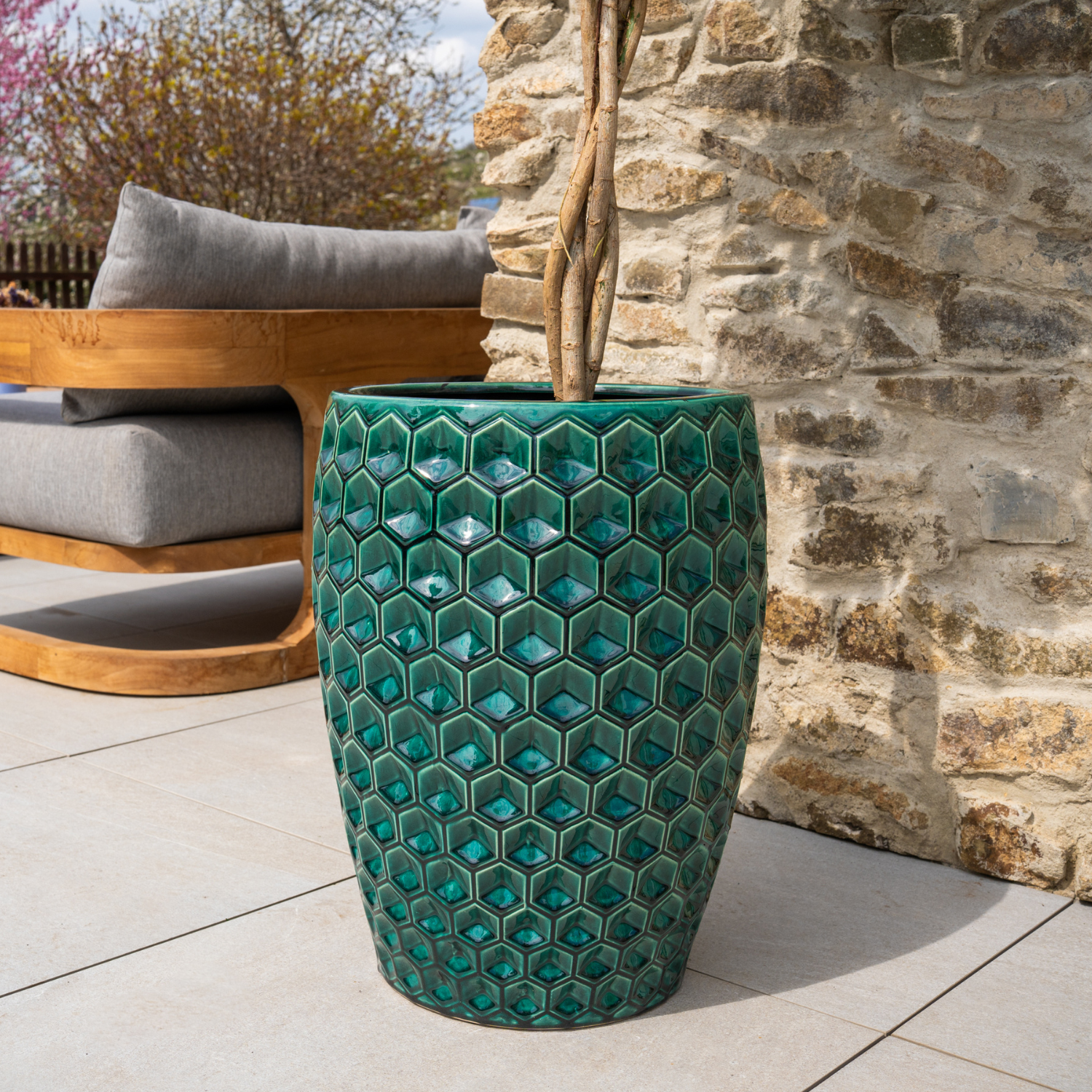
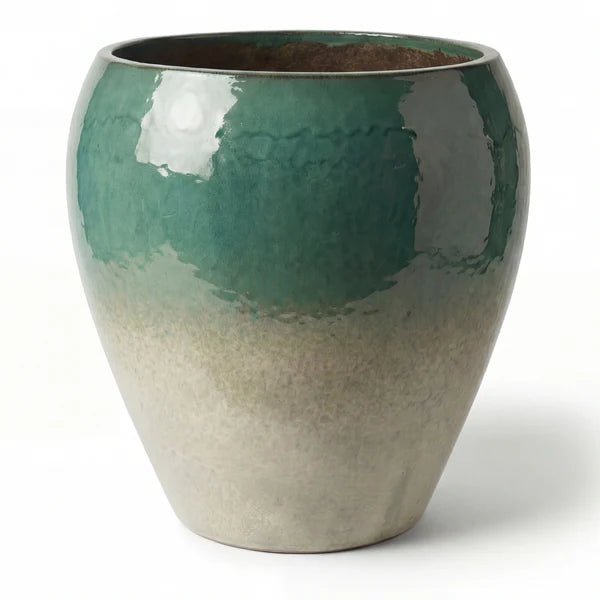
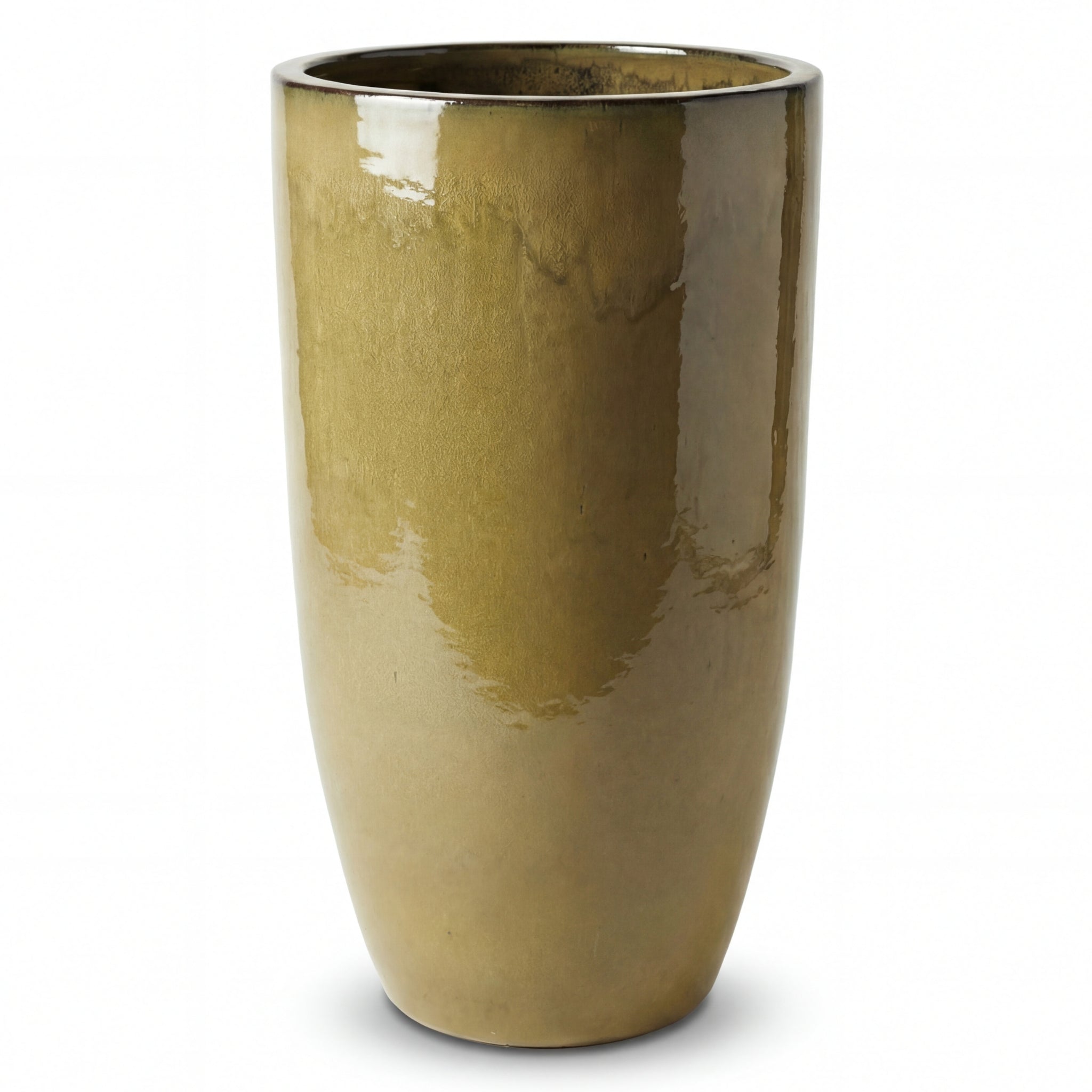
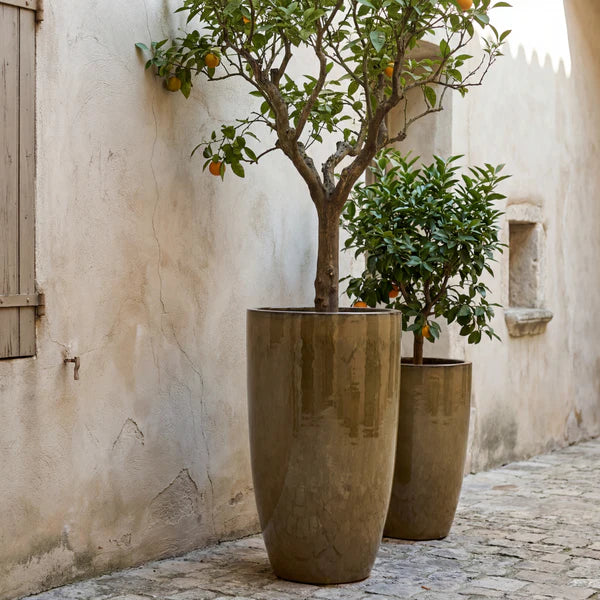
Glazed ceramic is appealing for its decorative appearance and wide range of colors.Its smooth and non-porous surface limits water evaporation, which reduces the frequency of watering for certain plants. Our glazed ceramic flower pots are also frost-resistant, which allows them to be used both indoors and outdoors. They are perfectly suited for indoor plants, as well as balconies and terraces.
Fiber-reinforced concrete
Fiber-reinforced concrete is a modern material highly valued for making large pots. Thanks to the addition of fibers to the concrete mix, it offers excellent strength while remaining lighter than traditional ceramic. Our fiber-reinforced concrete flower pots are designed for outdoor use. They are highly resistant to climate variations, especially frost and UV rays.It is therefore an ideal solution for furnishing a terrace, balcony, or garden with pots that are both sturdy and durable.
Terracotta
Porous, it promotes soil aeration and naturally regulates humidity. Fragile to shocks, sensitive to frost if not glazed, requires more frequent watering. Ideal for Mediterranean plants (olive tree, lavender, rosemary).
Plastic and resin
Very lightweight and economical, available in large sizes. Waterproof (poor root oxygenation), fades under UV, unstable for large plants in strong winds. Ideal for balconies with limited load and urban vegetable gardens.
Stainless steel
Stainless steel pots stand out for their contemporary style and elegant finish. Made from 304 stainless steel, they offer excellent durability and retain their aesthetic appearance over time. Our stainless steel flower pots are suitable for both indoor and outdoor spaces. Their sturdy structure and refined finish make them ideal decorative pieces for furnishing a terrace, balcony, or garden with a modern touch.
Comparison table:
|
Material |
Frost resistance |
Weight |
Price |
Ideal for |
|---|---|---|---|---|
|
Glazed ceramic |
⭐⭐⭐ |
Heavy |
€€ |
Indoor, protected balcony |
|
Fiber-reinforced concrete |
⭐⭐⭐⭐ |
Heavy |
€€€ |
Garden, terrace |
|
Terracotta |
⭐⭐ |
Heavy |
€€ |
Mediterranean, rustic |
|
Plastic/resin |
⭐⭐⭐ |
Light |
€ |
Balcony, urban vegetable garden |
| Stainless steel | ⭐⭐⭐⭐ | Heavy | €€€ | Terrace, balcony, modern garden |
How to choose the size of a flower pot
 Golden rule: the pot must represent at least 1/3 of the total height of the plant (root ball + foliage).Neither too small, as the roots will suffocate. Nor too large, as excess potting soil retains too much moisture and encourages fungi.
|
Plant type |
Recommended diameter |
Recommended depth |
|---|---|---|
|
Aromatic herbs (basil, parsley) |
12 – 15 cm |
10 – 12 cm |
|
Geraniums, petunias |
20 – 25 cm |
15 – 20 cm |
|
Tomatoes, peppers |
30 – 40 cm |
30 – 40 cm |
|
Shrubs (lavender, boxwood) |
35 – 50 cm |
30 – 40 cm |
|
Olive trees, small trees |
50 – 80 cm |
50 – 60 cm |
|
Bamboos, tall grasses |
40 – 60 cm |
40 – 50 cm |
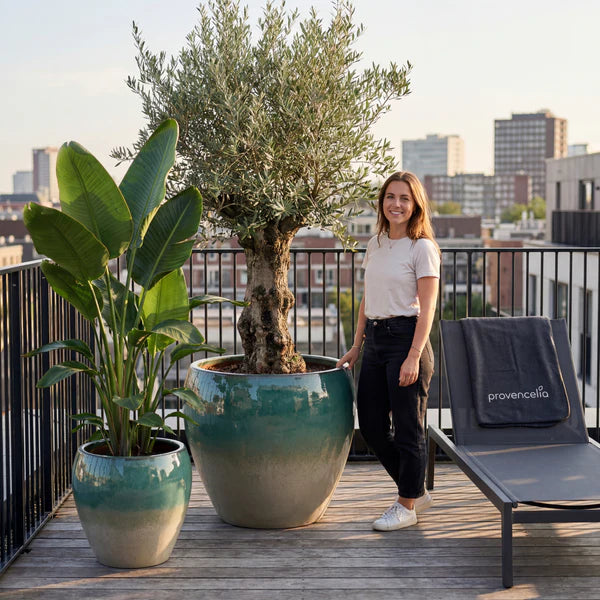
These dimensions are indicative.If the roots are coming out through the drainage holes, if the plant wilts despite watering, or if its growth suddenly stops in the middle of the season, it's a sign to repot. Choose a pot with a diameter 2 to 5 cm larger than the previous one, never too big at once. The best time to repot: spring, during the vegetative recovery. For shrubs and olive trees, discover our selection of XXL pots suitable for large plantings.
Which pot to choose according to the type of plant?
1. Indoor plants
Opt for glazed ceramic or plastic with a saucer to protect your floors. Repot every 1 to 2 years in spring. A decorative cachepot without a hole can be used in addition to a technical pot with drainage.
2.Outdoor plants
Opt for materials resistant to frost such as fiber-reinforced concrete or glazed ceramic. A well-drained pot is mandatory. Raise it on wooden feet to avoid contact with frozen ground in winter.
3. Shrubs and small trees
Minimum diameter 40 cm for an adult shrub. Provide 5 to 10 cm of clay pebbles at the bottom of the pot and a suitable substrate (Mediterranean potting soil for olive trees and lavender, shrub potting soil for boxwood and hydrangea). To choose the best plants for your large pots, check out our top 10 plants suitable for ceramic pots.
And if you have an olive tree, find all our tips in our guide olive trees: a Mediterranean symbol for your terrace.
4.Succulents and cacti
Shallow and wide terracotta pots, ultra-draining substrate (50% cactus soil + 50% pozzolana). No saucer: stagnant moisture is their number one enemy.
5. Urban vegetable garden
Tomatoes and peppers require a pot at least 30 cm in diameter and 30 cm deep. For herbs, 12 to 15 cm is sufficient. Our deep planters allow you to mix several species while optimizing the available space.
Flower pots for terrace and balcony
For a terrace or balcony, it is important to choose pots that are both durable and easy to handle. Fiber-reinforced concrete is particularly suitable for this type of space, as it offers great strength while being lighter than traditional ceramic.
Our fiber-reinforced concrete flower pots are designed for outdoor use. They withstand weather conditions such as sun, wind, or frost very well. This makes them an ideal solution for furnishing a terrace or balcony with pots that are both durable and aesthetic.
Choosing a frost-resistant outdoor flower pot
To withstand harsh winters, an outdoor pot must meet four essential qualities. Frost resistance: check for the "frost-resistant" label with a specified temperature limit. Fiber-reinforced concrete is one of the most reliable materials for outdoor use. Effective drainage: clear drainage holes are essential because water that freezes in a pot expands and can crack even the most robust materials.A weight and stability suitable to withstand the wind, complemented if necessary by gravel as ballast. Finally, elevation on feet or wooden blocks to avoid direct contact with frozen ground. In winter, bring in unglazed terracotta pots and sensitive plants (citrus, geraniums) before the first frosts. Wrap fragile plants in winter protection fleece.
How to properly plant in a flower pot
-
Drainage: place 5 cm of clay pebbles or gravel at the bottom of the pot, then cover with a geotextile fabric to separate the drainage from the substrate.
-
Substrate: use a potting soil suitable for your plant (universal, Mediterranean, cacti, tomatoes, etc.).Never use garden soil: it is too compact and suffocates the roots in pots.
-
Planting : center the plant at the same level as in its original pot, fill in with substrate, press down lightly and water abundantly until water flows out through the holes.
-
Fertilization: incorporate a slow-release fertilizer (3 months) at planting. During the season, apply a liquid fertilizer every 15 days to stimulate growth and flowering.
|
🌿 Watering advice Let the potting soil dry out to 1/3 of its depth before watering again. Terracotta pots (porous) require more frequent watering than glazed ceramic or plastic pots.In summer, water preferably in the morning or evening to limit evaporation. To discover all the steps in detail, consult our complete guide to repotting your plants. |
How to care for your flower pots
Cleaning
At the end of the season, clean your pots with a brush and soapy water to remove lime deposits, moss, and residues. For terracotta, soaking in a mixture of water and white vinegar removes white lime stains.
Winter protection
Bring in pots that are not frost-resistant before the first frosts. For those left outside, raise them on insulating saucers and wrap fragile plants in winter fleece. Stop watering for dormant plants.
Substrate renewal
Every 1 to 2 years, partially or completely renew the potting soil. The substrate becomes depleted with successive waterings. This is also an opportunity to check the condition of the roots and repot into a slightly larger pot if necessary.
Decoration ideas with flower pots
 Flower pots are also real decorative accessories. Here are some ideas to enhance your spaces:
Play with volumes
Group 3 or 5 pots of different heights (the rule of odd numbers) for a natural and structured look.
Create a green corner
Define a space with large bamboo or grass planters, then add colorful flowering pots to bring life.
Dare to design
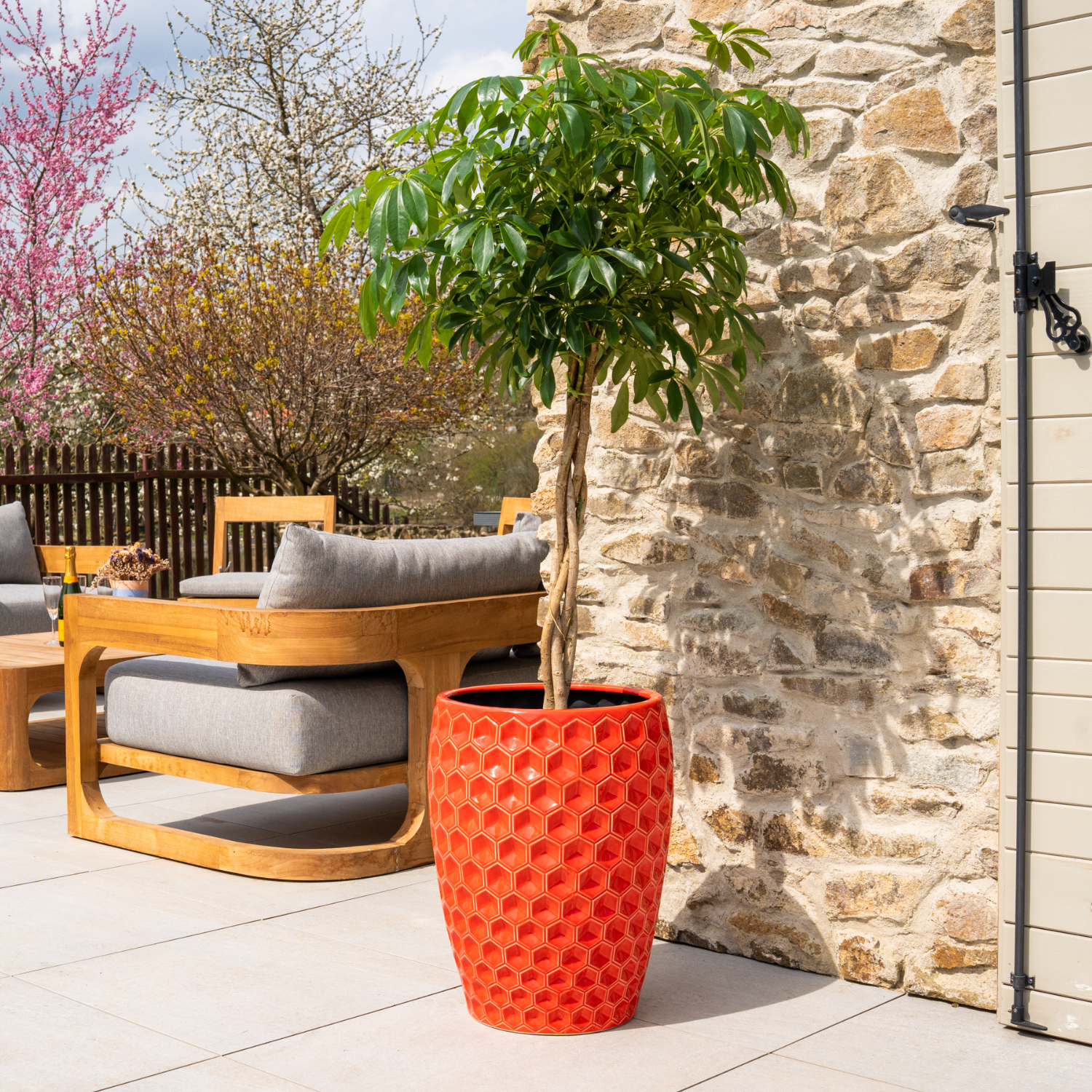
Neutral tones (concrete gray, matte black) for a contemporary style; bright colors for a Mediterranean atmosphere. On a sunny balcony, choose light colors to avoid overheating the roots.
Create a multi-planted pot
Combine one tall and architectural plant (grass, agapanthus) + one floral filler plant (geranium, petunia) + one trailing plant (ivy, bacopa) for a spectacular result.
FAQ – Frequently Asked Questions about Flower Pots
❓ What is the difference between a pot and a planter cover?
The pot is perforated and intended for direct planting. The planter cover is decorative, without a hole, into which the technical pot is placed. Regularly empty excess water from the planter cover to prevent the roots from soaking in it.
❓ Is it absolutely necessary to have holes in a flower pot?
Yes, for almost all plants. Drainage holes allow excess water to drain and oxygenate the roots. Only aquatic plants (papyrus, lotus) are grown in watertight containers.
❓ How do I know if my pot is frost-resistant?
Certain materials are naturally better suited to outdoor conditions and winter temperatures. For example, fiber-reinforced concrete offers excellent resistance to climate variations, especially frost.
Conversely, some more porous pots, such as unglazed terracotta, can be more sensitive to cold when left outside during winter. For year-round outdoor use, it is therefore preferable to choose materials designed to withstand these conditions.
❓ How often should a plant be repotted?
Every 1 to 2 years for most plants, in spring. Repot as soon as the roots come out of the holes, the plant wilts despite watering, or its growth stops.Choose a pot with a diameter 2 to 5 cm larger than the previous one.
❓ Which material should you choose for a pot in full sun?
Light-colored glazed ceramic or fiber-reinforced concrete are good choices for exposure to full sun. These materials withstand outdoor conditions well and help limit excessive heat accumulation around the roots.
Avoid very dark plastic pots, which can concentrate heat and quickly warm up the substrate. Unglazed terracotta can also be interesting, as its porosity helps maintain some coolness through water evaporation.
Conclusion
Choosing the right flower pot is the foundation of successful cultivation, whether indoors, on a balcony, or in a garden.A well-suited pot allows roots to develop freely, promotes optimal drainage, and contributes to the overall health of the plant in the long term. Remember three essential criteria: the material (fiber-reinforced concrete for outdoor use, ceramic for decoration, terracotta for Mediterranean plants), the size (proportional to the plant, neither too small nor too large), and adaptation to the species (each plant has its specific needs—the same pot is not suitable for both a cactus and an olive tree). By respecting these criteria, you provide your plants with the best conditions to thrive sustainably.
You now know everything you need to choose the right pot. All that's left is to find yours. Explore our entire collection. 🌿