Glazed terracotta and recycled fiber-reinforced concrete: Creating a Harmonious Terrace
A combination of materials that makes all the difference
On a terrace or in a garden, it is not just the plants that create the atmosphere: it is the containers that hold them. In 2026, the outdoor decor trend is moving away from uniformity to explore controlled contrast. Combining glazed terracotta, warm and traditional, with fiber-reinforced concrete, mineral and contemporary, allows you to create an outdoor space with character without ever becoming disjointed.
At Provencelia, this meeting of materials is at the heart of our approach: giving each outdoor space a unique signature, blending Provençal heritage with modern design.
Glazed terracotta: timeless warmth
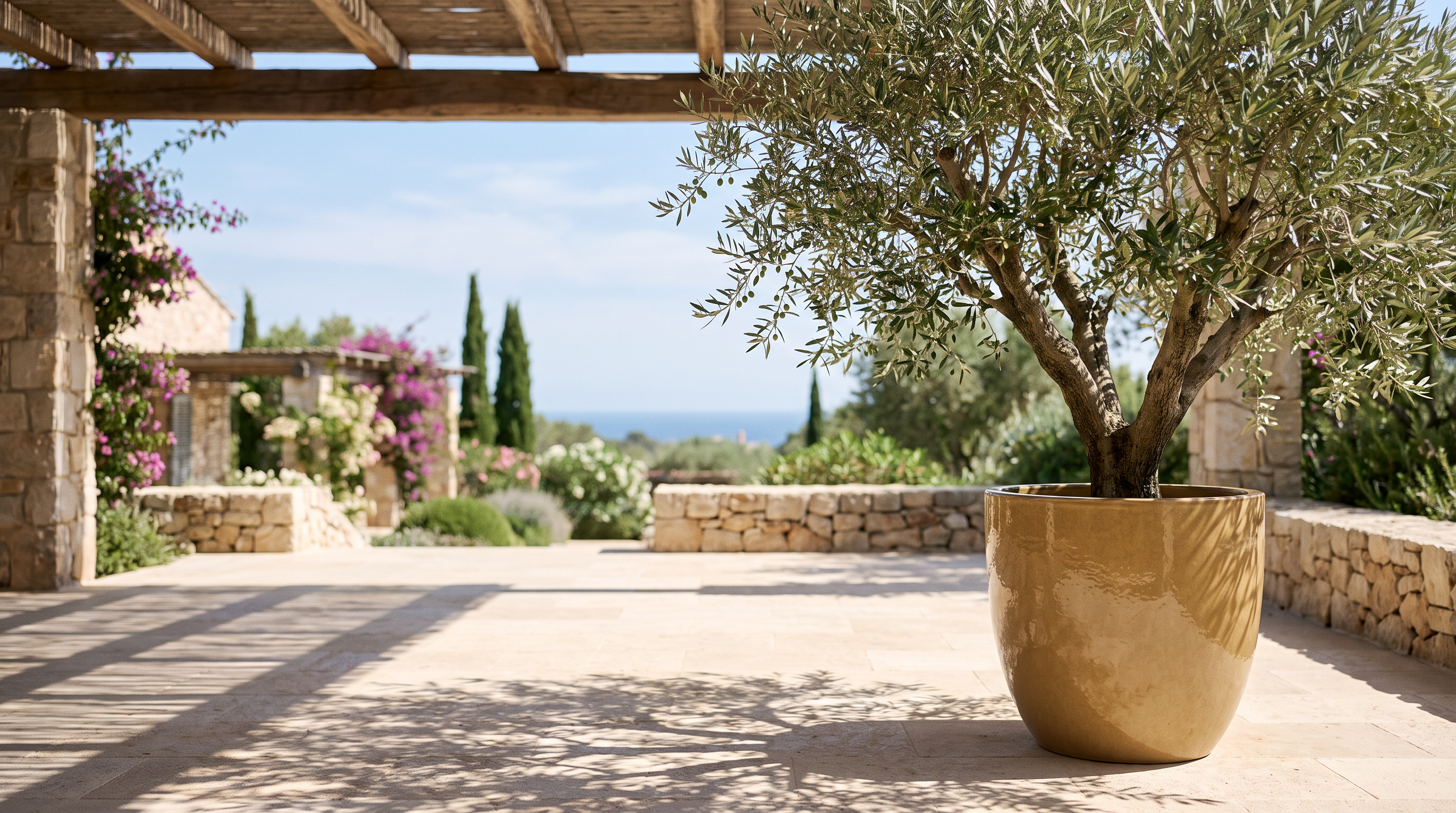
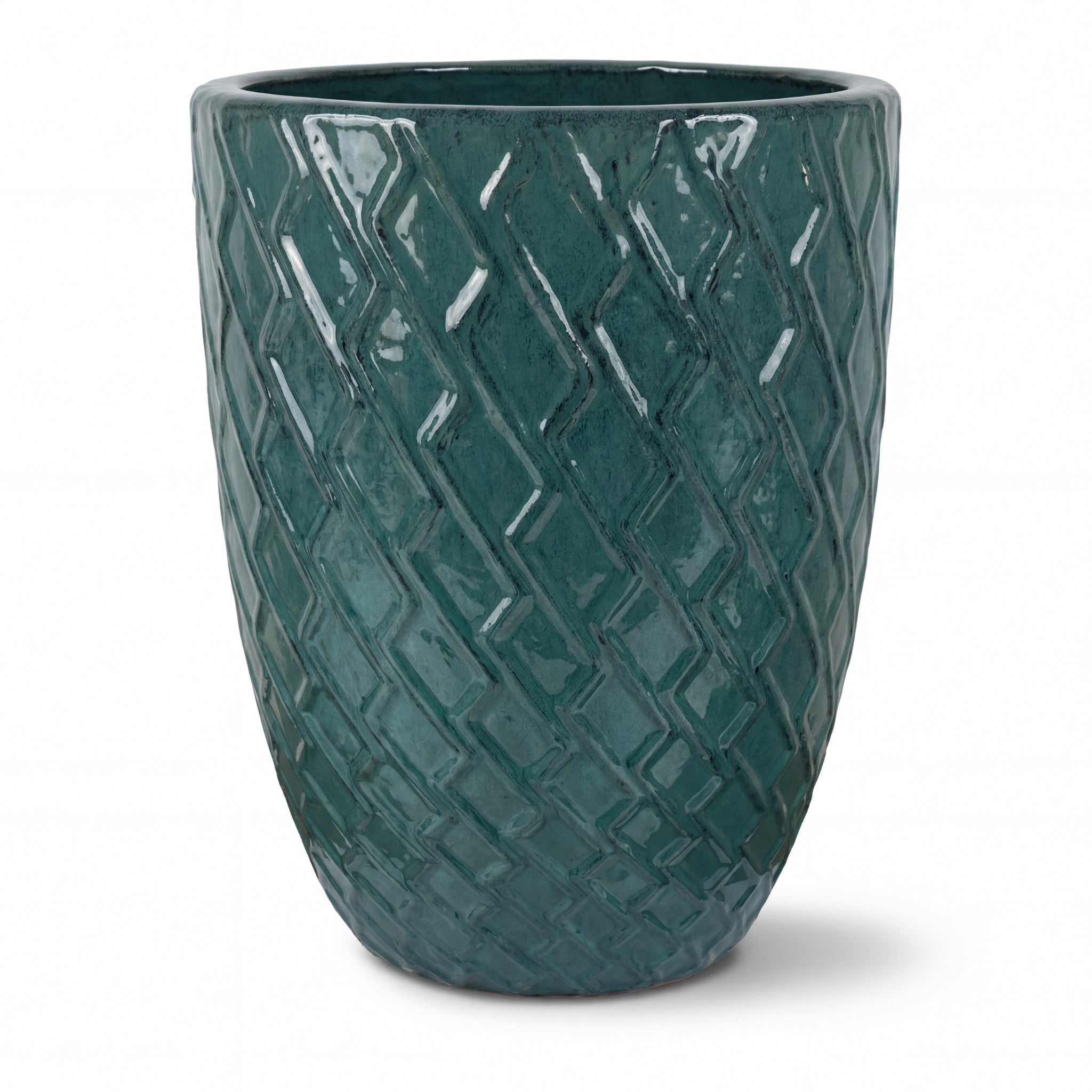
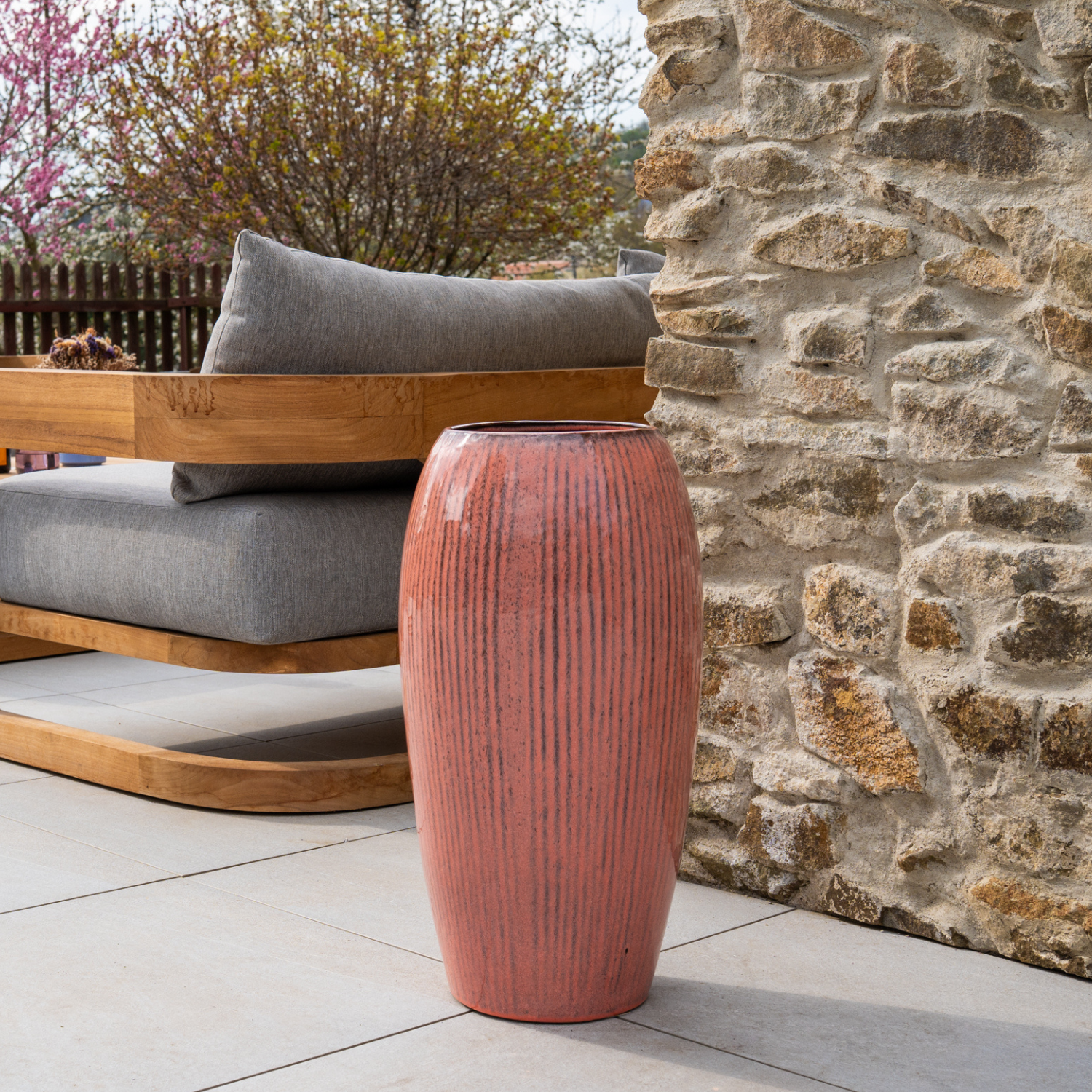
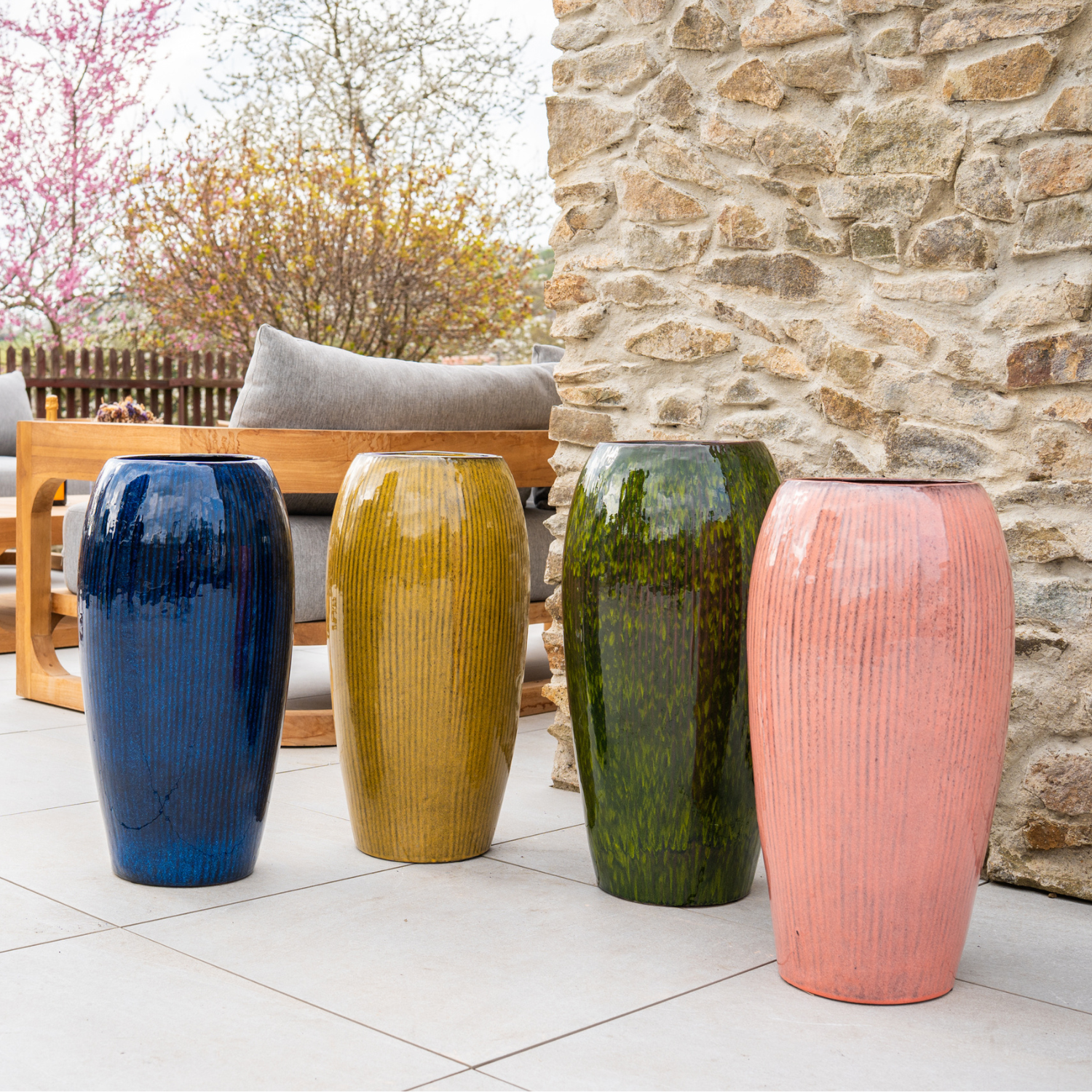
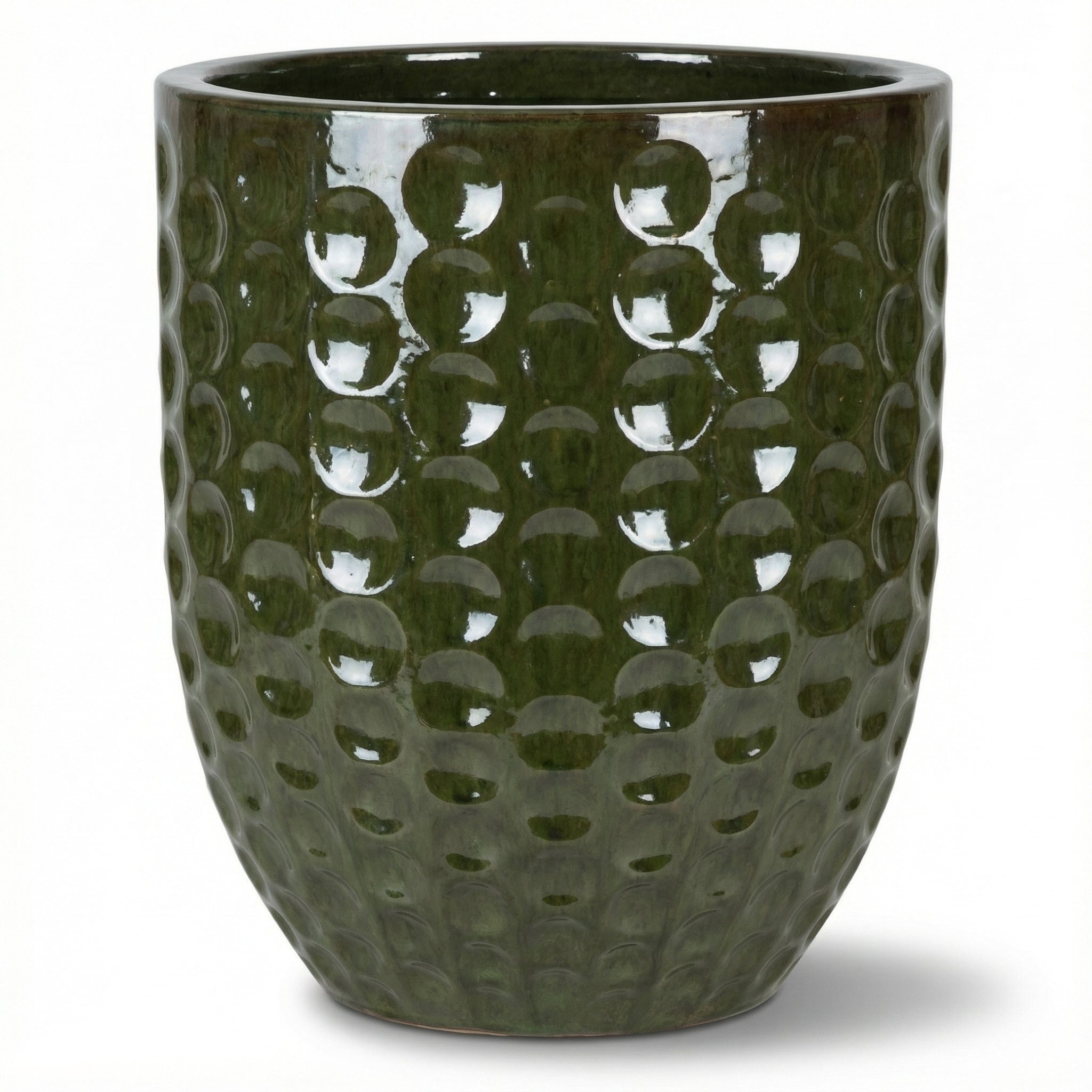
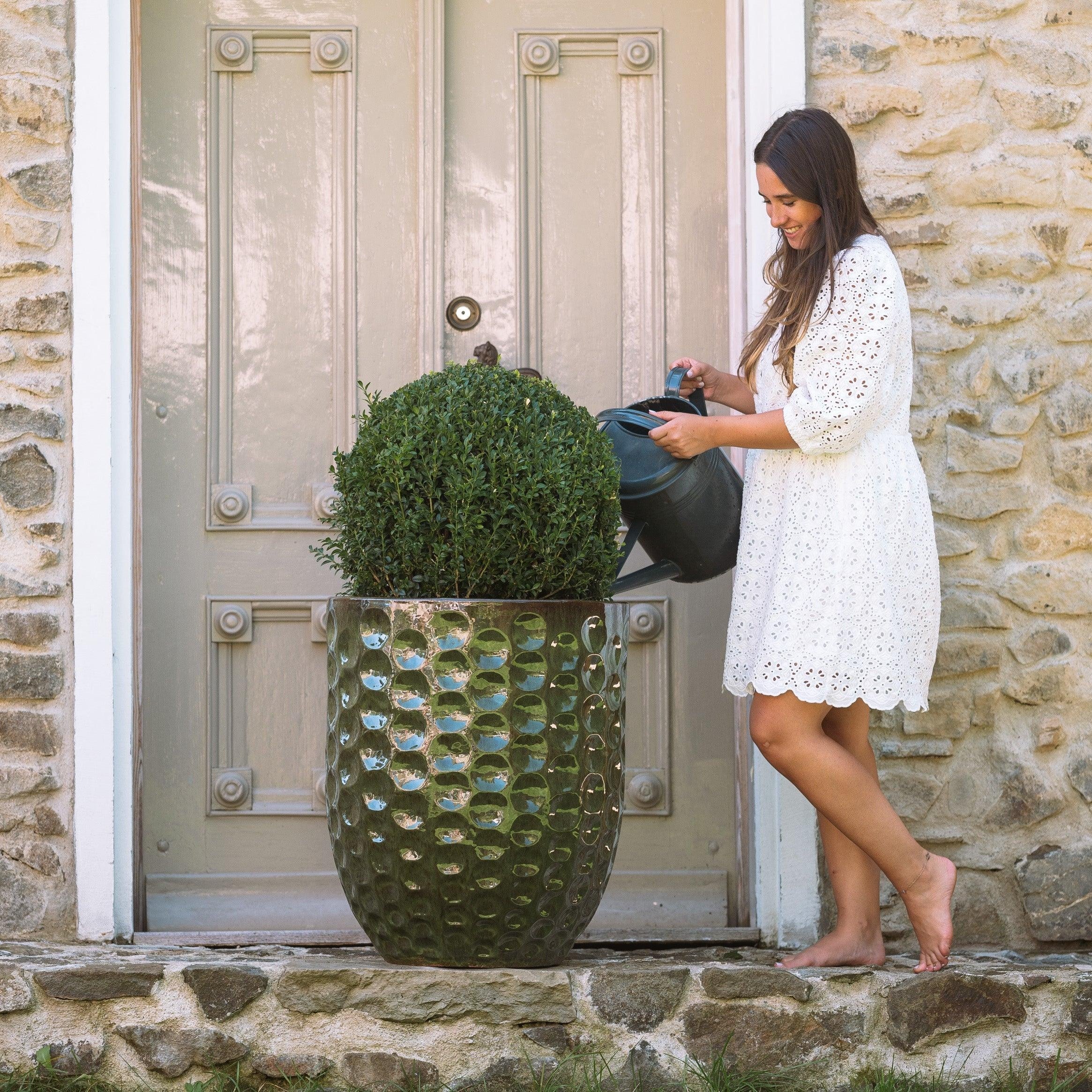
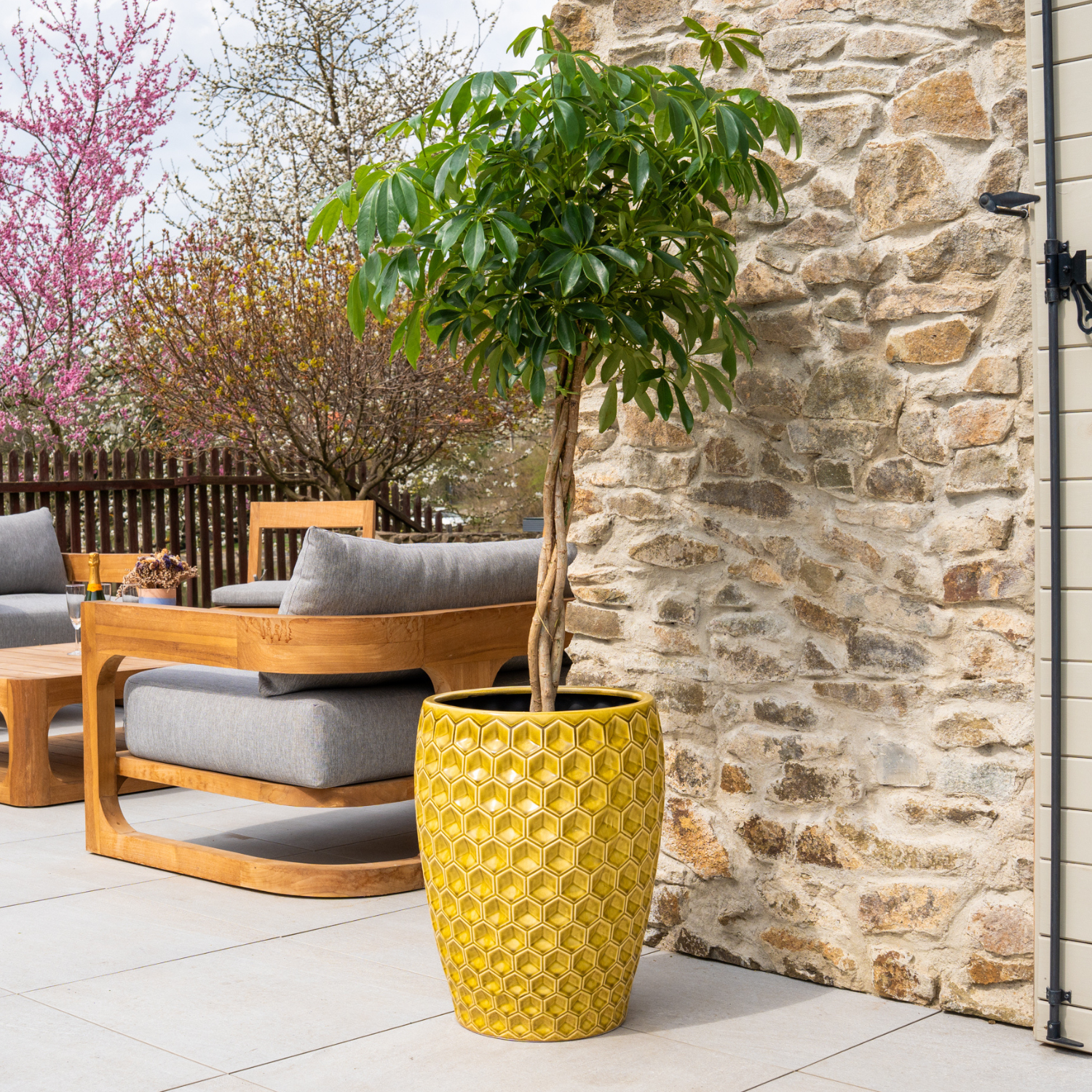
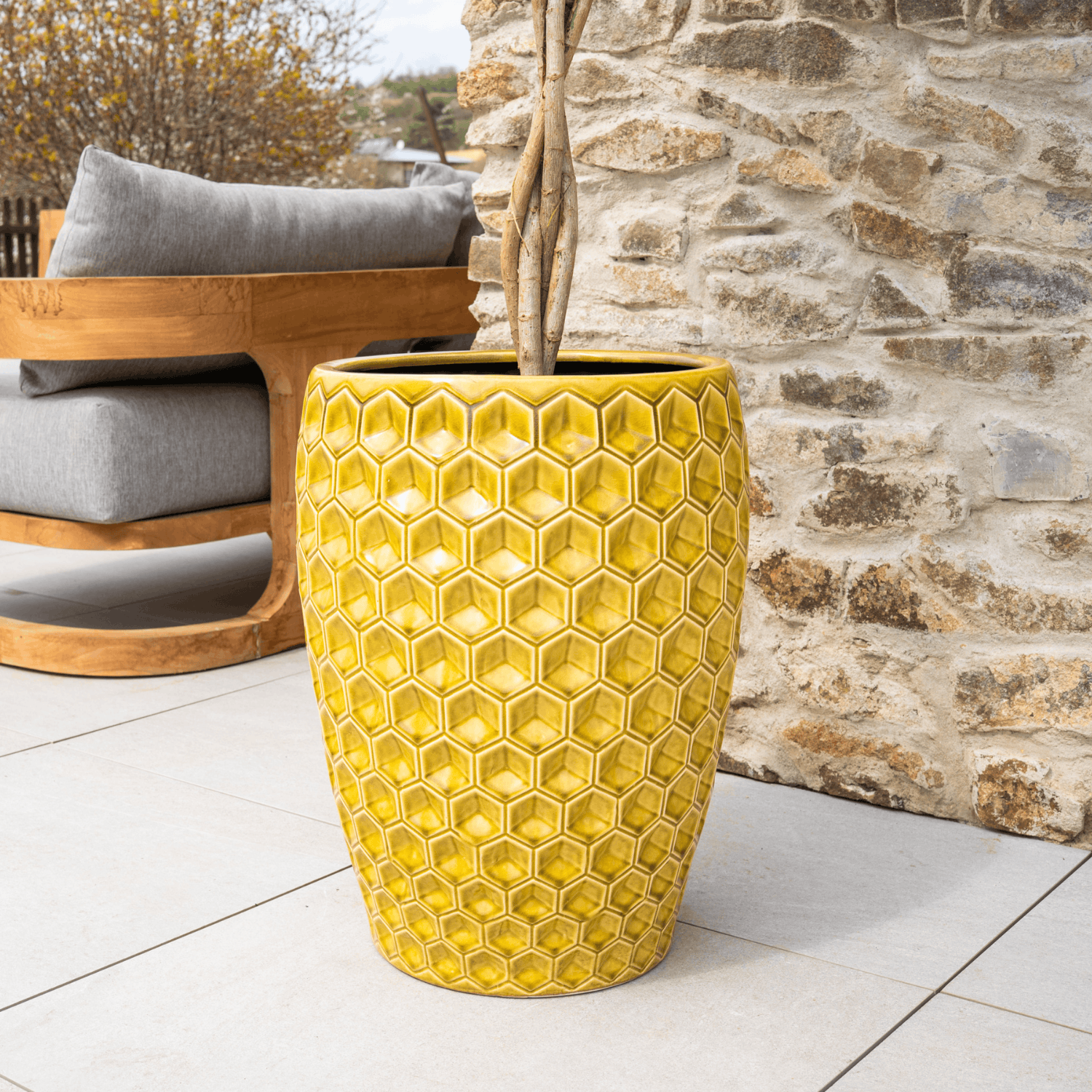
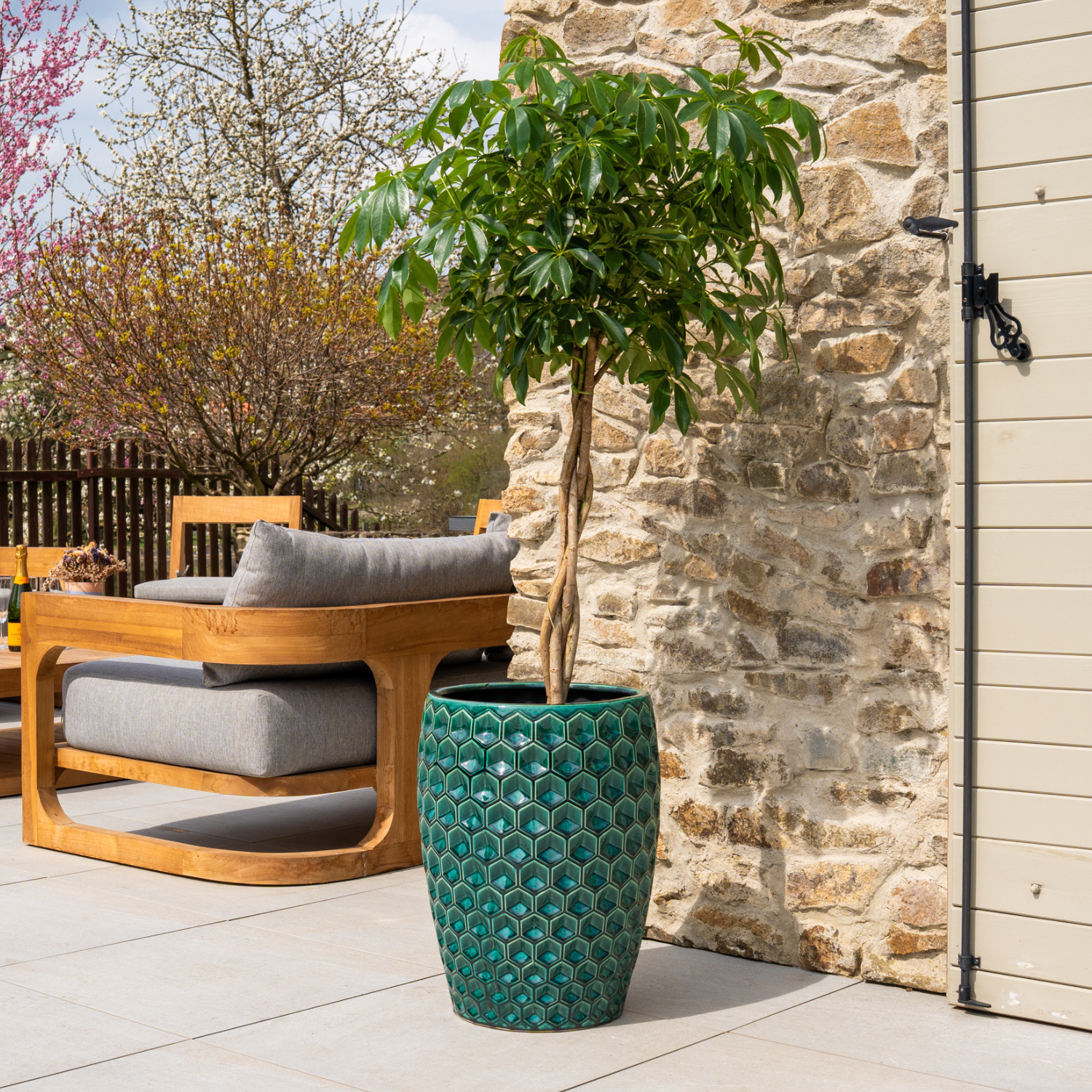
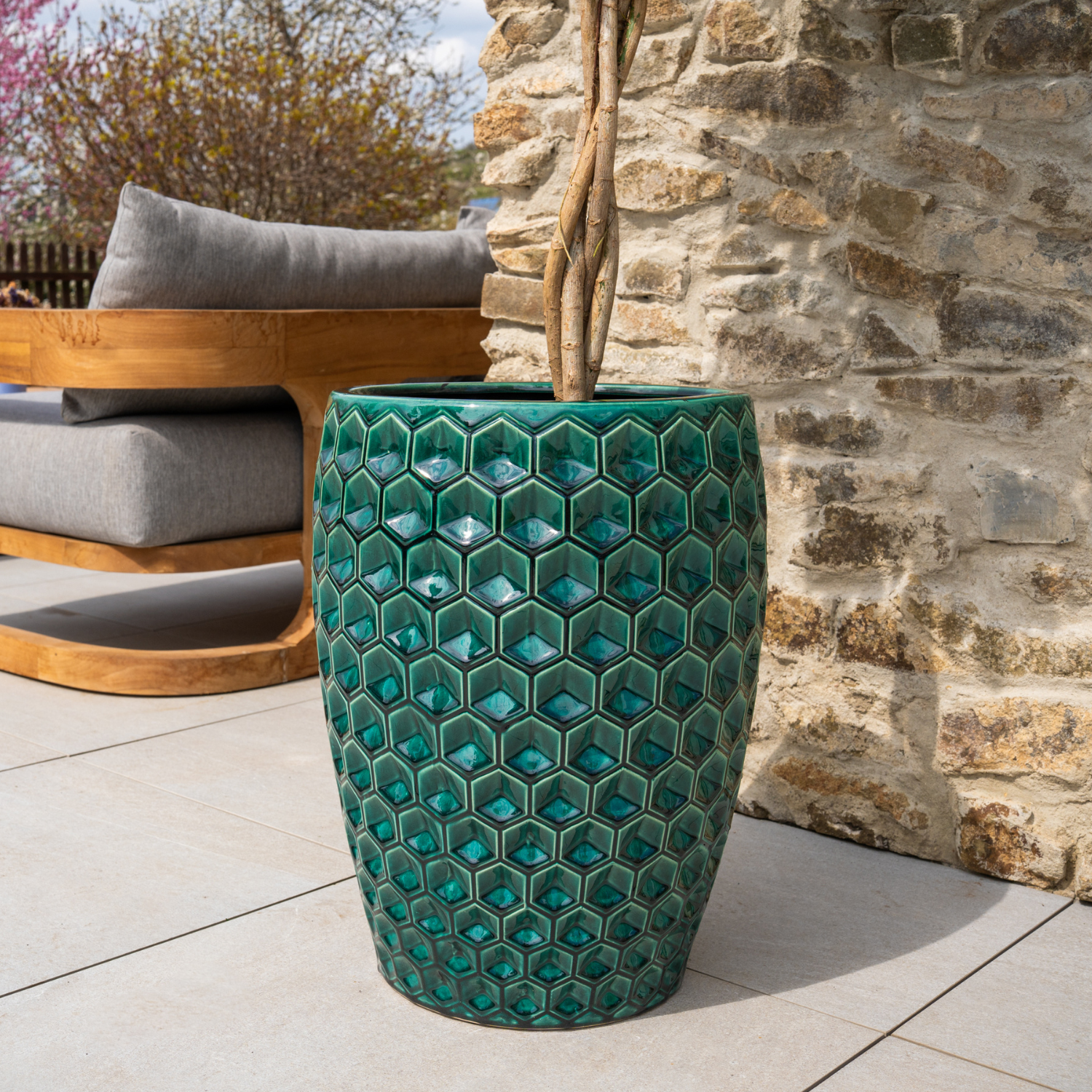
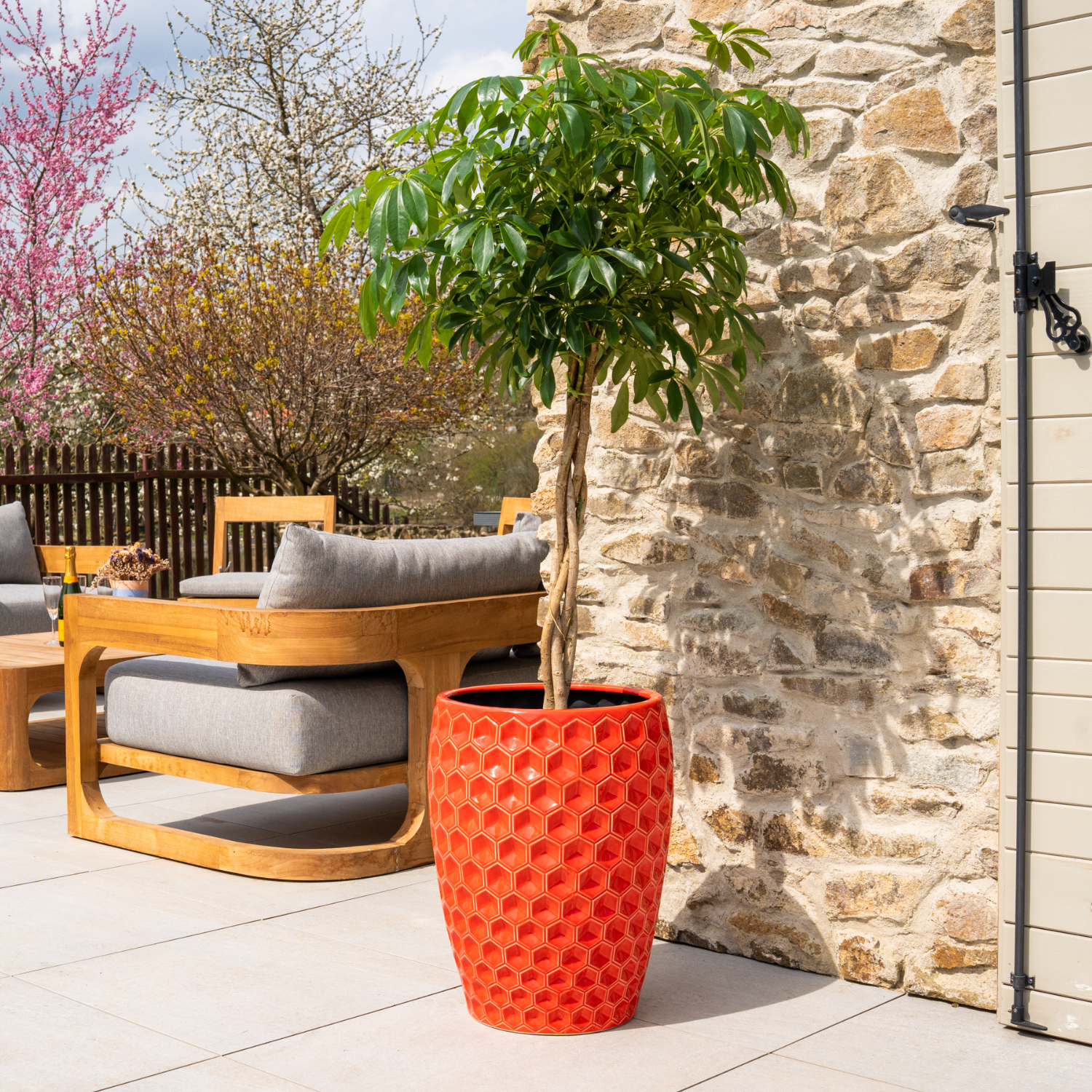
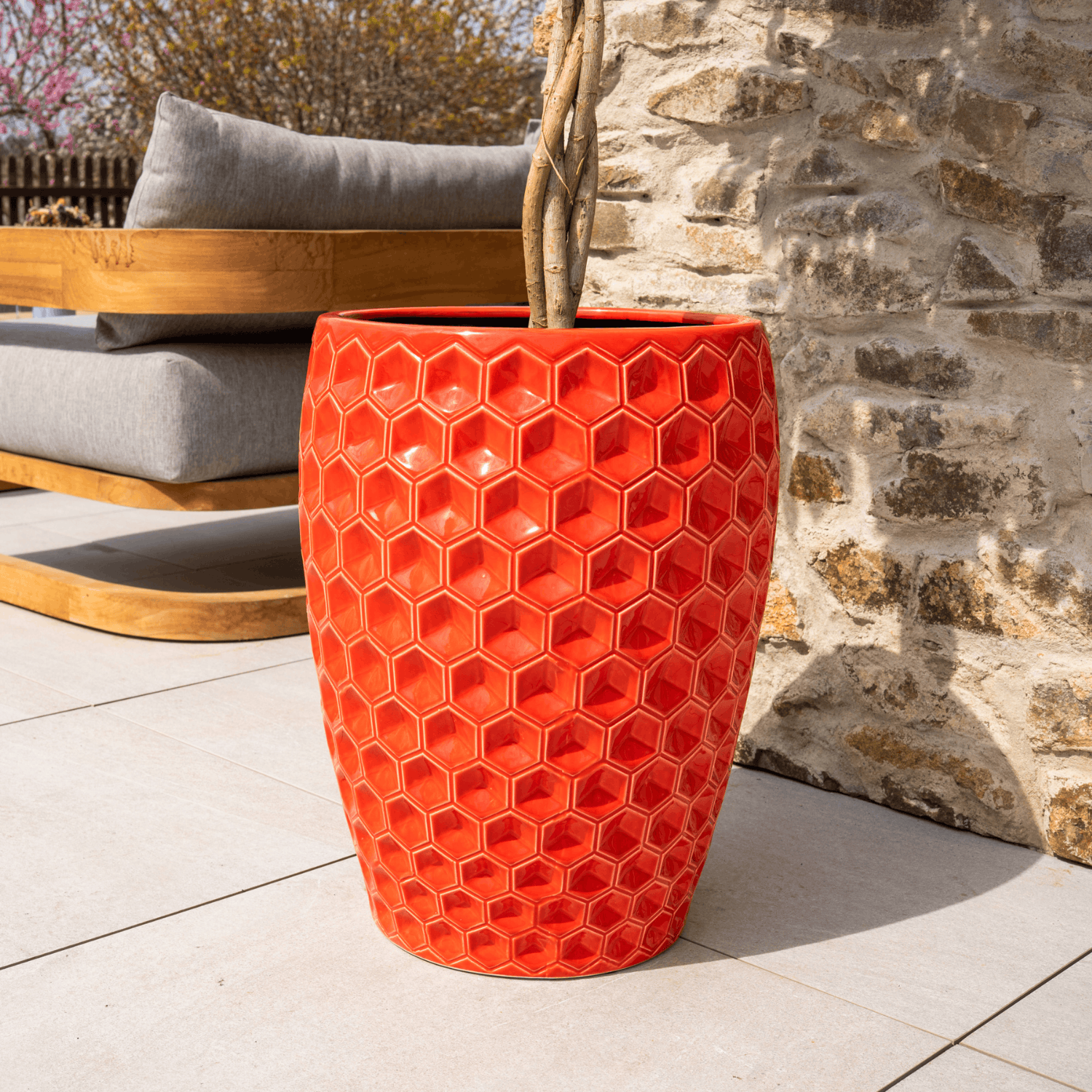
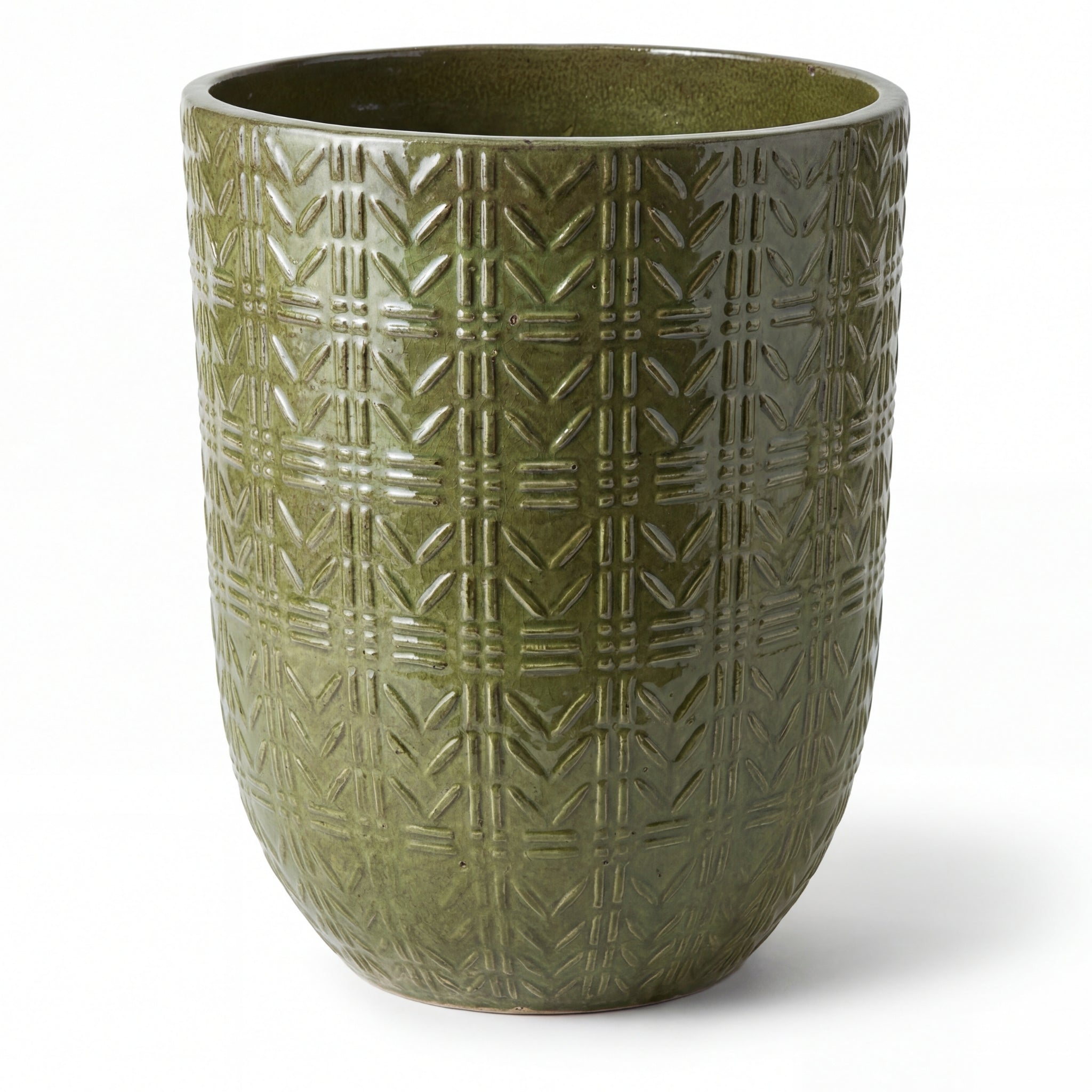
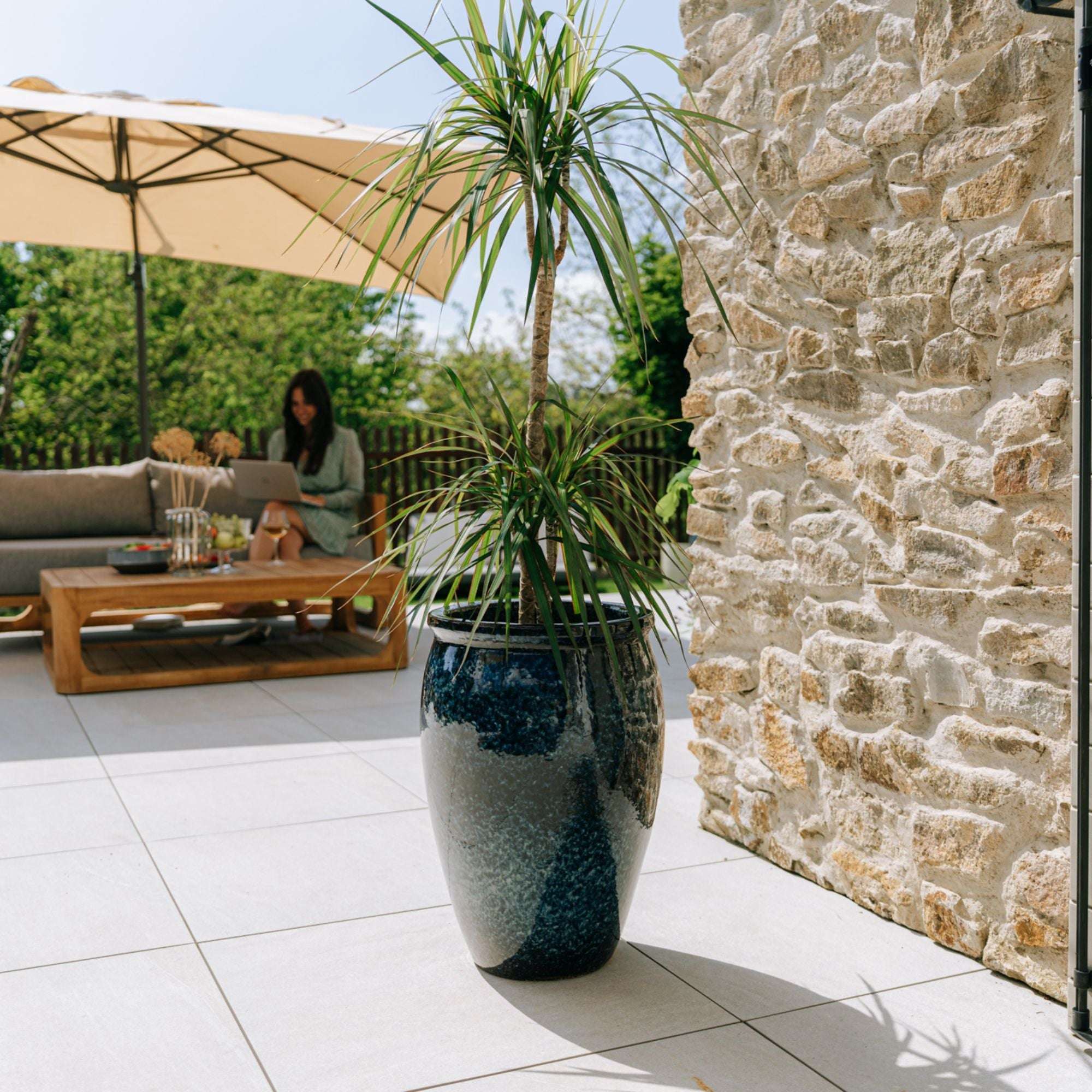
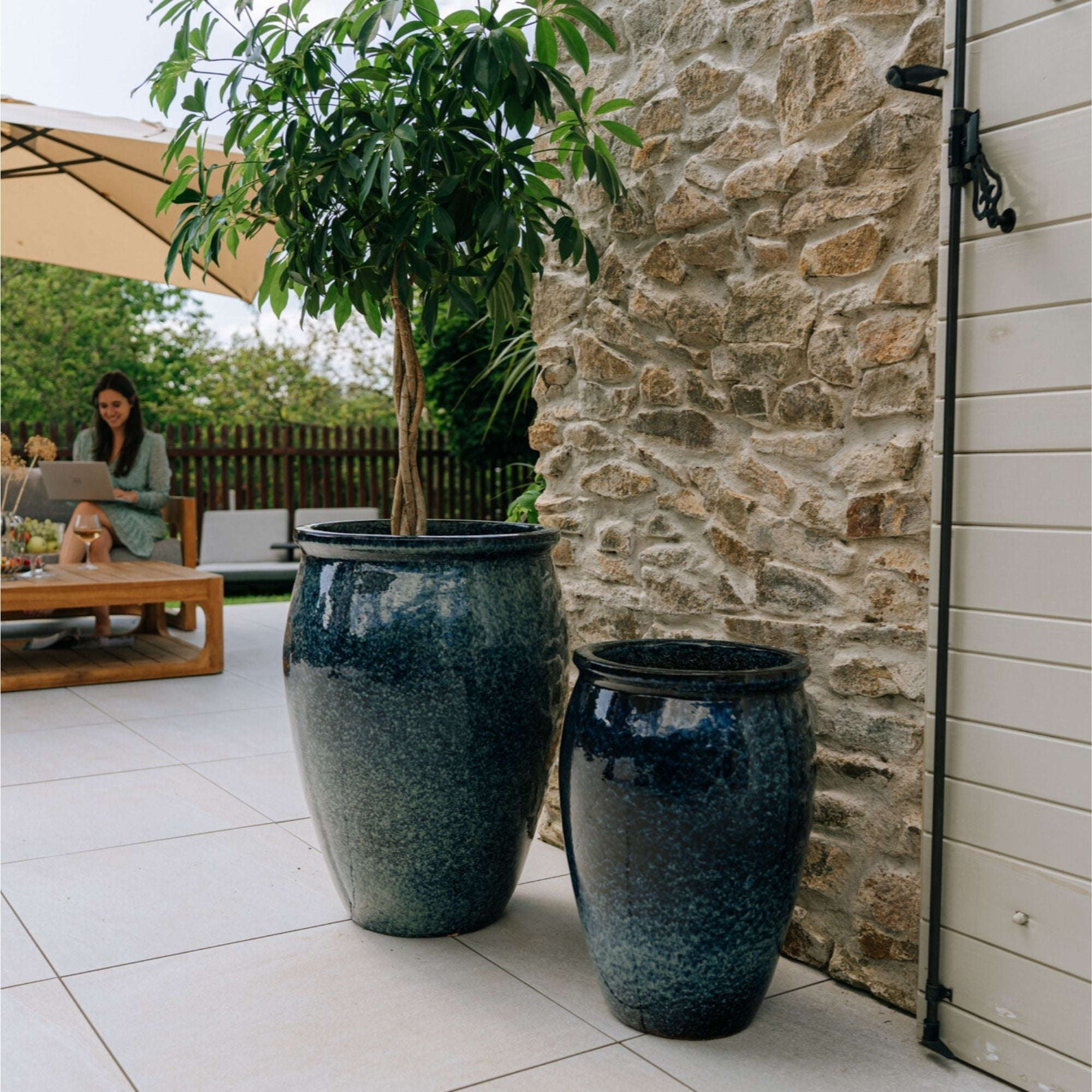
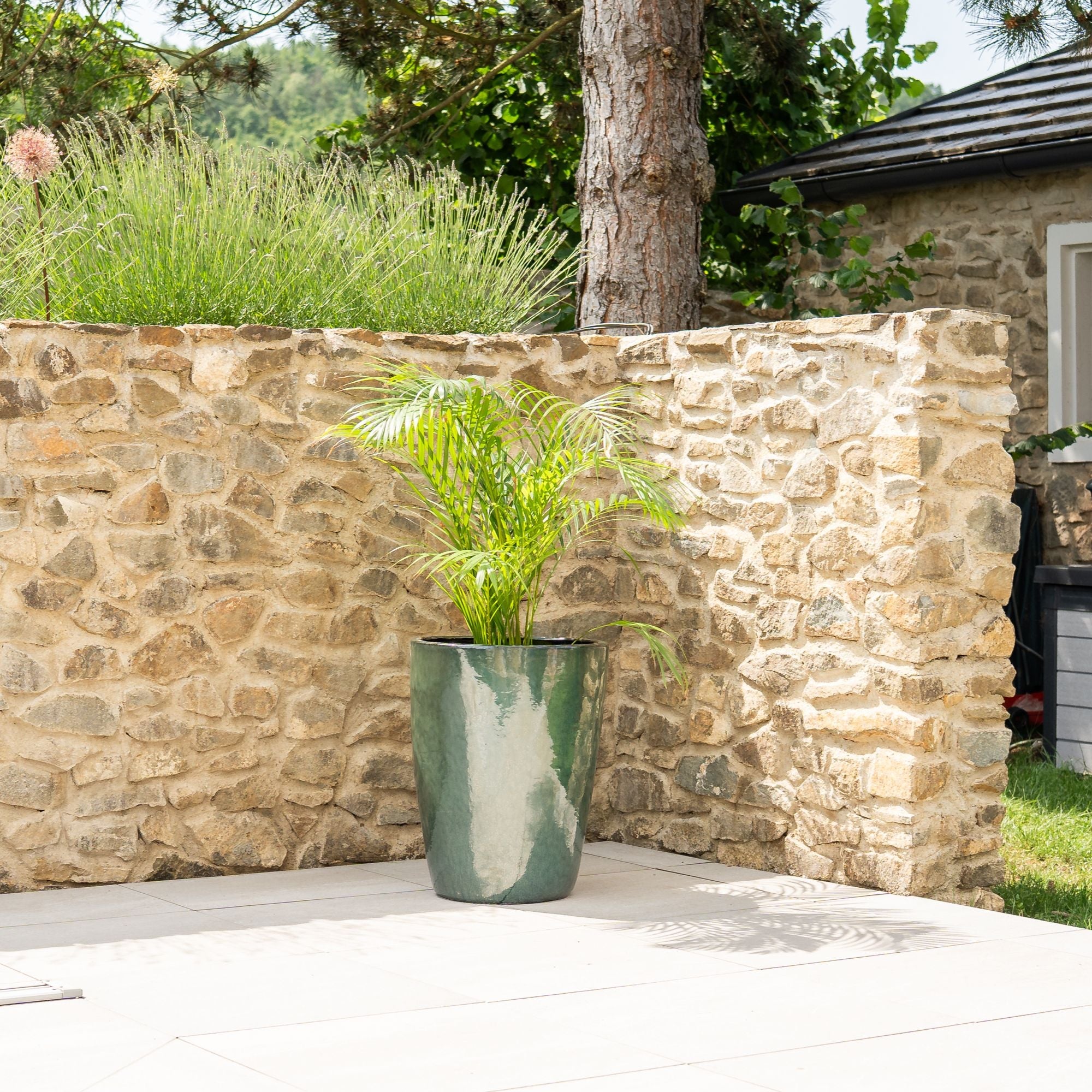
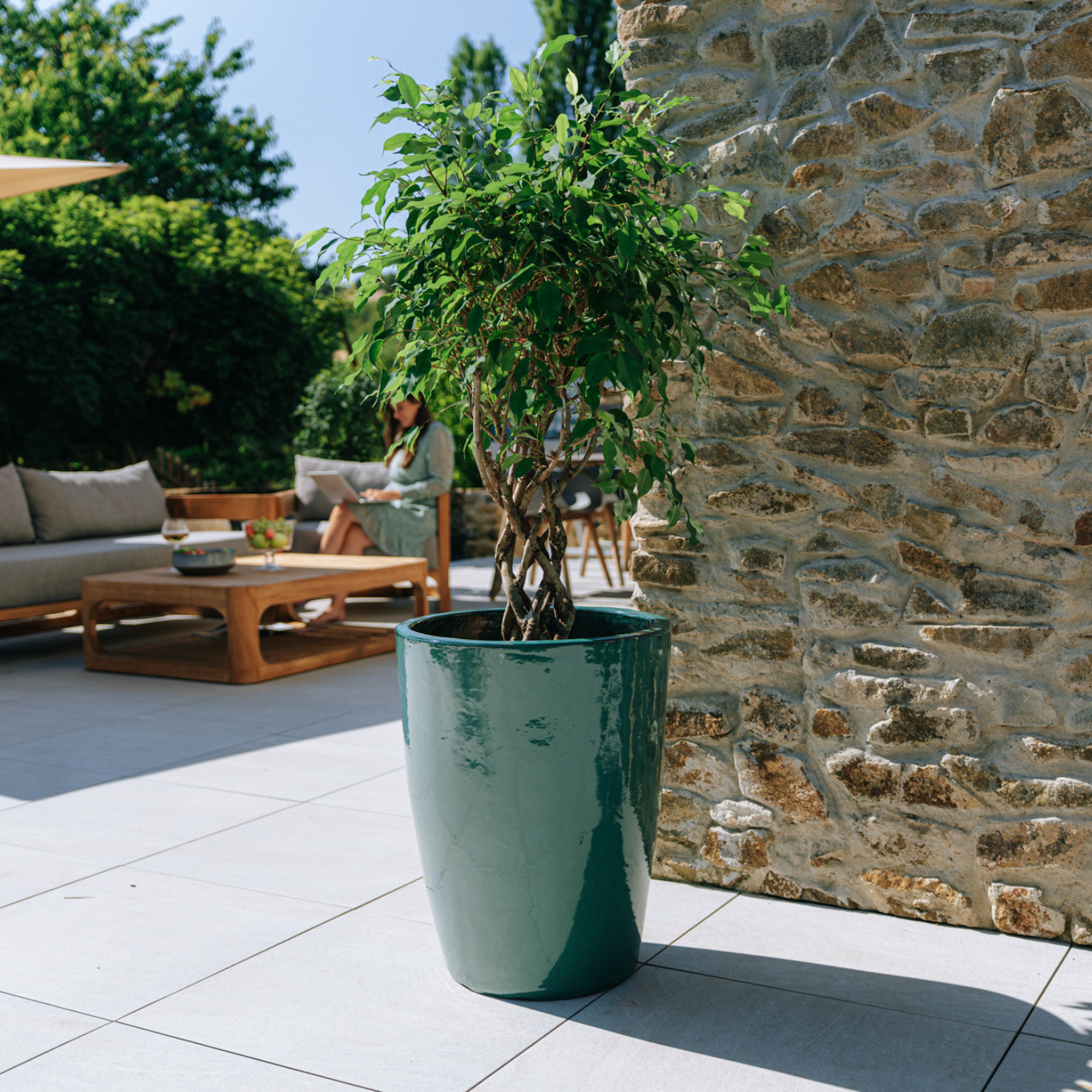
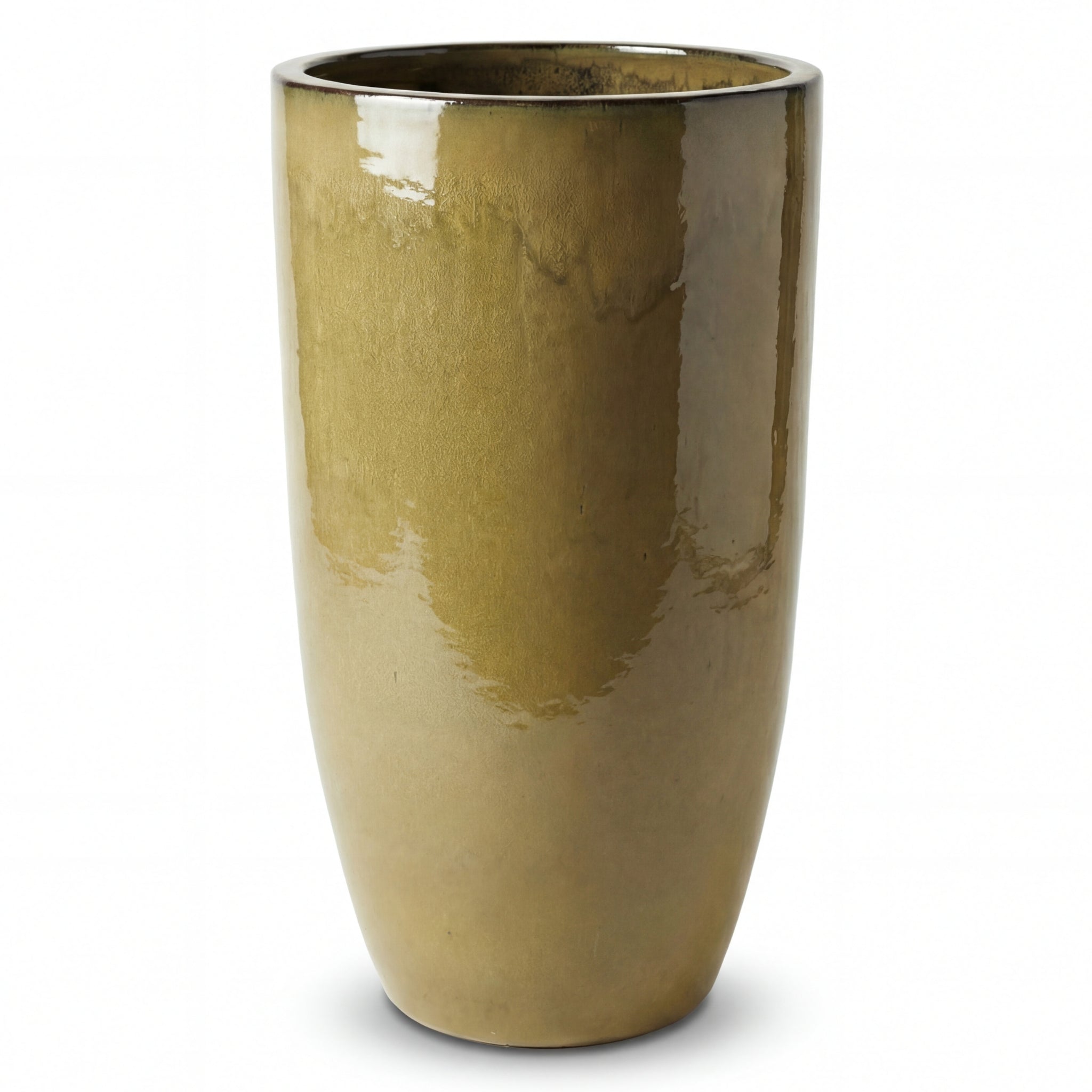
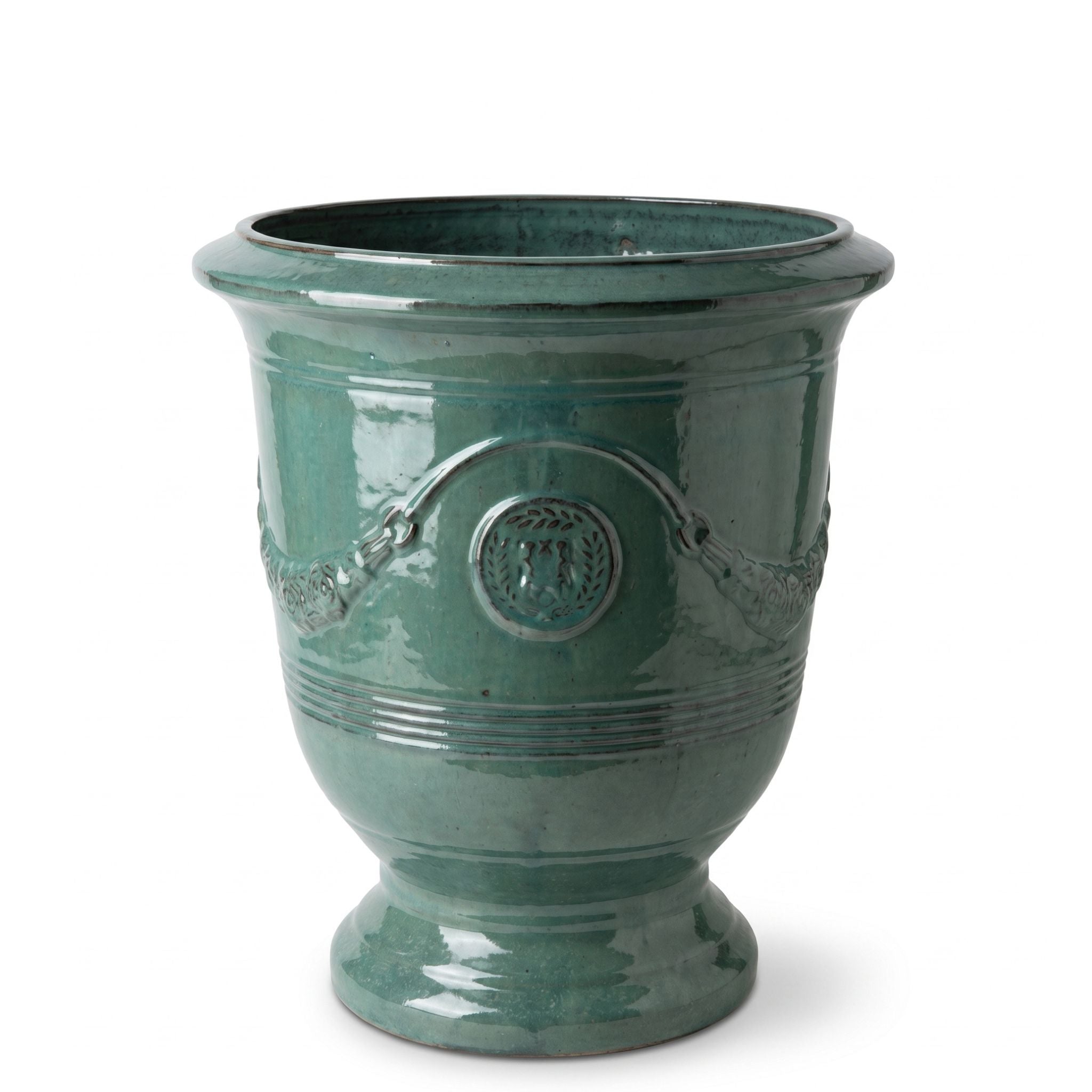
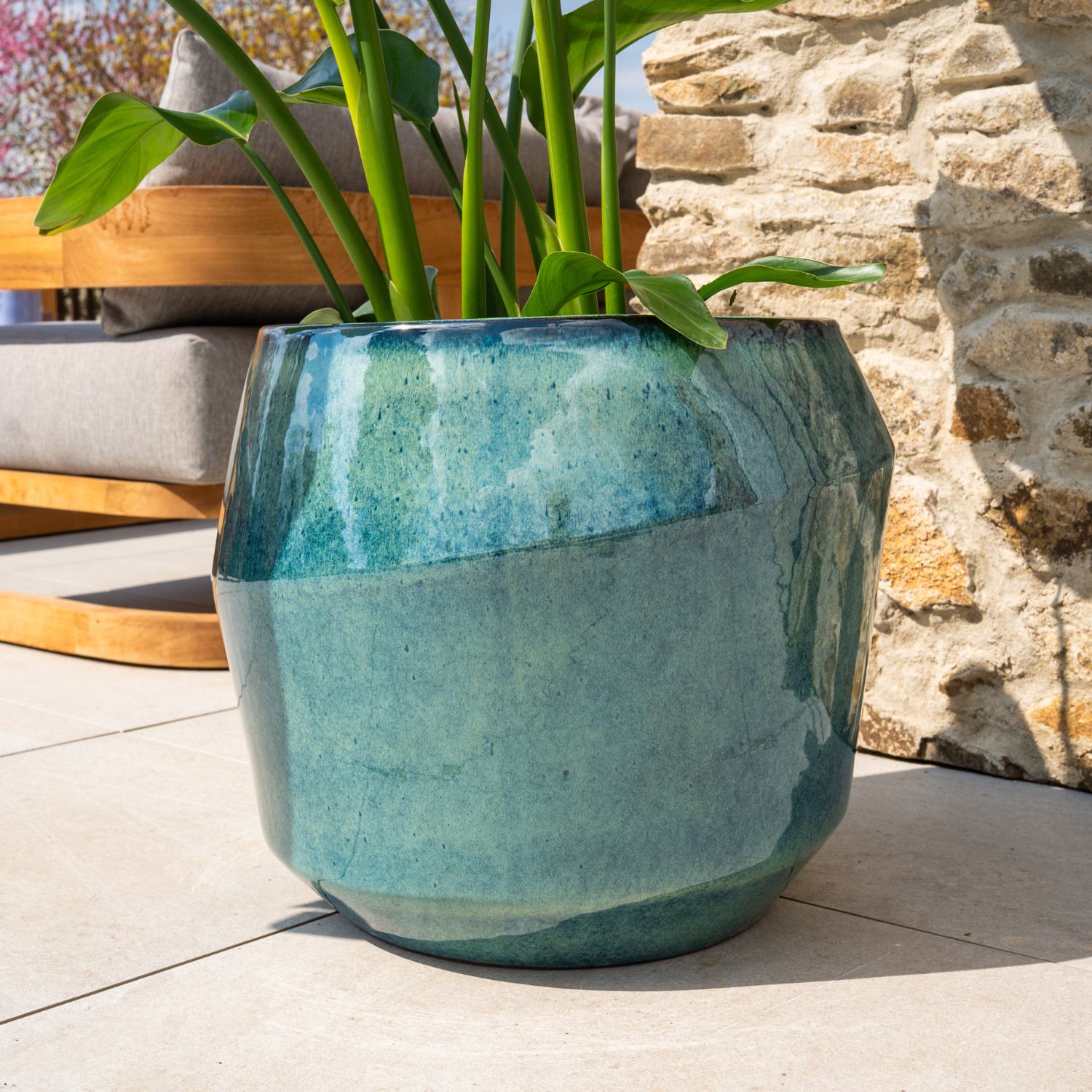
Handcrafted using traditional expertise, glazed terracotta remains the benchmark for gardens seeking a Mediterranean soul.Our Versailles and Paris, pots, available in large sizes and in a palette ranging from deep blue to fir green, including red and white, bring an immediate sculptural presence. Their glossy, frost-resistant glaze captures the light and ages gracefully, never losing its brilliance.
These pieces naturally find their place as centerpieces: on either side of an entrance, in the center of a terrace, or to highlight a pathway.
Where and how to showcase them
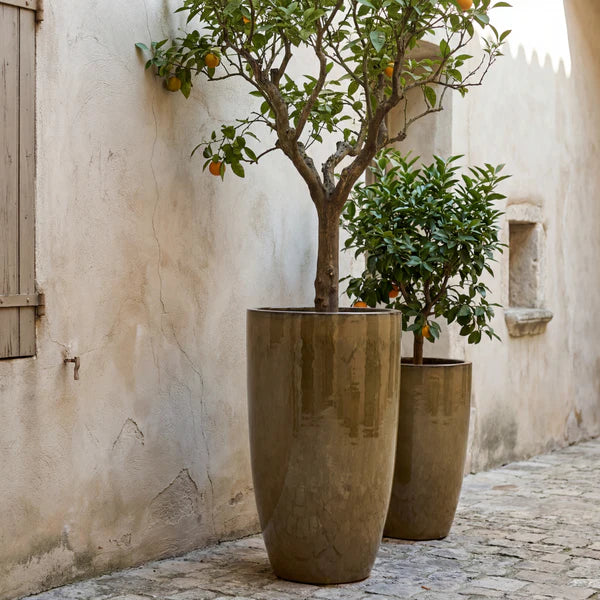
A large Versailles pot planted with an olive tree or a pruned laurel immediately structures a space. Positioned symmetrically or alone near a light-colored wall, it draws the eye and anchors the composition.
Fiber-reinforced concrete: the mineral and contemporary touch
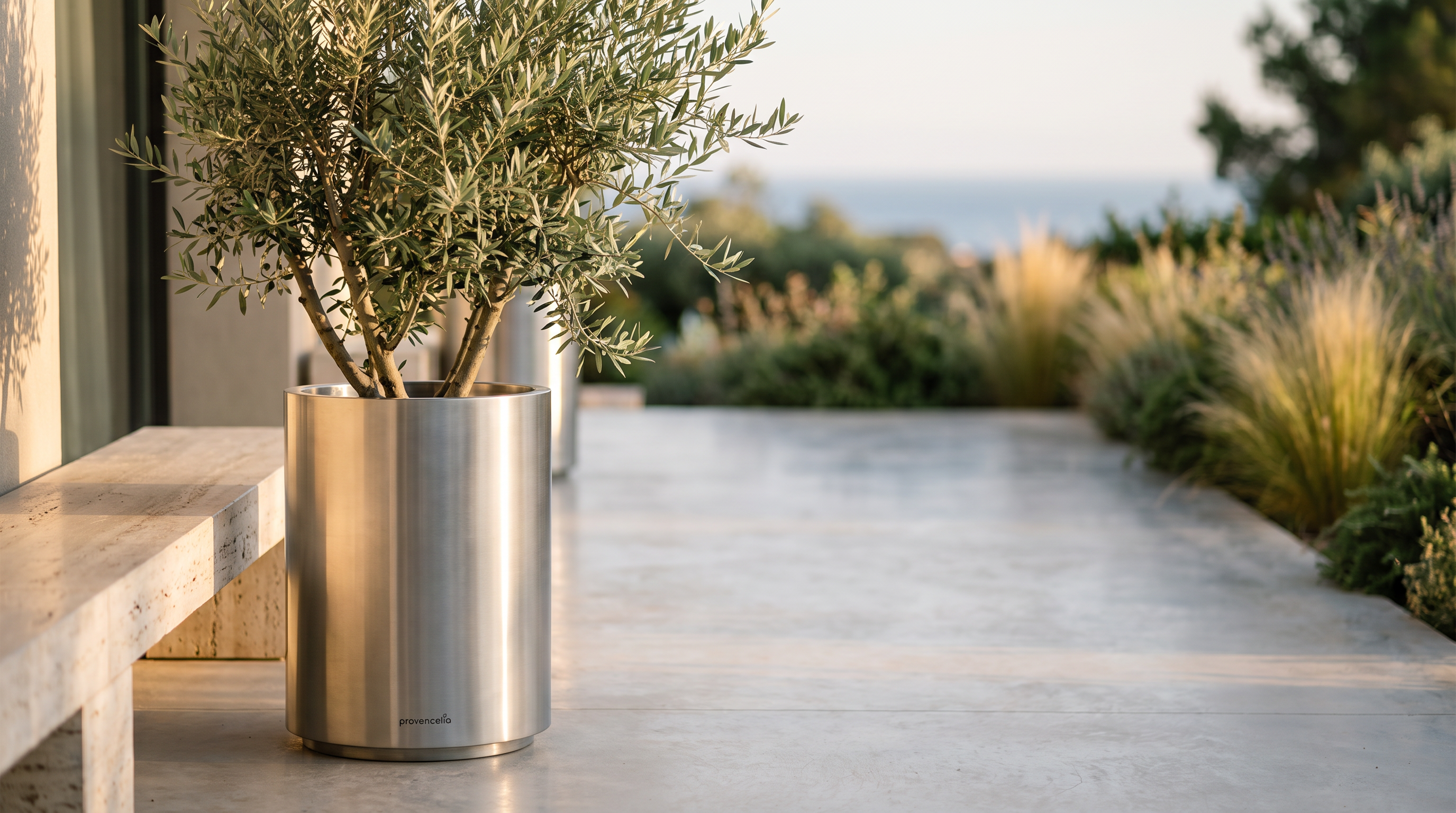
In contrast to the heritage style, fiber-reinforced concrete embodies a raw and refined aesthetic, highly sought after in exteriors with a strong architectural style. Our Essence, Monolith and Opus ranges offer clean lines and neutral shades — beige, light gray, dark gray, matte black — which fit just as well on a minimalist terrace as in a more plant-filled garden, where they serve as a discreet counterpoint.
Lighter than solid concrete but just as robust, fiber-reinforced concrete withstands the elements and requires virtually no maintenance: a simple wipe with a sponge is enough to restore its original appearance.
The art of controlled contrast
The key to a successful composition is not to randomly oppose materials, but to make them interact.Some simple principles:
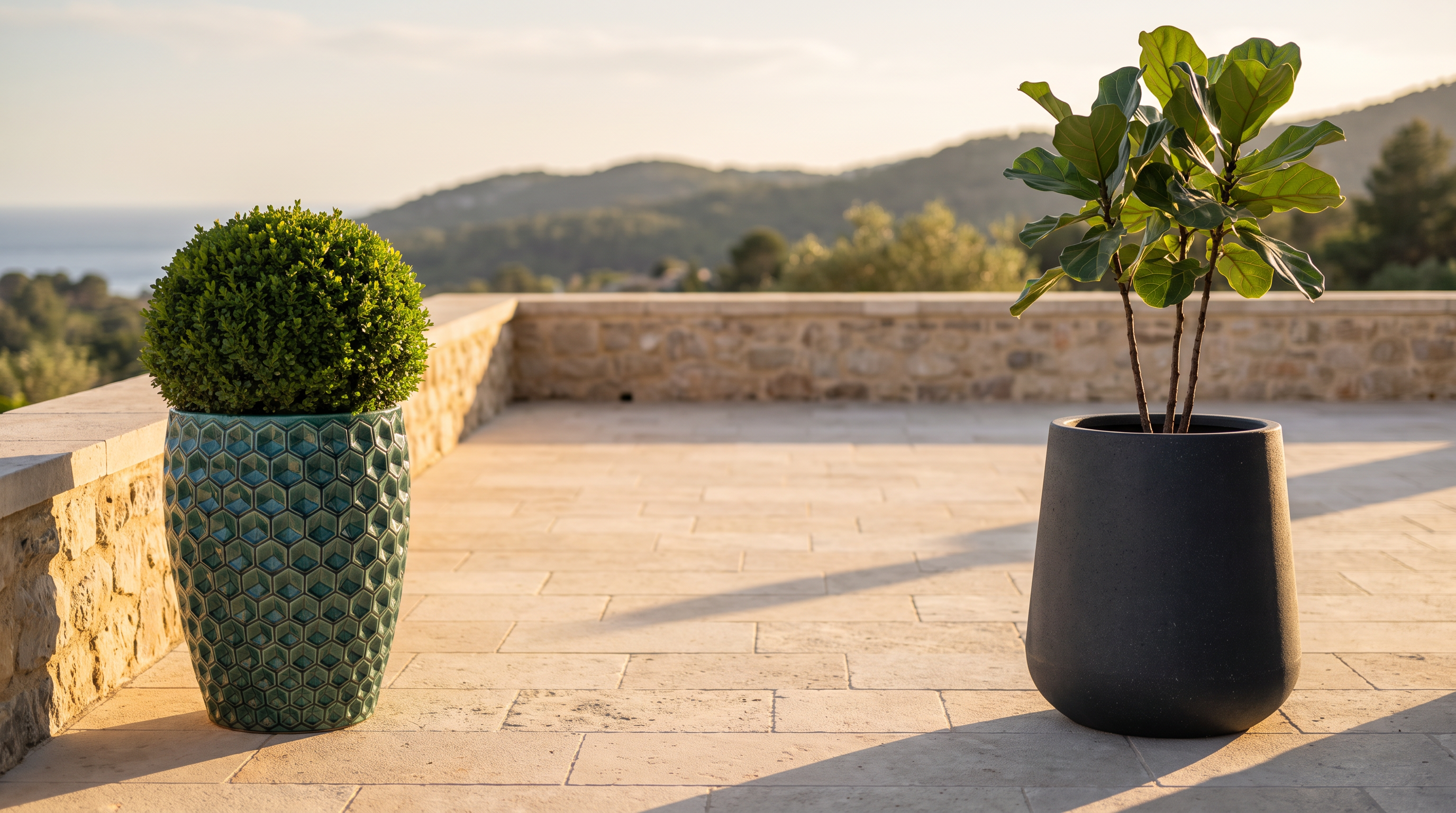
A linking shade. Choosing a terracotta pot and a fiber-reinforced concrete pot that share a similar shade (for example, pine green and dark gray) creates visual continuity despite the difference in material.
A hierarchy of sizes. A large terracotta pot as the centerpiece, surrounded by smaller fiber-reinforced concrete pots as companions, avoids competition between the two materials.
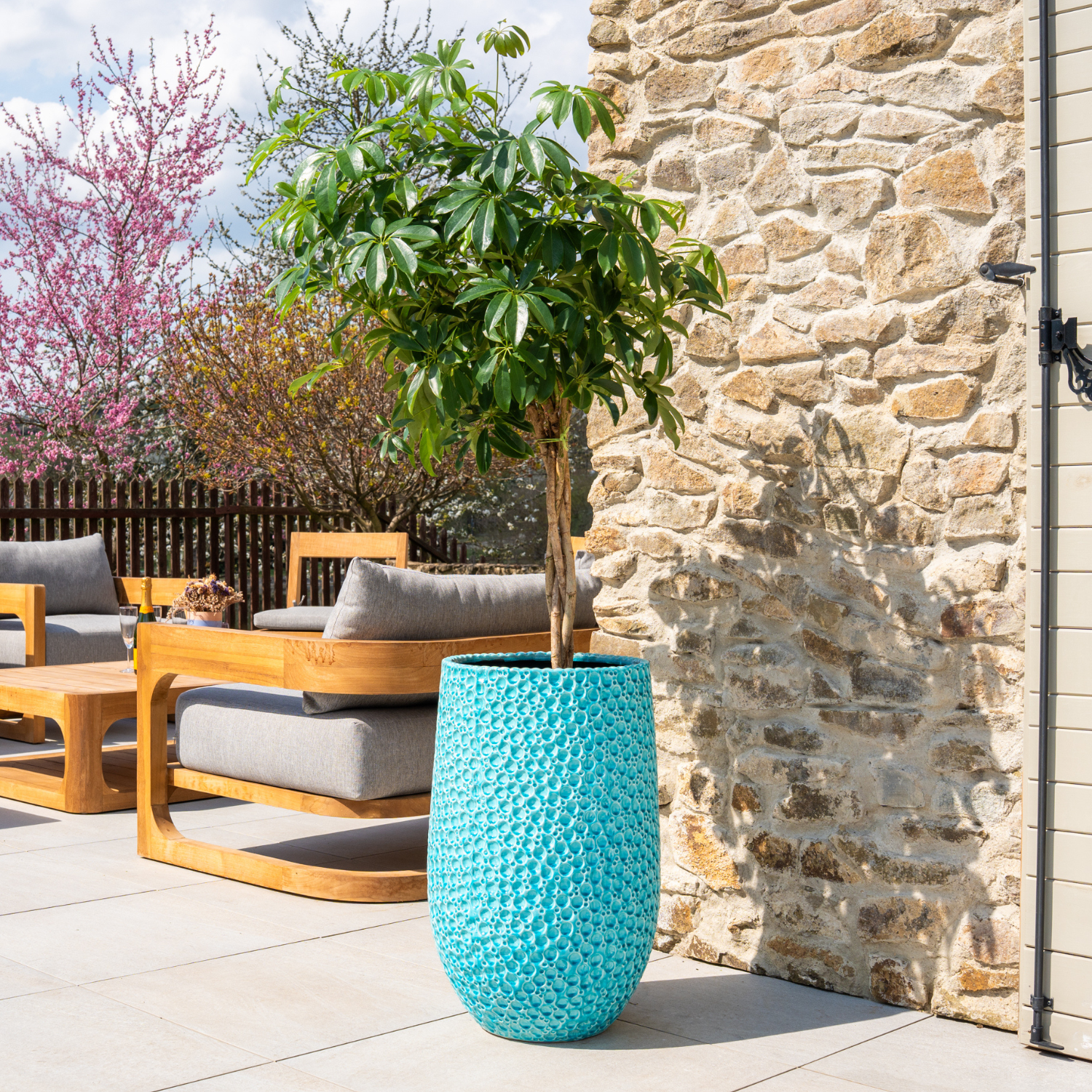
A distribution of roles. Reserve terracotta for structural plantings (olive tree, boxwood, laurel) and fiber-reinforced concrete for more graphic arrangements (grasses, succulents, plants with architectural foliage such as ficus).
Two materials, one cohesive garden
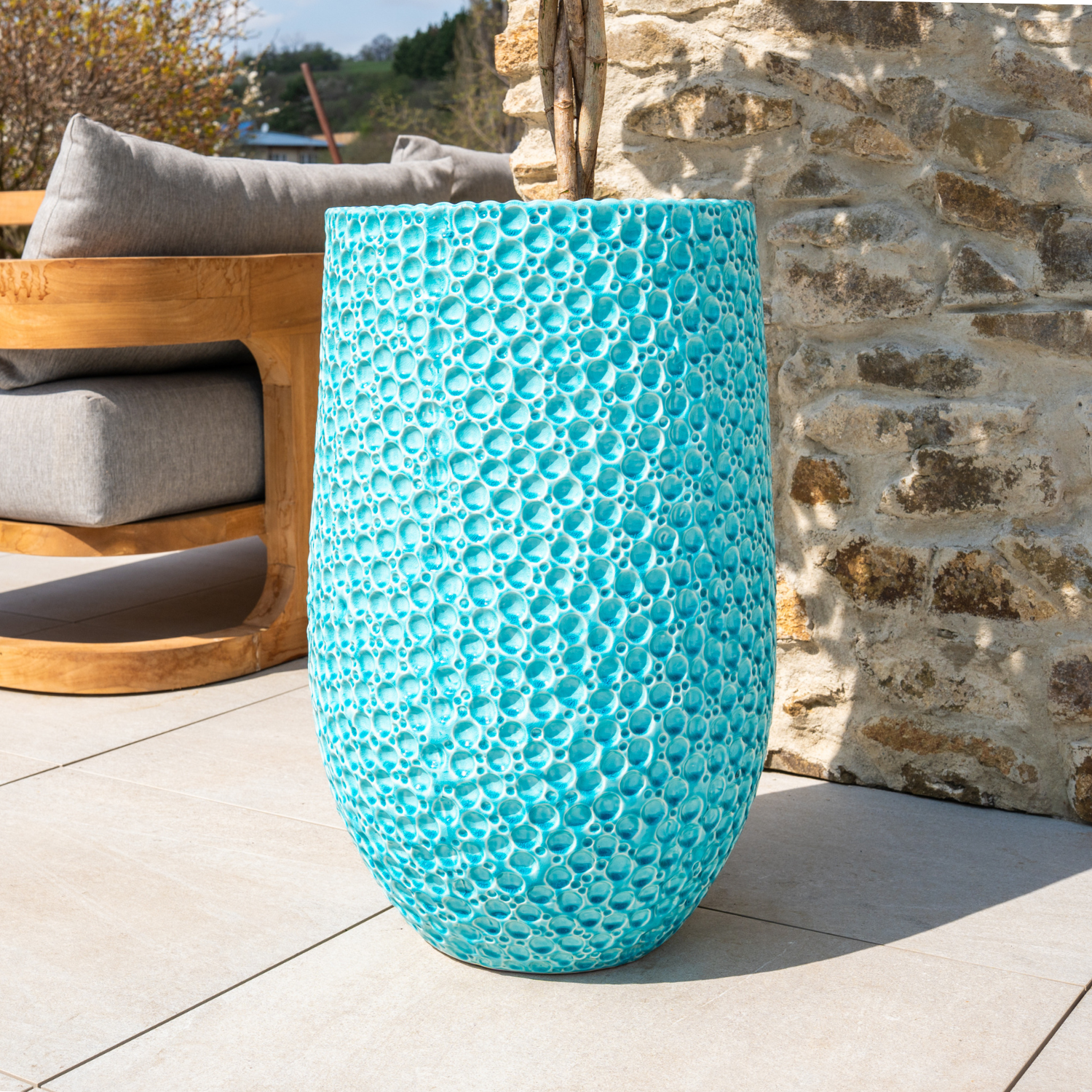
On a large terrace, for example, you can place a Paris blue pot near the facade, surrounded by two Monolith dark gray pots arranged opposite each other.The result: a scene that conveys both Provençal authenticity and a decidedly contemporary sensibility. On a smaller balcony, a single duo—a medium-sized Versailles pot and an Opus cachepot—is already enough to establish this dialogue of materials.
This approach adapts to all scales: villa garden, urban terrace, hotel or restaurant entrance. The key is to maintain color consistency and allow each piece to breathe, rather than multiplying materials without logic.
Maintenance: two materials, two simple routines
Glazed terracotta requires minimal maintenance: occasional cleaning with clear water and checking the drainage are sufficient, as its glaze protects it from frost and moisture. Fiber-reinforced concrete, on the other hand, withstands climatic variations very well and is just as easy to clean.In both cases, adding a layer of clay pebbles at the bottom of the pot before planting ensures optimal drainage and extends the lifespan of both the container and the plants it houses.
Create your own duo
Whether you are starting with an existing terracotta pot or creating a new arrangement from scratch, the key is to design your outdoor space as a cohesive whole rather than a collection of isolated pieces. Discover our glazed terracotta and fiber-reinforced concrete collections, designed to complement each other in both color and format, allowing you to create without risk of error.
Want to give your outdoor space a signature that is both warm and contemporary? Discover our Versailles, Paris, Essence, and Monolith ranges on provencelia.com, and let the interplay of materials transform your garden or terrace.