

Which saucer should you choose for a planter: size and material?
The saucer is an easy detail to overlook. Yet it determines whether your terrace, wooden flooring or furniture withstands the first watering. In this guide, we show you how to choose the right size, the right material and a glaze to match your planter.
Why a saucer is not an optional accessory
After watering, excess water has to drain somewhere. If the planter sits directly on paving, the ground or a wooden board, the water ends up where you do not want it: stains on the ground, limescale marks on the terrace, damaged wooden flooring or rust marks on metal.
The saucer solves the problem elegantly: it collects draining water, which the plant can take up again or which you can easily empty. It also protects the planter: water running down the side leaves difficult-to-remove limescale marks on ceramic.
The three functions of a saucer
- Protecting floors and furniture: no stains, limescale or damaged wooden flooring
- Acting as a reservoir: water remains available for 1 to 2 hours after watering, and the plant takes up what it needs
- Aesthetics and stability: a ceramic saucer brings the whole look together, while its weight stabilises a tall planter
What size to choose: 2 to 4 cm larger
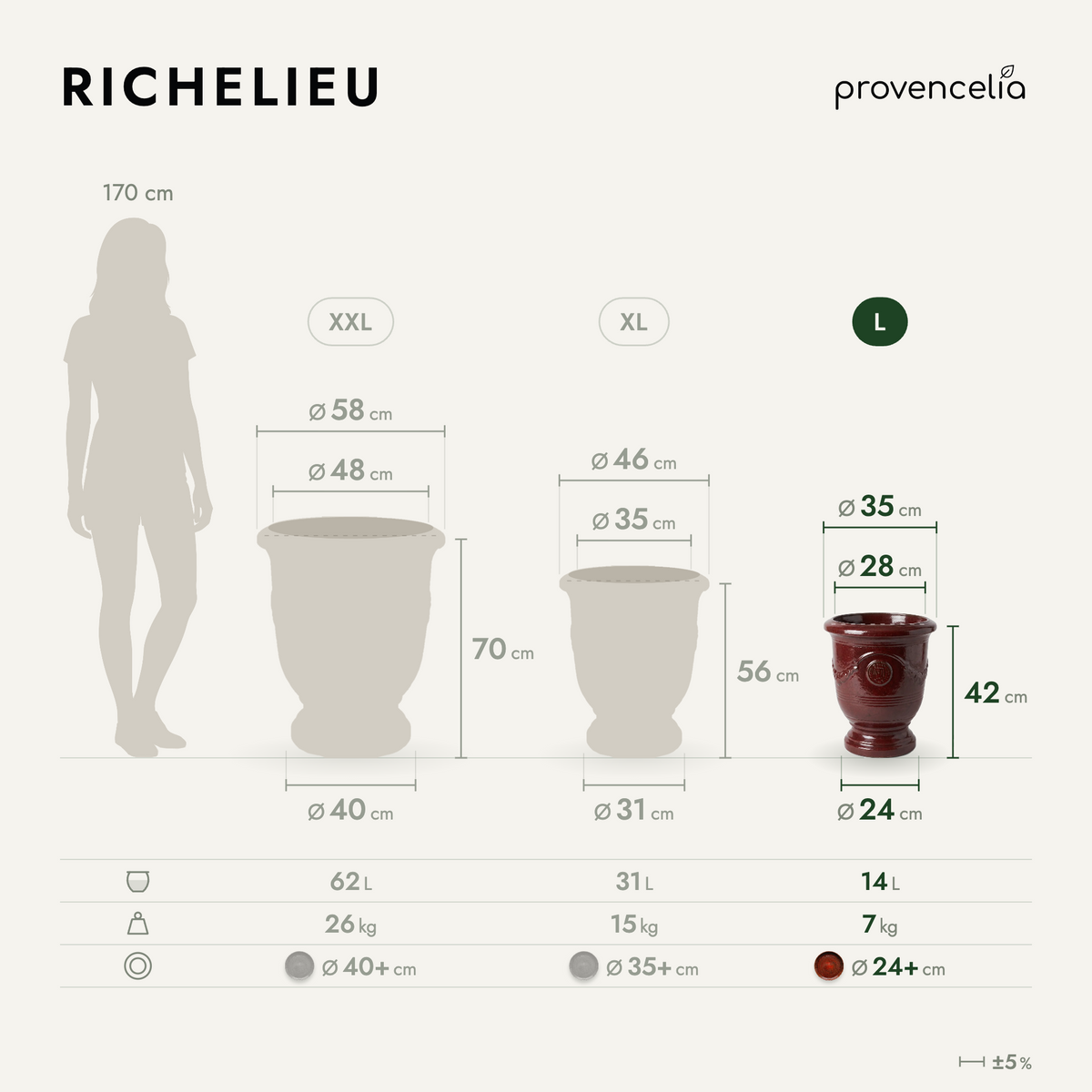
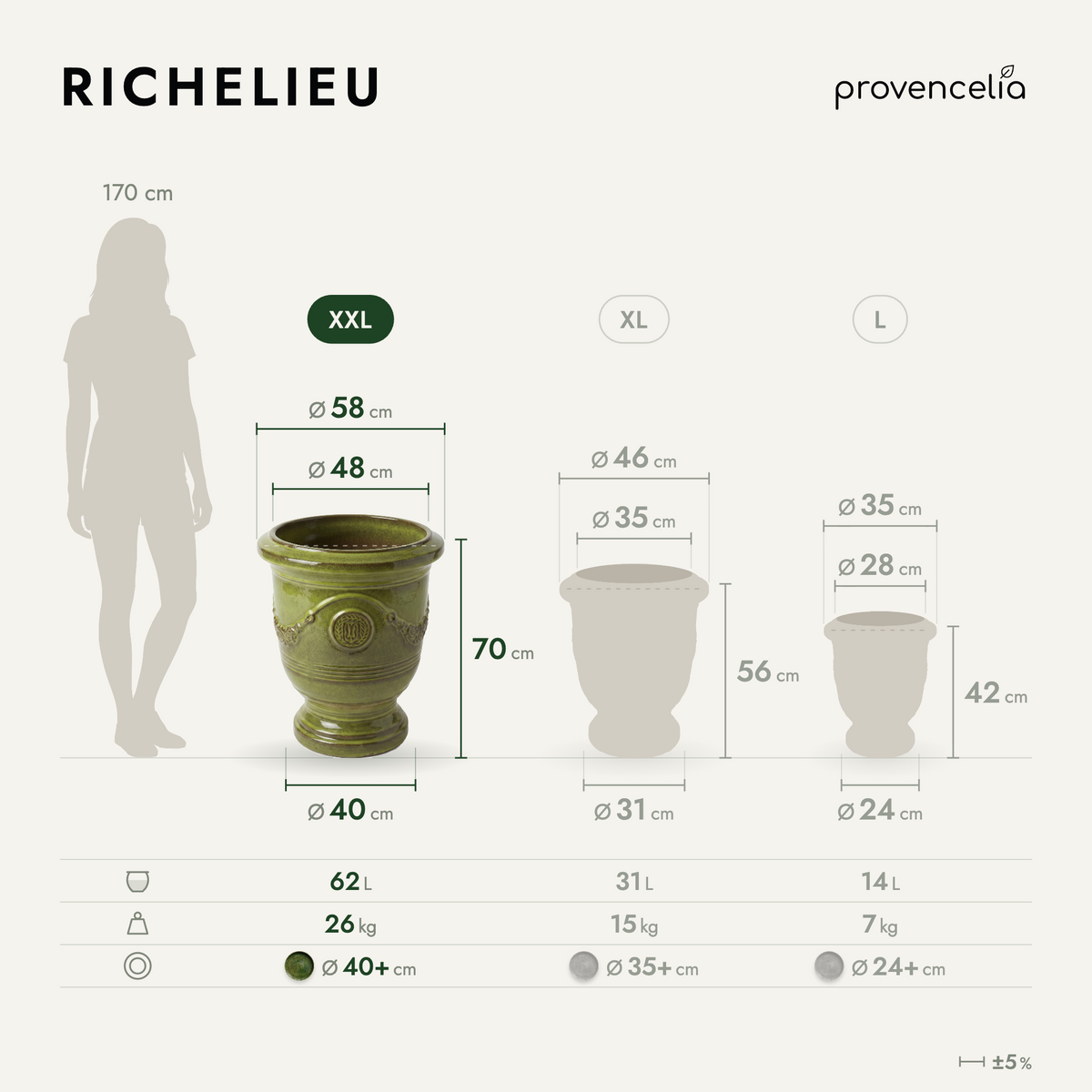
The basic rule: the diameter of the saucer should be 2 to 4 cm wider than the base of the planter (not its opening). Too small, and it overflows. Too large, and it protrudes inelegantly while unnecessarily retaining water, which can rot the roots.
Size guide
- Planter base of 15 to 22 cm: 18 to 25 cm saucer
- Planter of 22 to 30 cm: 27 to 35 cm saucer
- Planter of 30 to 40 cm: 35 to 45 cm saucer
- Planter of 40 to 55 cm: 45 to 55 cm saucer
- XXL planter of 60 cm and above: saucer of at least 55 cm, ideally with a high rim
If in doubt, measure the diameter of the planter's base and add 2 to 4 cm. Most models in our saucer collection are designed for the corresponding Provencelia planters.
Material: ceramic or plastic
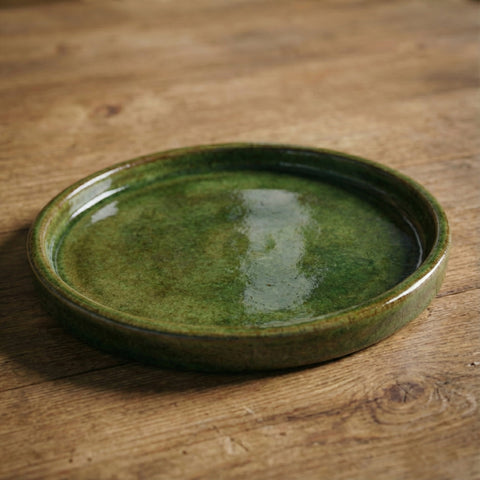
Ceramic saucers are more attractive, more durable and perfectly match ceramic planters. Being heavy, they will not blow away in the wind on a terrace or balcony. High-fired ceramic does not absorb water.
Plastic saucers are lighter and less expensive. On a balcony where you often move planters, or if weight matters, they can be more practical. But they cannot compete with ceramic: white plastic turns yellow and black fades.
A matching glaze for every model
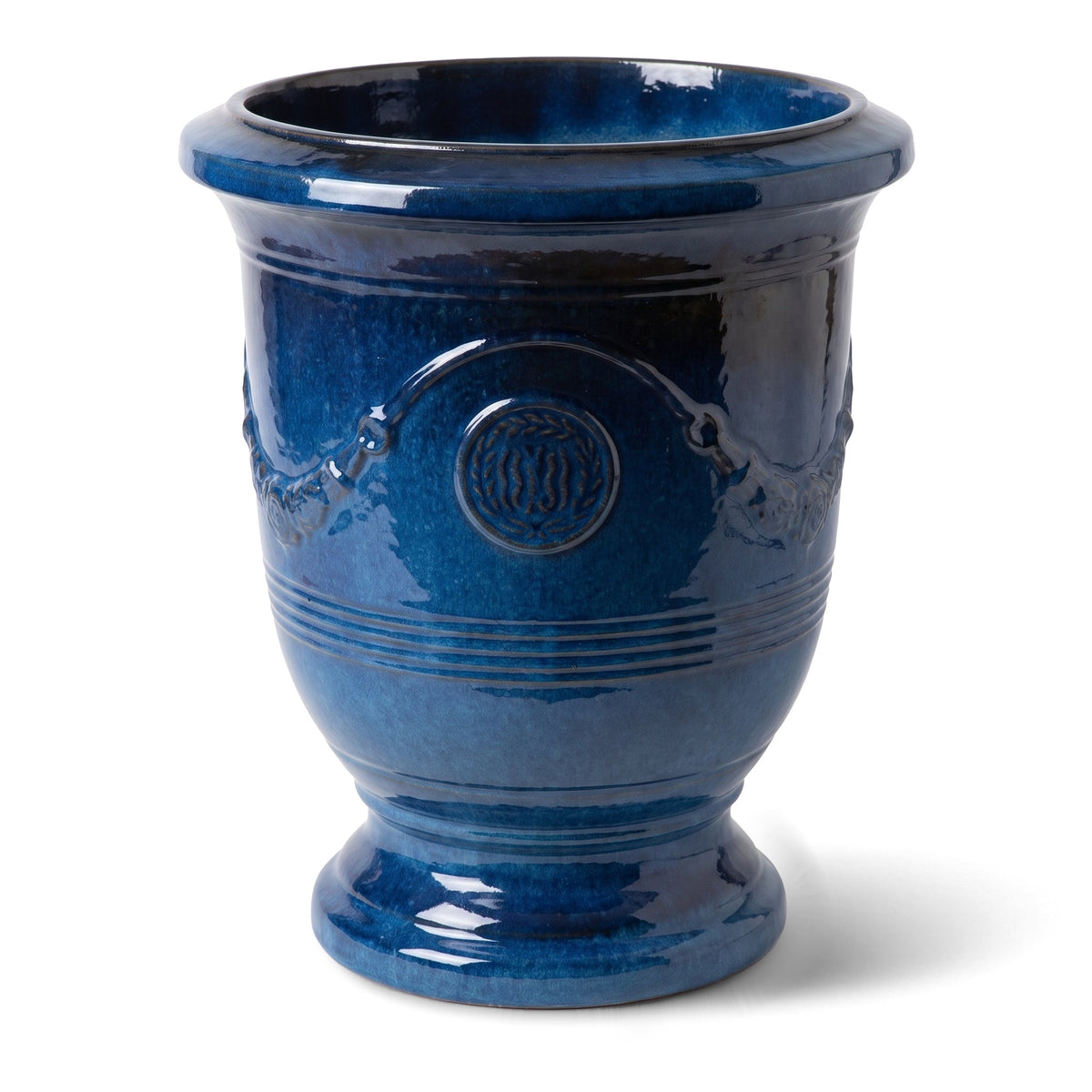
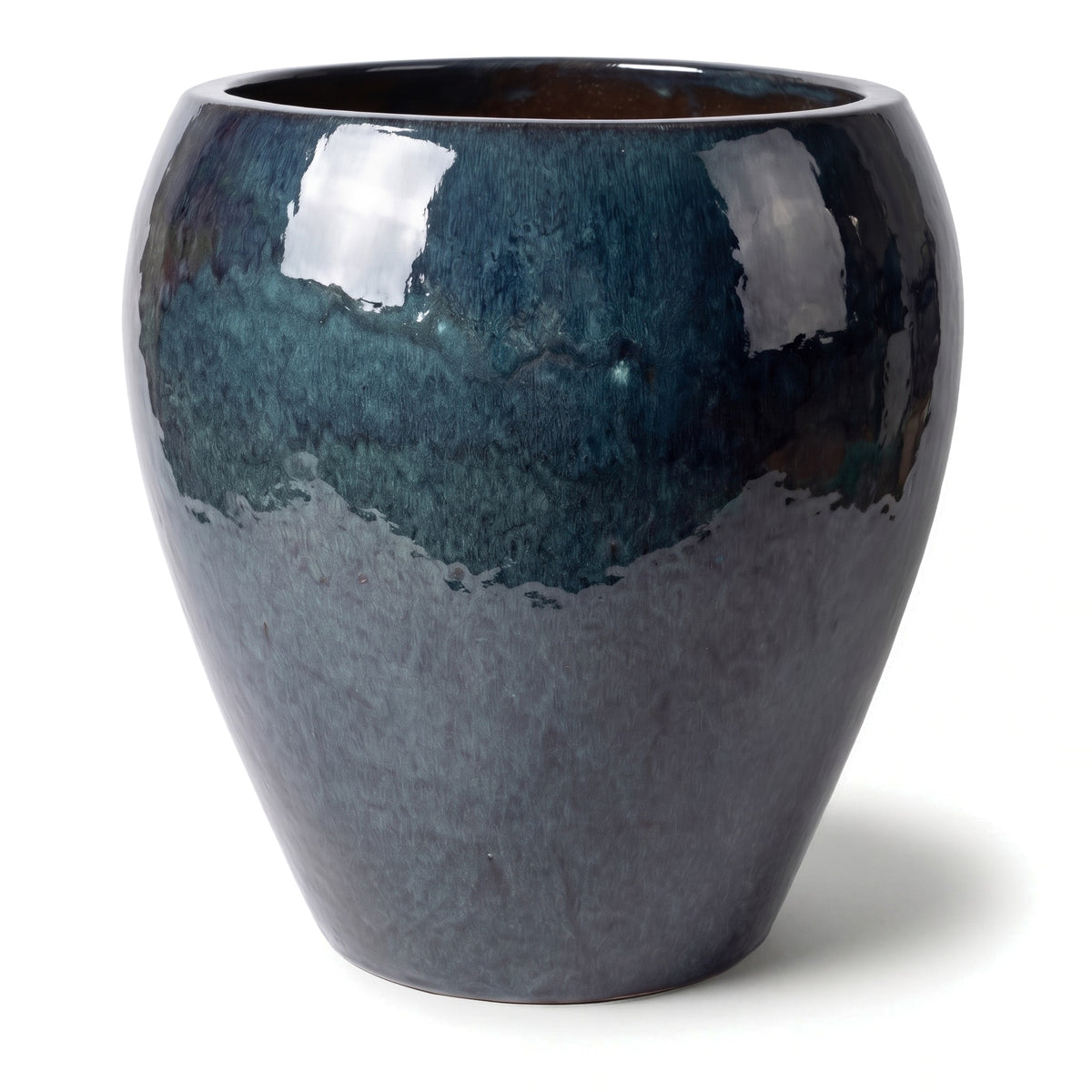
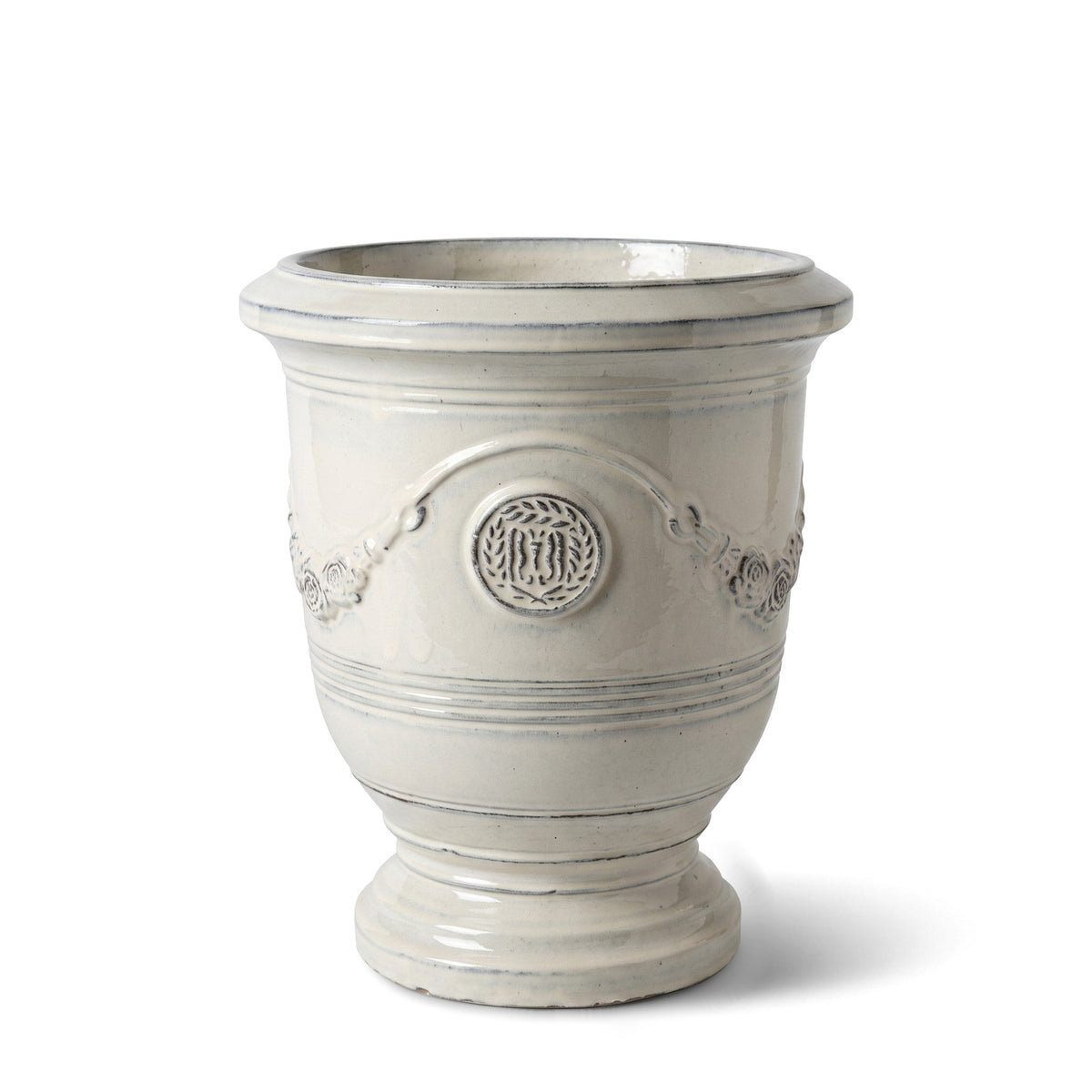
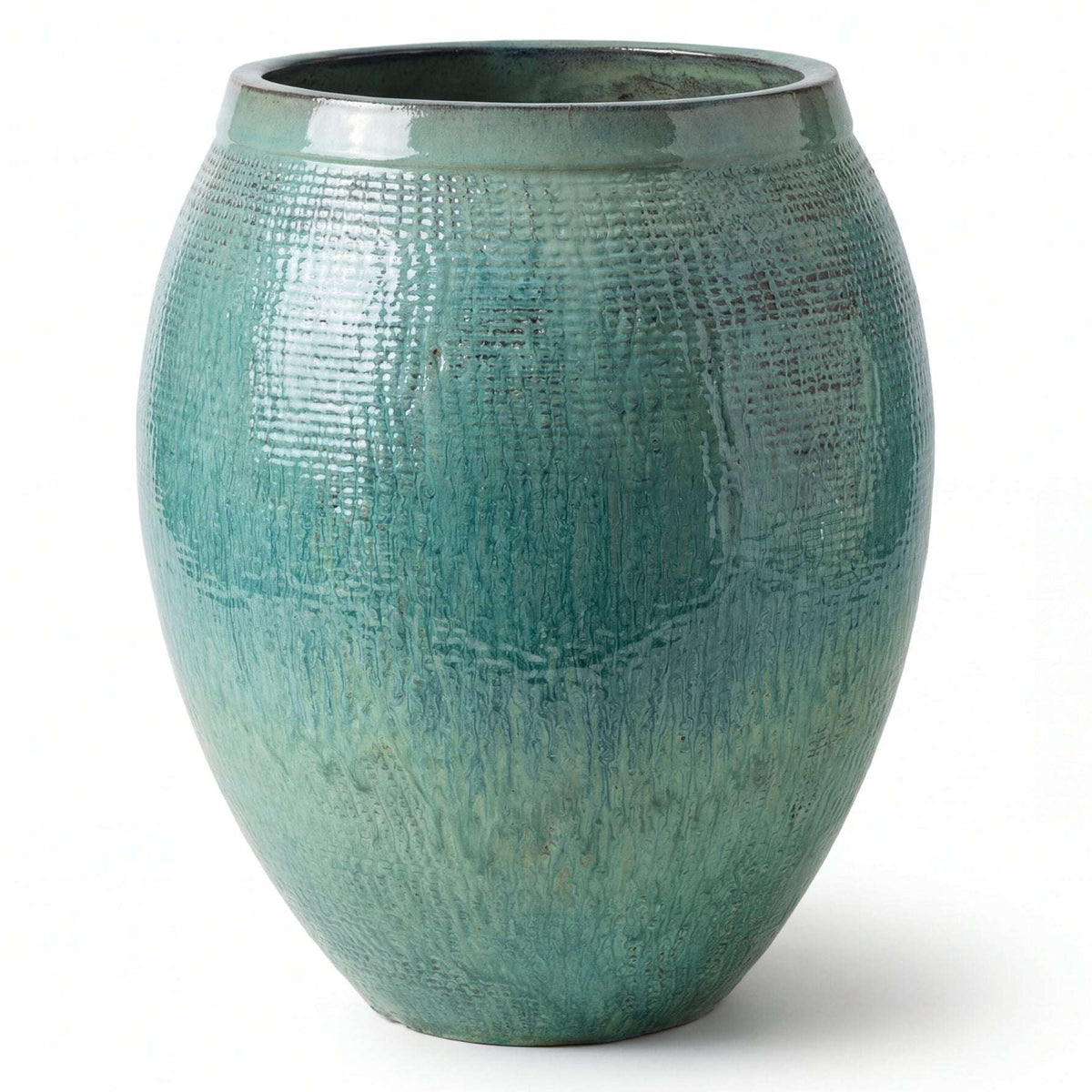
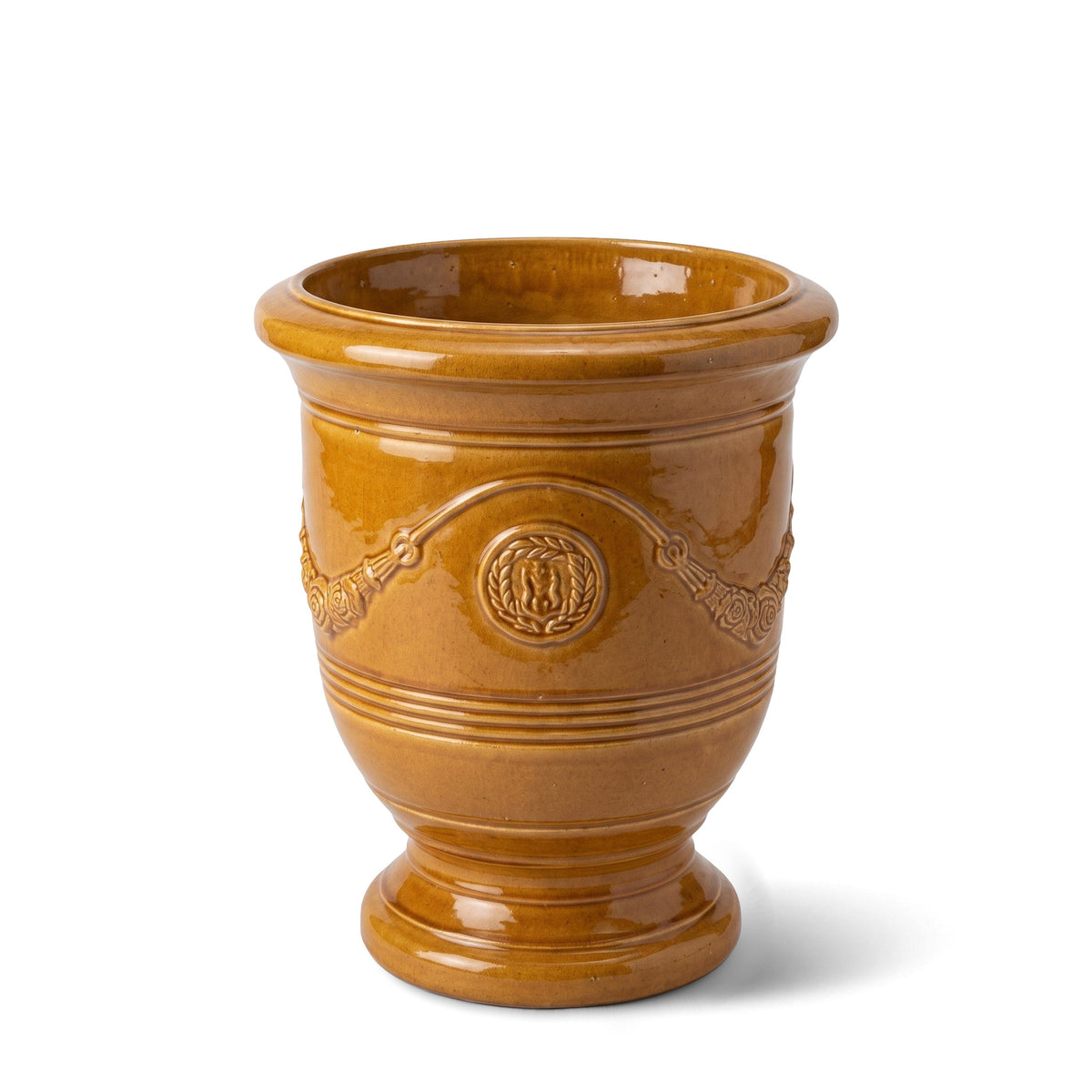
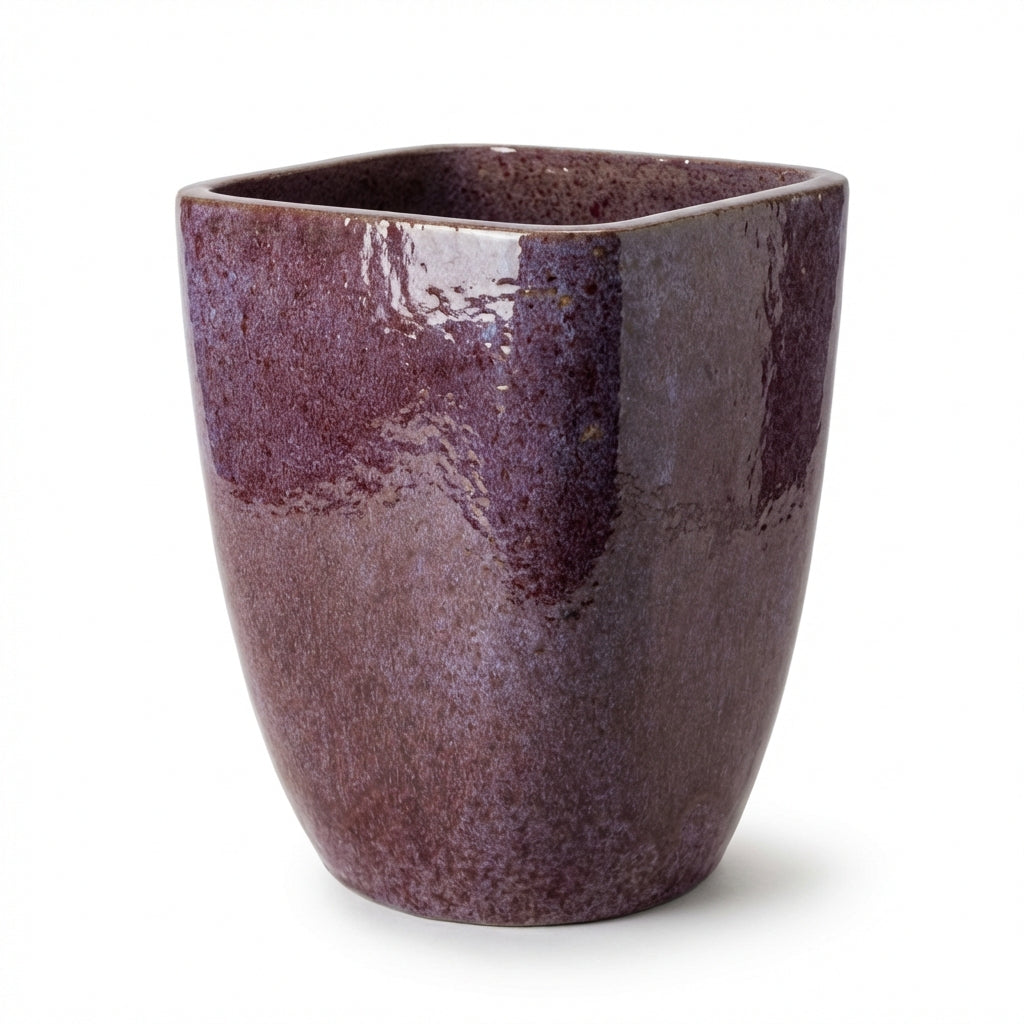
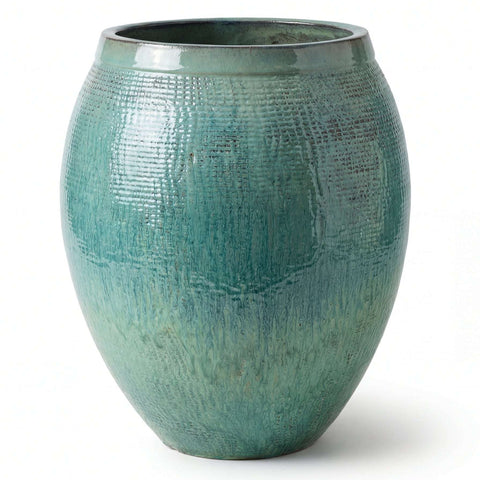
Our saucers use the same glaze palette as Provencelia planters: you can choose exactly the same colour or create contrast. A few combinations:
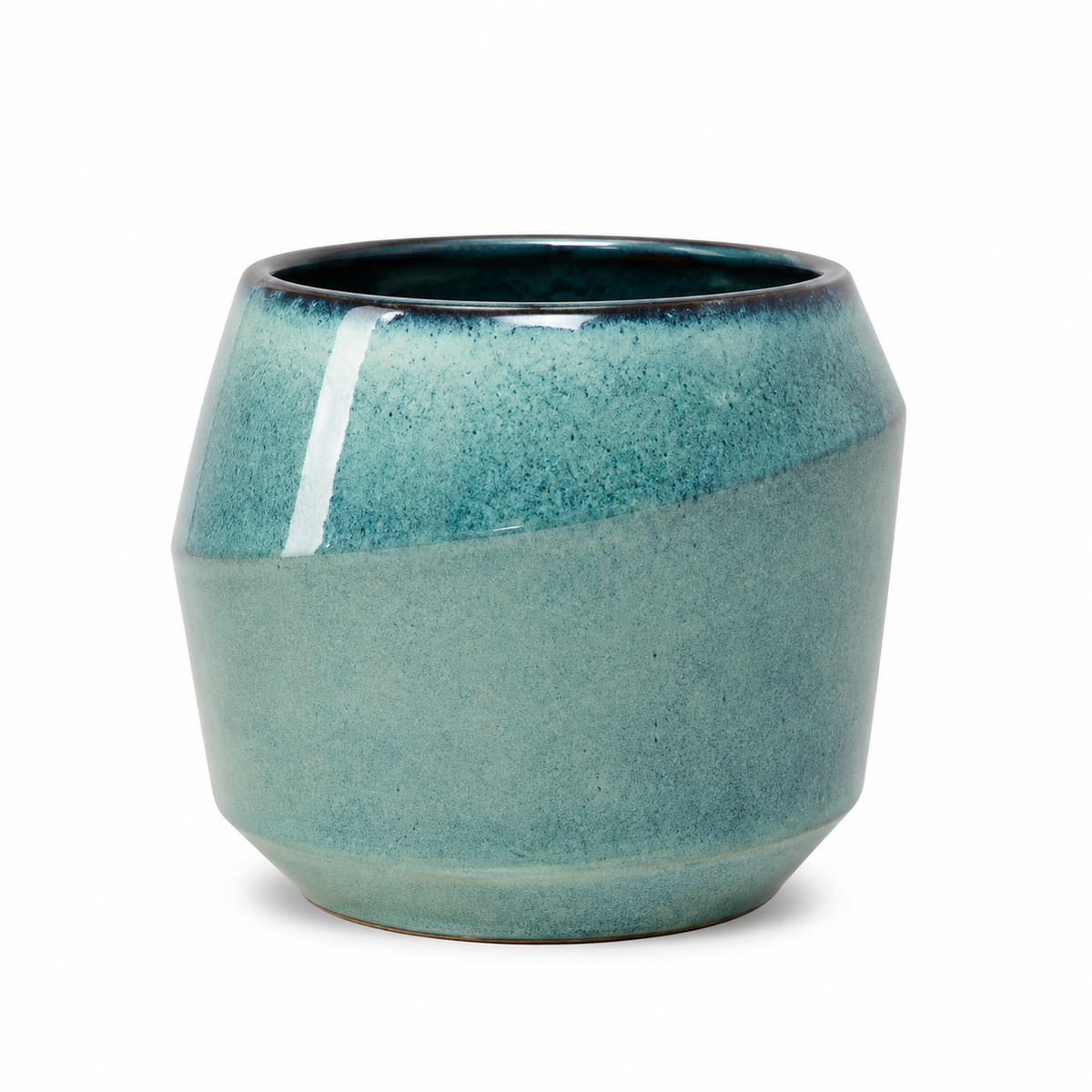
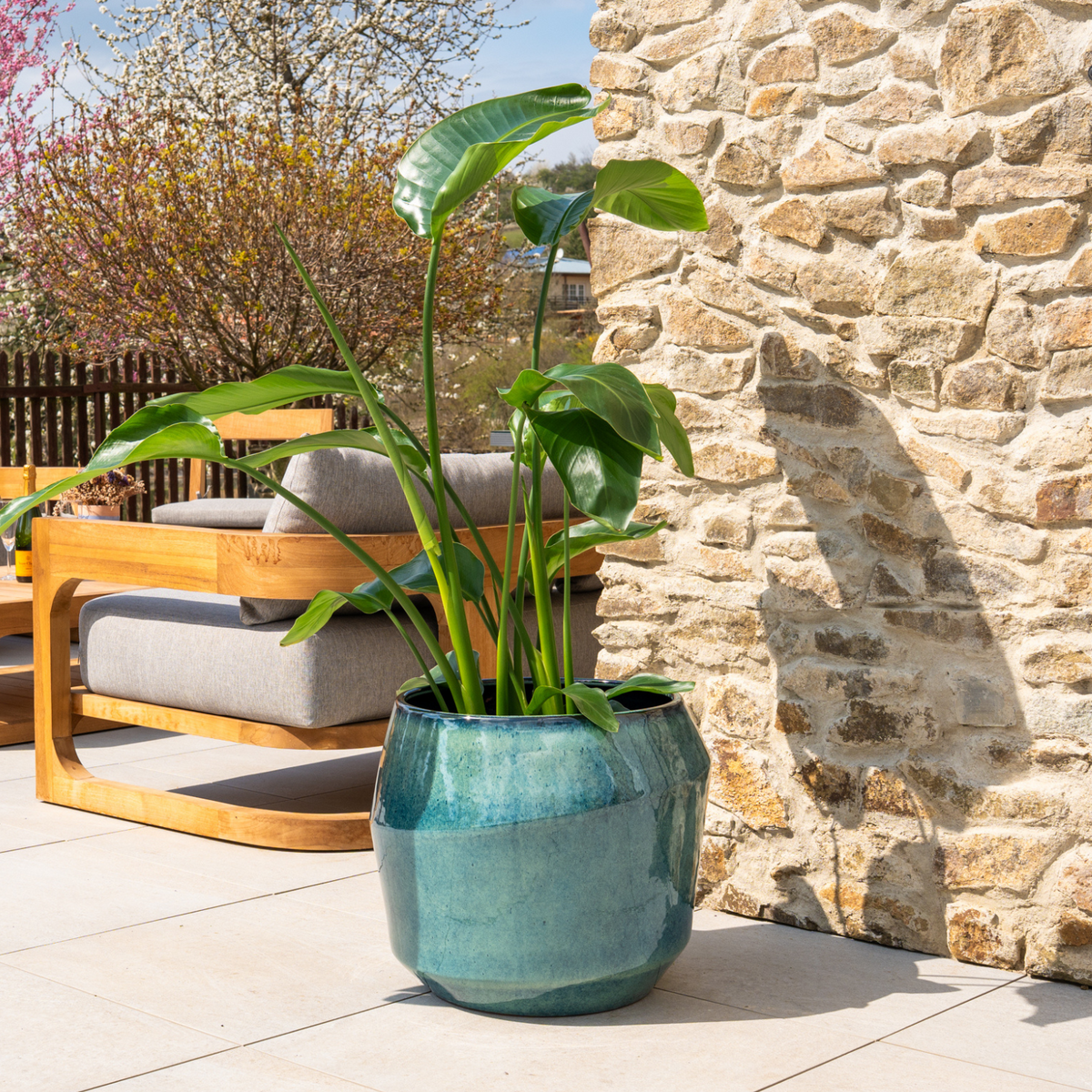
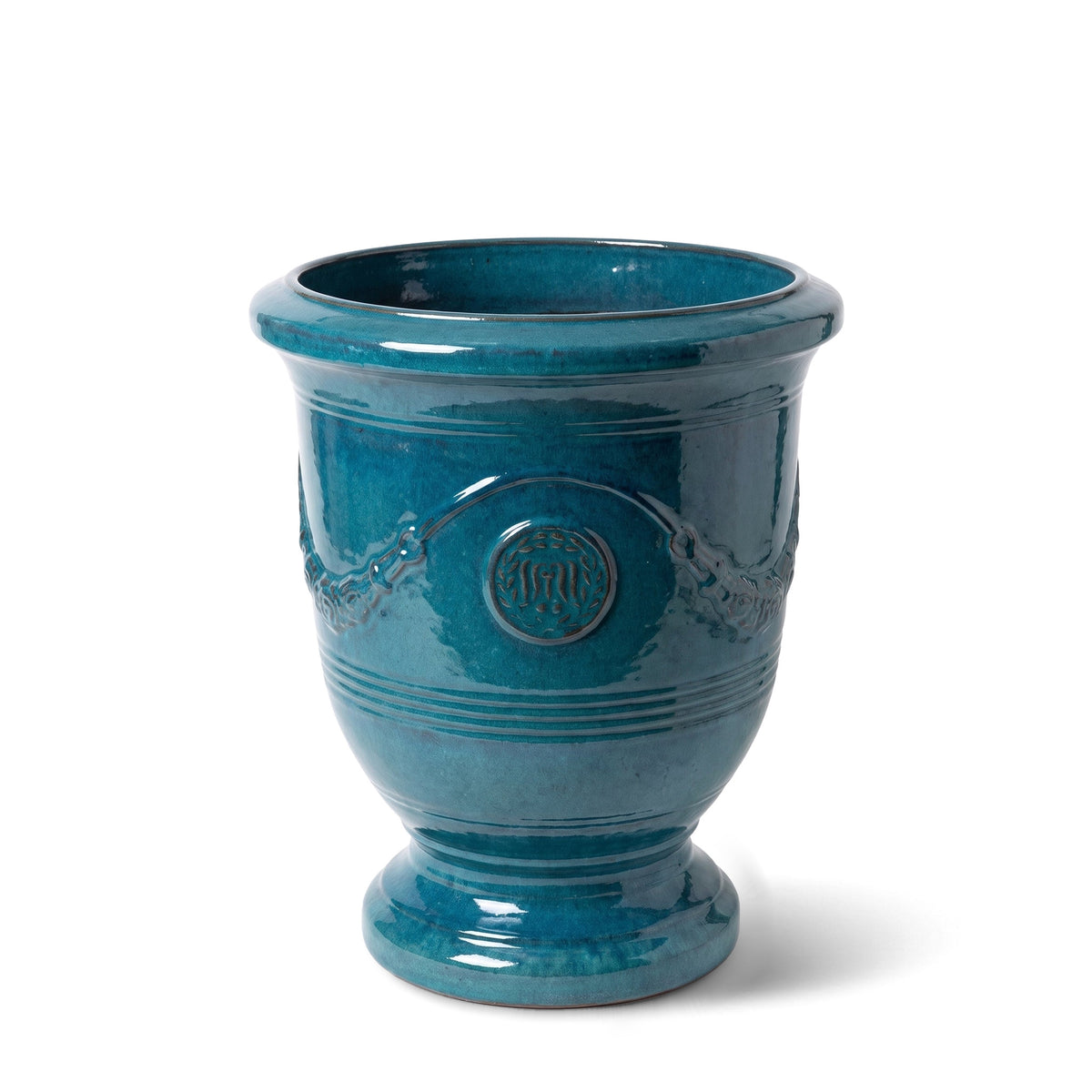
- Zeus turquoise + white or light grey saucer (contrast), or turquoise (tone on tone)
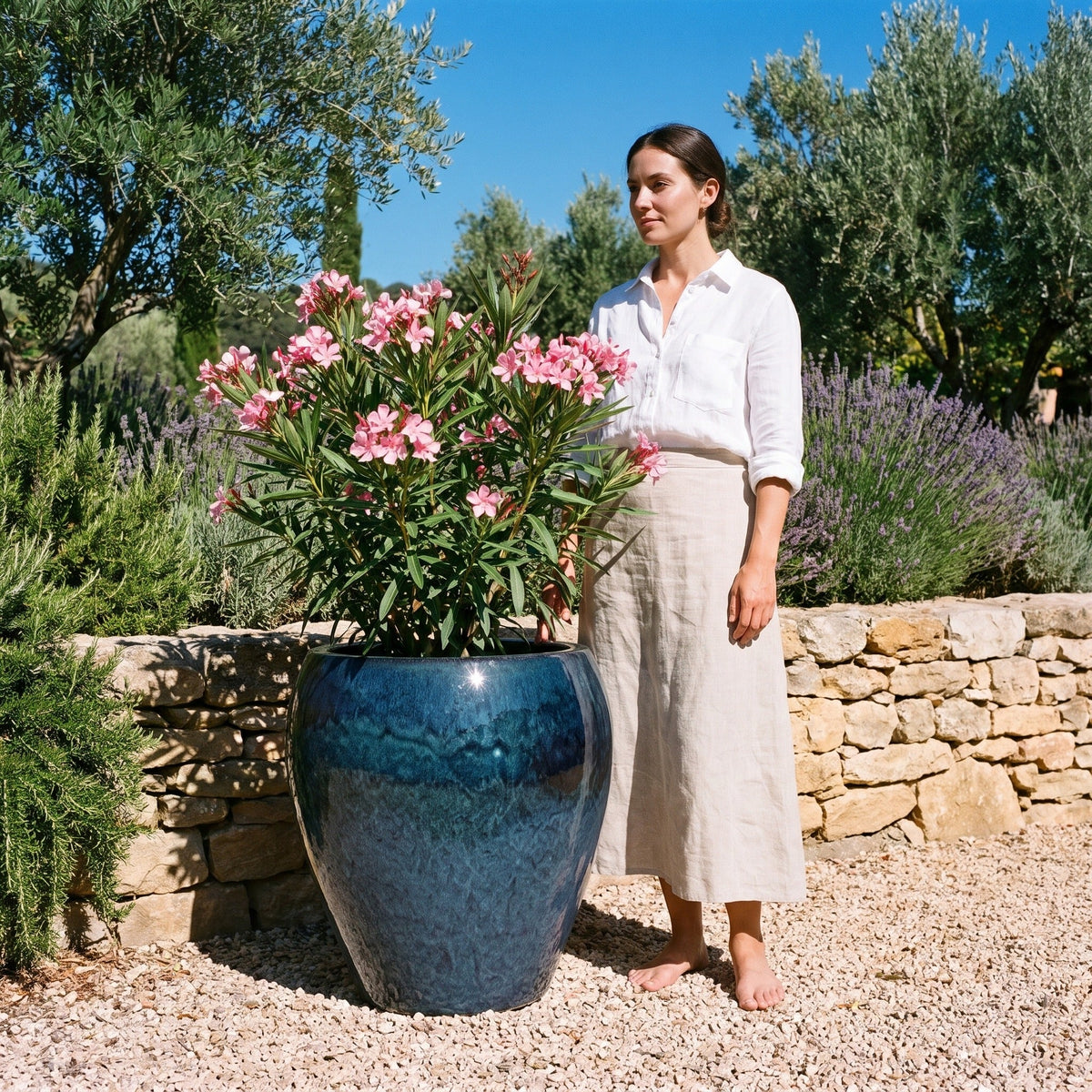
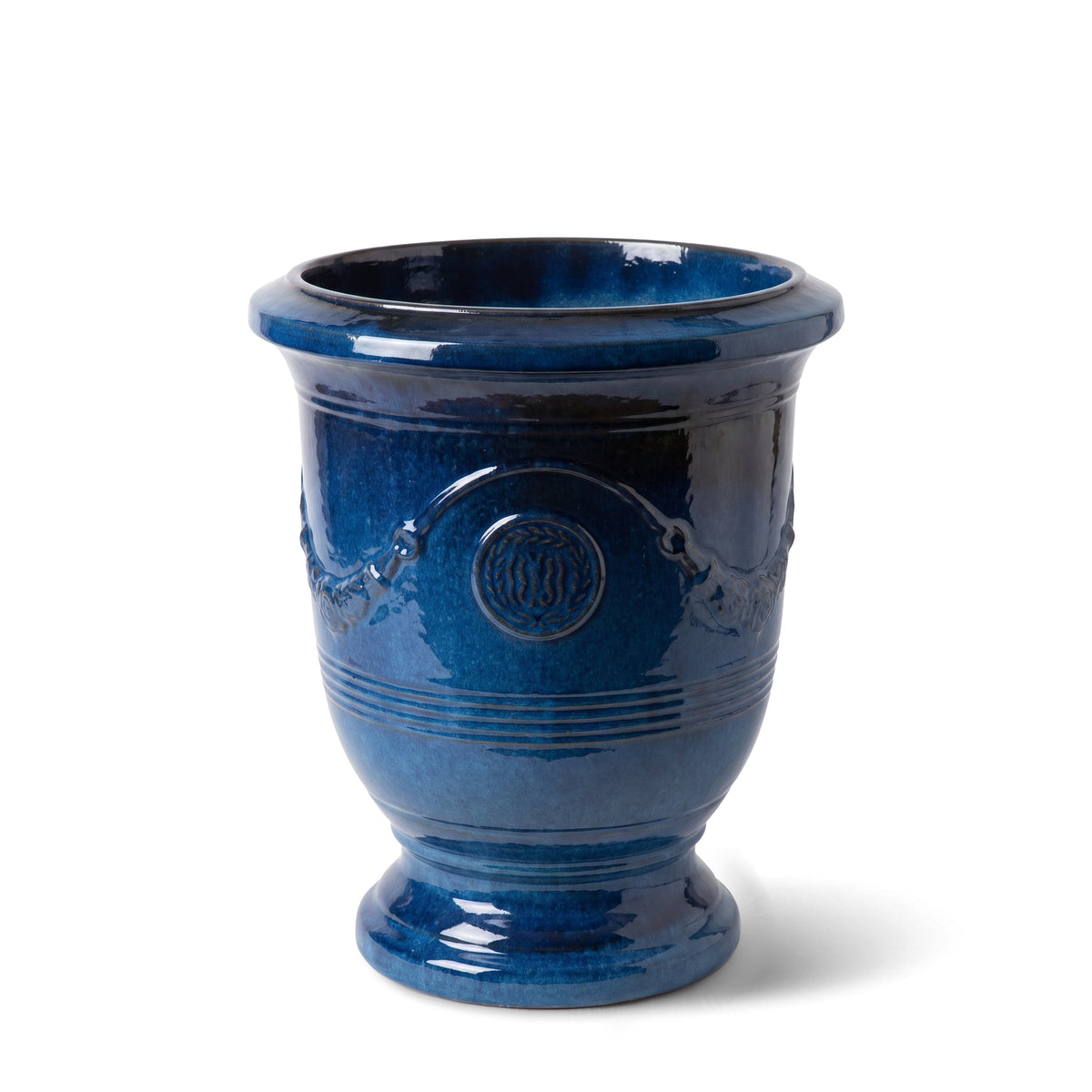
- Lafontaine Steel Blue + white or Steel Blue saucer
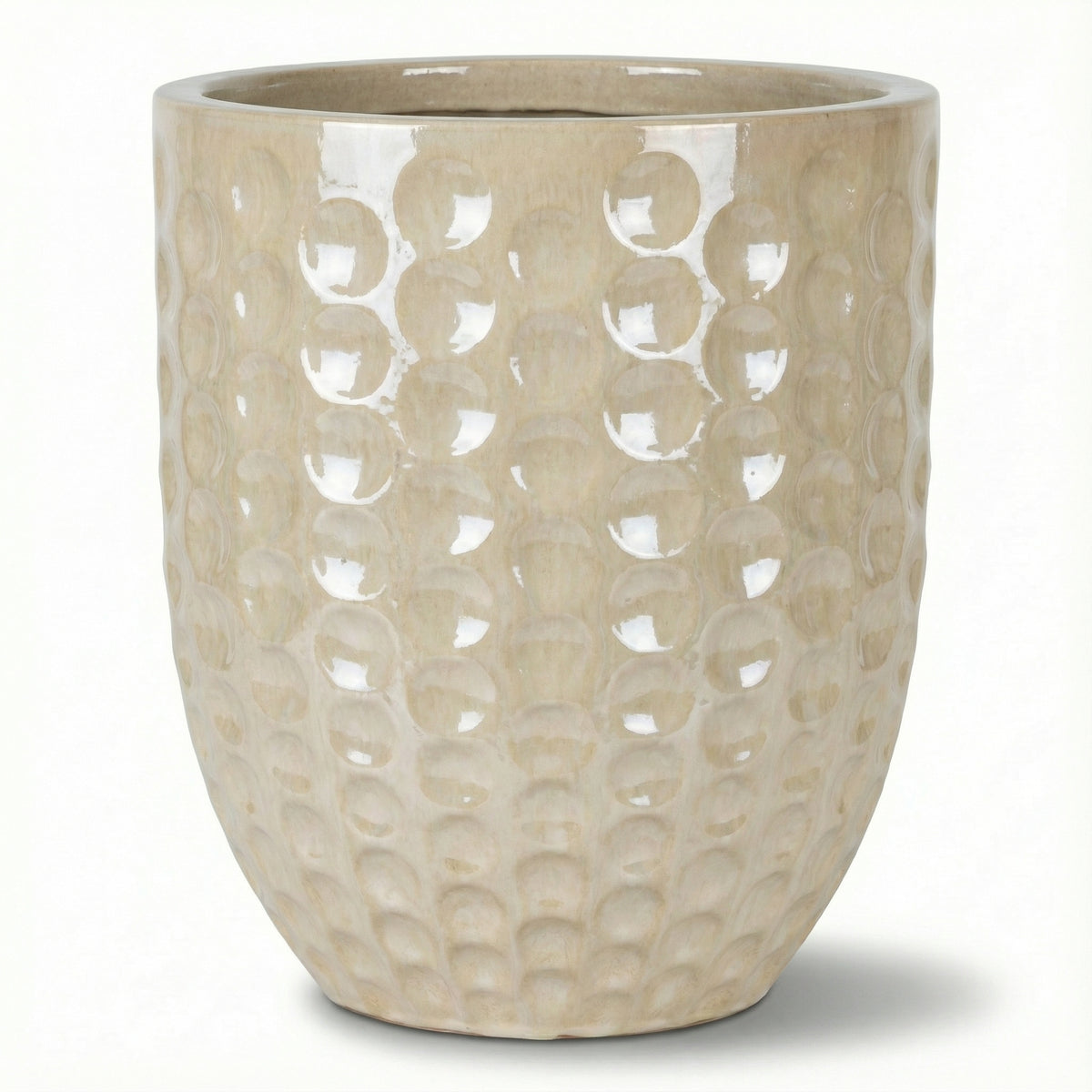
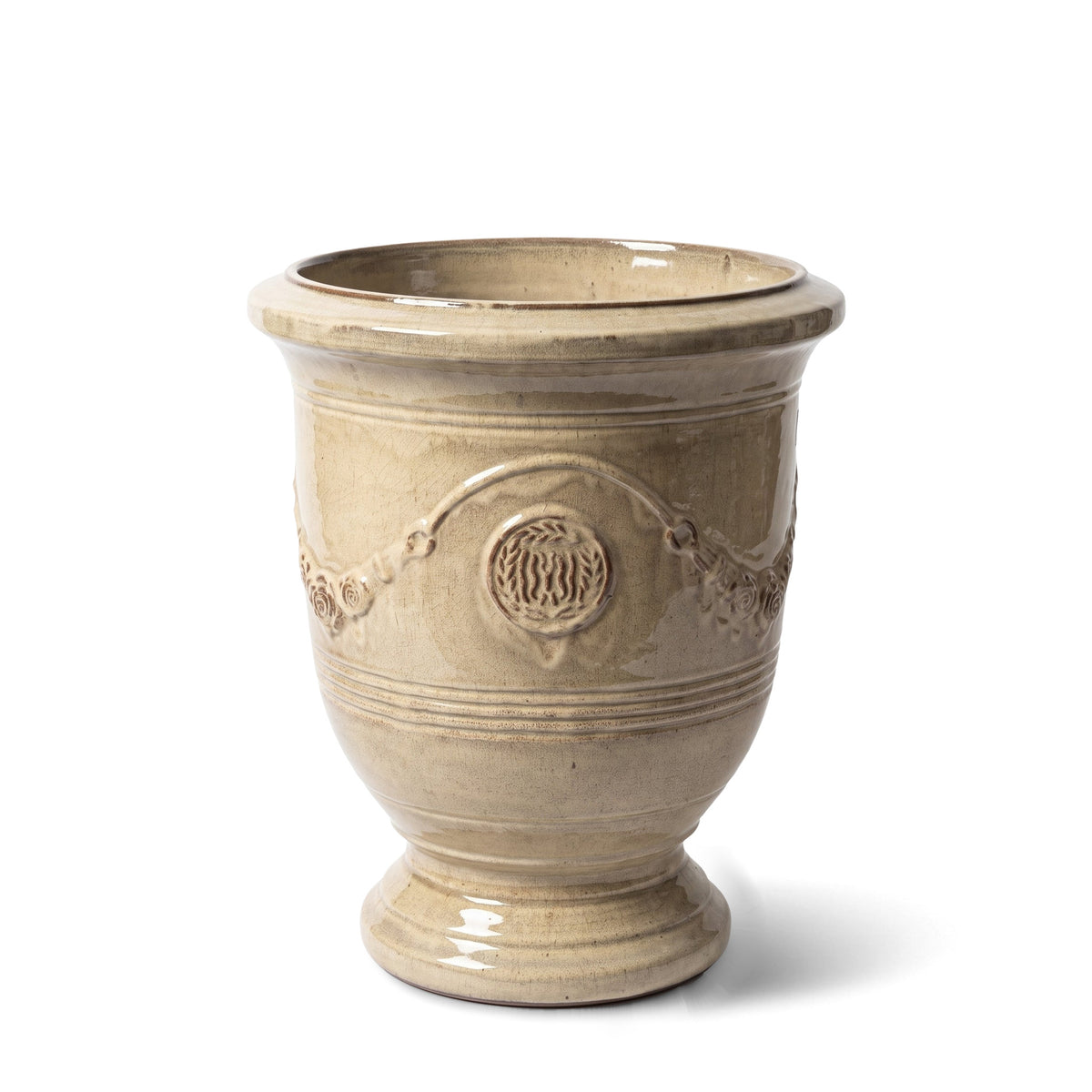
- Bacchus sand + sand or cream white saucer
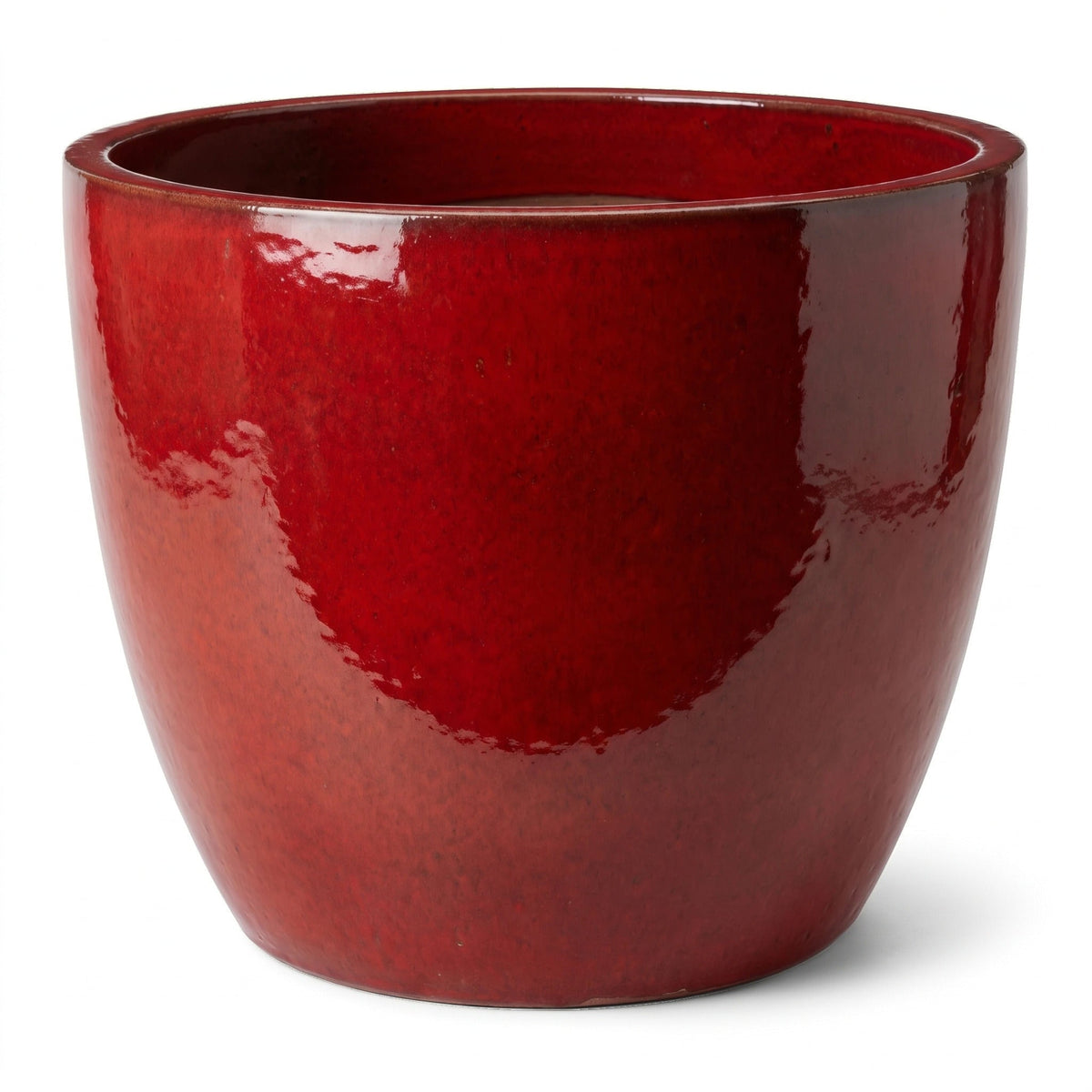
- Gaïa Tropical Red + autumn green saucer (complementary)
In winter
Do not let water stand in the saucer in winter: this avoids ice patches and the risk of the saucer cracking under the pressure of frozen water.
Care and cleaning
- After each watering: empty any remaining water after 30 to 60 minutes; roots should not remain submerged for long
- Once a month: remove the saucer and wash it in lukewarm water with a neutral cleaning product
- Limescale: gently remove it with diluted vinegar water (1 part to 5), then rinse
- Before winter: dry it completely and store it under cover, or leave it outside thoroughly dry
Frequently asked questions
Can the planter be left in the saucer water? Briefly, yes (for 1 to 2 hours after watering). Not for long: the roots would rot. Empty any remaining water after an hour.
Which saucer should I choose for my Zeus, Lafontaine or Bacchus planter? Find the model name, then look in the saucer collection for the same or a complementary glaze.
Should I choose a larger saucer for future use? No. A large saucer beneath a small planter retains rainwater, risking root rot. Choose according to your current planter.
What if my planter has no drainage hole? The saucer is then not useful, but we recommend a planter with a drainage hole and saucer instead, otherwise the roots risk excess water.
In summary
The saucer is an essential accessory. Choose it according to the base diameter (2 to 4 cm larger), favour high-fired ceramic for outdoors and match the glaze to your planter.
Discover our collection of ceramic saucers, designed to match Provencelia planters.
Also read: