Which plants suit a 30 cm flower planter?
A diameter of 30 to 39 cm corresponds to the 15 to 30 L containers used by nurseries. It is the first size that accommodates a structural specimen: a half-standard citrus tree, ball-pruned bay laurel, young olive tree or small Japanese maple.
For flowering plants, hydrangeas, agapanthus and oleanders will thrive in it for several years. Grasses such as stipa or pennisetum find the depth they need without toppling in the wind. For perennials, this diameter allows an arrangement of three or four plants in the same planter.
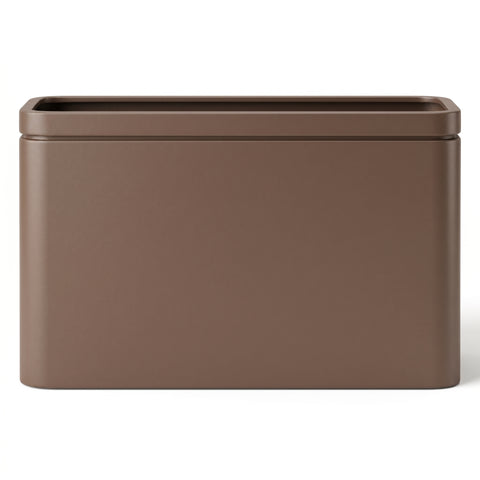
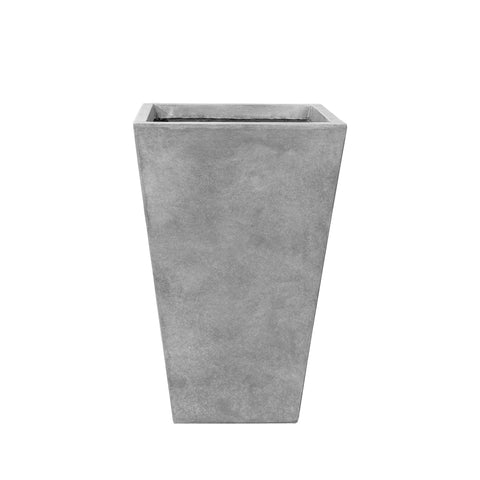
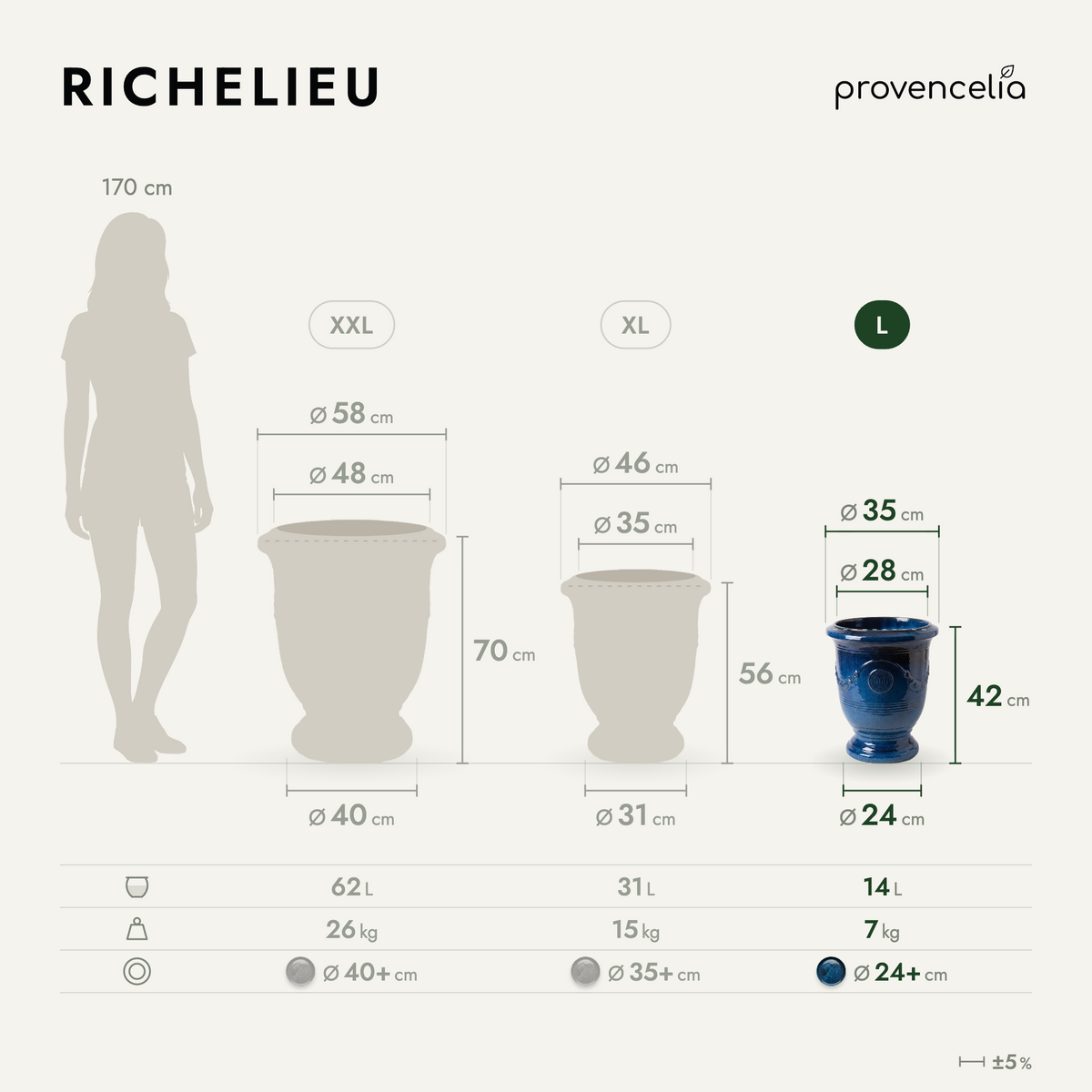
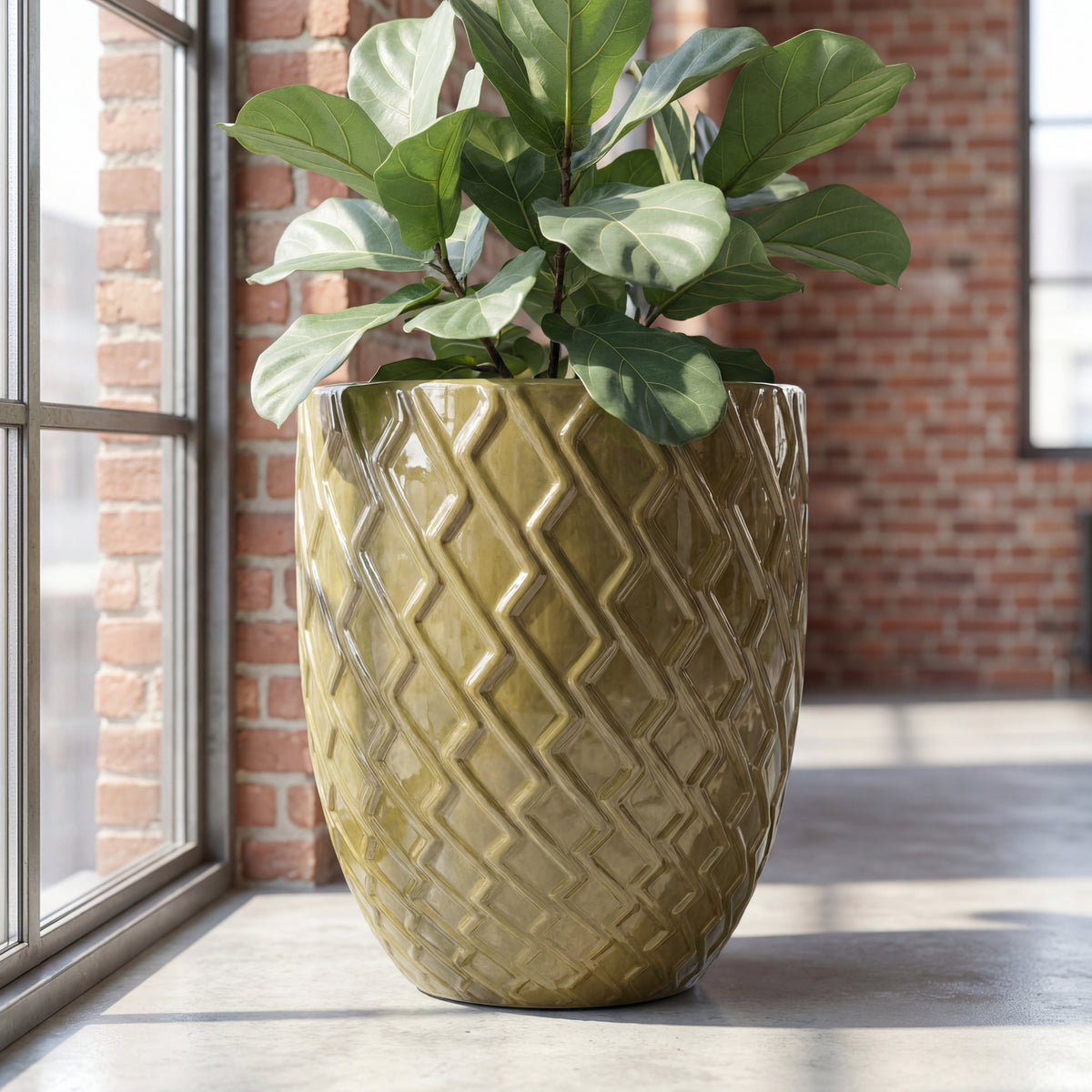
Indoors, this is the size for ficus lyrata, mature monstera and strelitzia. The RICHELIEU 35x42 cm holds 16 L, the LANCELOT 36x34 cm holds 20 L, and the PARIS 39x63 cm reaches 27 L. A trained olive tree or palm will require our40 cm flower planters.
Volume, height and stability at this size
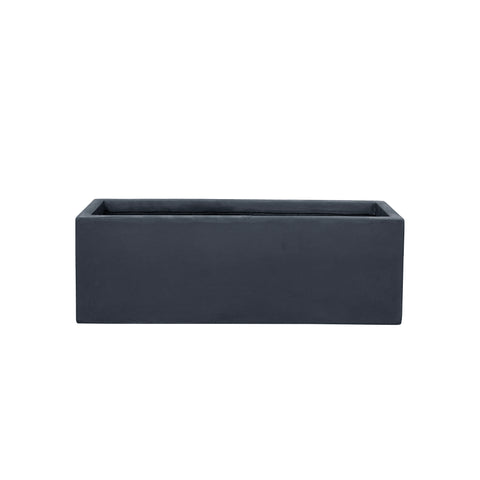
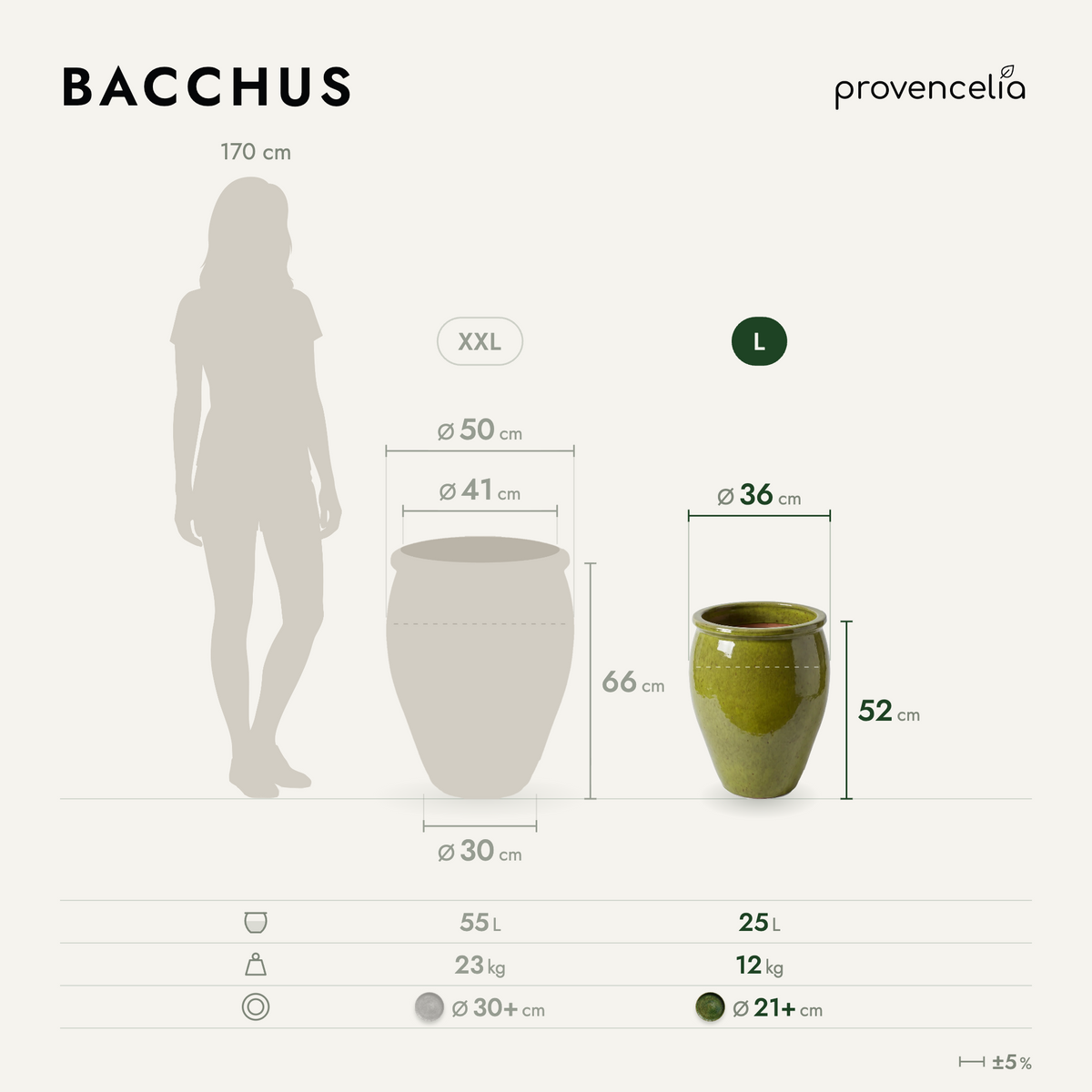
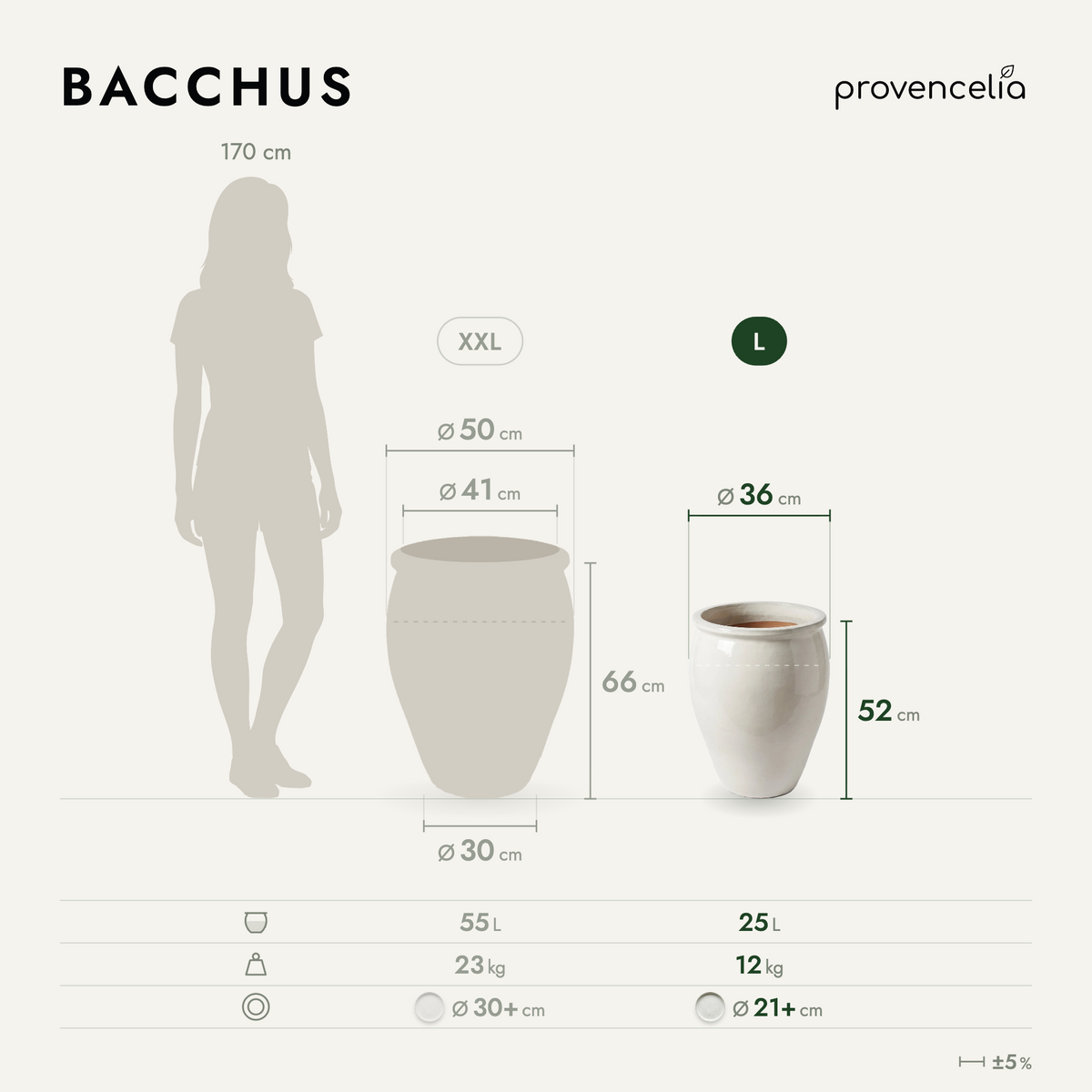
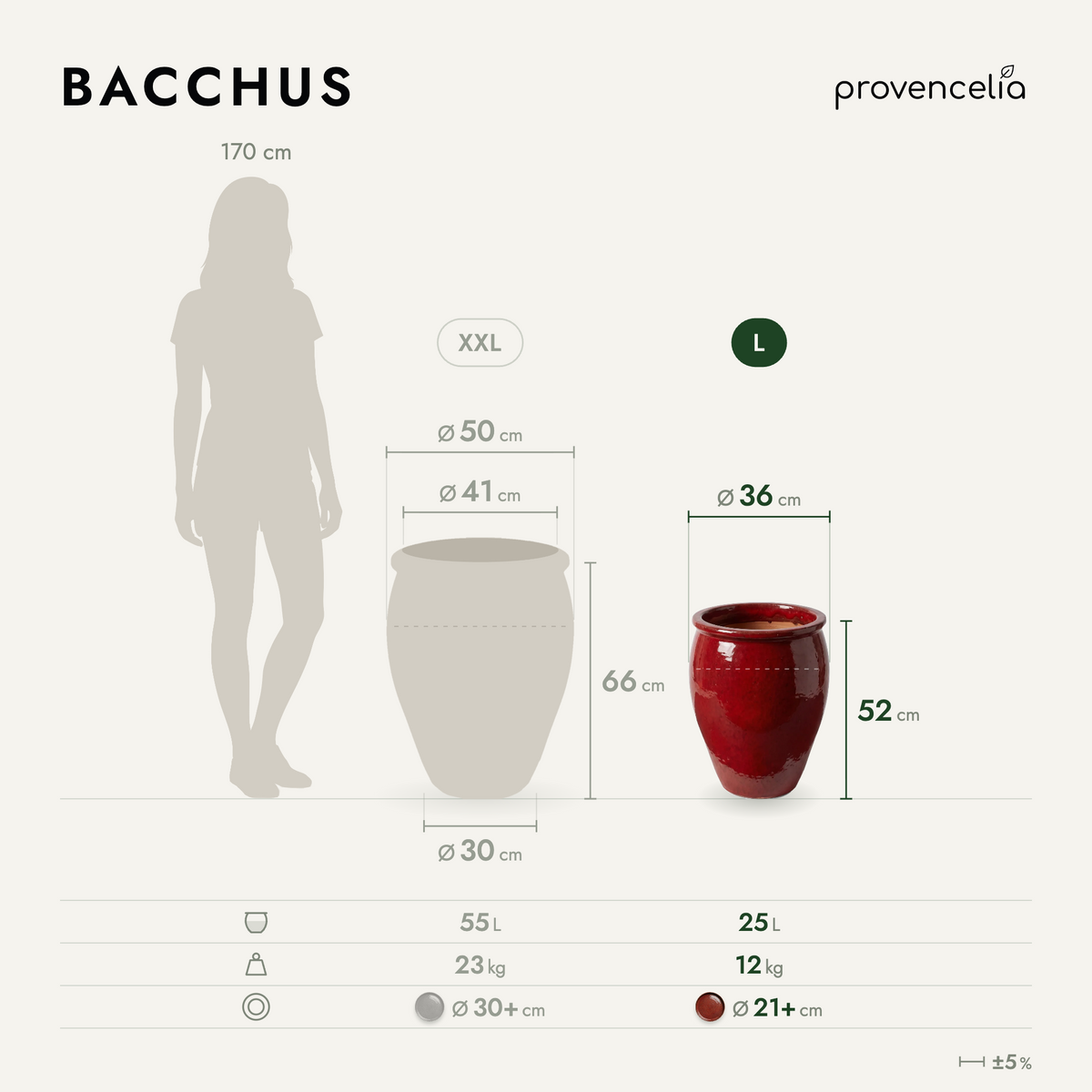
Capacity ranges from 13 to 27 L depending on the height and shape. An ATTILA 30x29 cm holds 13 L, a VERSAILLES 38x54 cm holds 25 L, and a PARIS 39x63 cm reaches 27 L. At the same diameter, height determines the volume.
This size range is precisely where the difference in height is greatest. A MILANO 31x61 cm and a LANCELOT 36x34 cm belong to the same diameter range, but one is twice the height of the other. The first adds vertical structure to an entrance, while the second fits beneath a window without blocking the view. Always check the second measurement before ordering.
The filled weight becomes an advantage at this size. A planted 20 L planter will not move at the first gust of wind, which matters on an exposed balcony or by the sea. In return, plan its location before filling it: once planted, the planter takes two people to move.
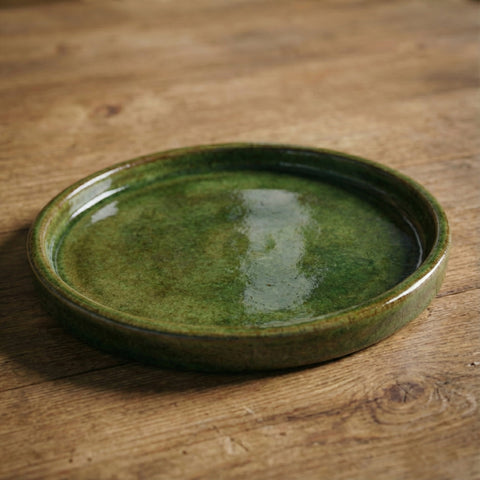
Drainage is built into the base. Indoors, oursaucersare ordered separately and match the glaze of each model.
30 cm or 40 cm: how to choose
The criterion is not the plant's current size, but the size it will reach in three years. A citrus tree bought in a 20 L container will thrive in a 35 cm planter and remain there for four to five years. The same specimen will require a 45 cm planter in ten years.
The 30 cm remains the right choice for a city terrace, a long balcony or a row along a wall, where floor width is limited. The 40 cm takes over for a standalone specimen intended to last, a palm or an already trained olive tree.
One final point: the empty weight. From 40 cm upwards, handling needs to be planned in advance, including the floor level and access. At 30 cm, one adult can still position the planter alone before filling it.
Frequently asked questions
Which plant suits a planter 30 cm in diameter?
A citrus tree, pruned bay laurel, young olive tree, hydrangea or an arrangement of perennials. This diameter corresponds to the 15 to 30 L containers sold by nurseries. For an already trained specimen, move up to 40 cm.
How many litres of soil fit in a 30 cm planter?
From 13 to 27 L depending on the height. A 30x29 cm planter holds 13 L, a 38x54 cm planter holds 25 L, and a 39x63 cm planter reaches 27 L. At the same diameter, a tall planter holds twice as much as a low planter.
Can an olive tree grow in a 30 cm planter?
A young olive tree can, for three to four years. A specimen with a broad crown or trained trunk requires at least 40 cm. The planter must remain heavier than the wind resistance of the foliage.
These models are in stock and dispatched quickly. Our advisers will help you match the size, plant and location.