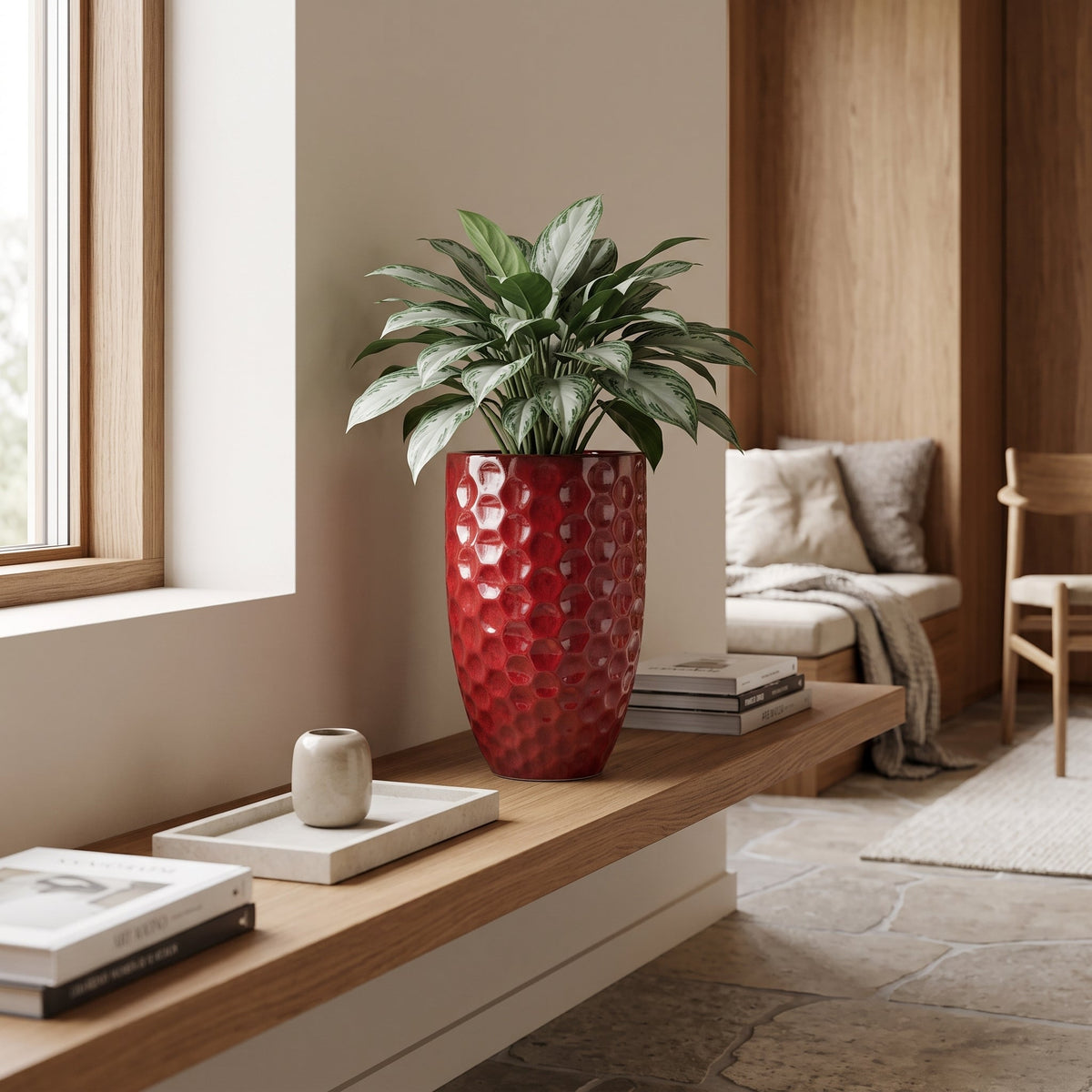
What size plant pot should you choose?
Choose a small plant pot by its height first, then by its diameter. Allow 3 to 5 cm more diameter than the root ball, no more. An oversized pot holds water in the middle, out of reach of the roots, and invites rot. Depth matters as much as width: a shallow pot suits succulents, a tall one suits deep-rooted plants. For anything above 30 cm, browse all our planters.
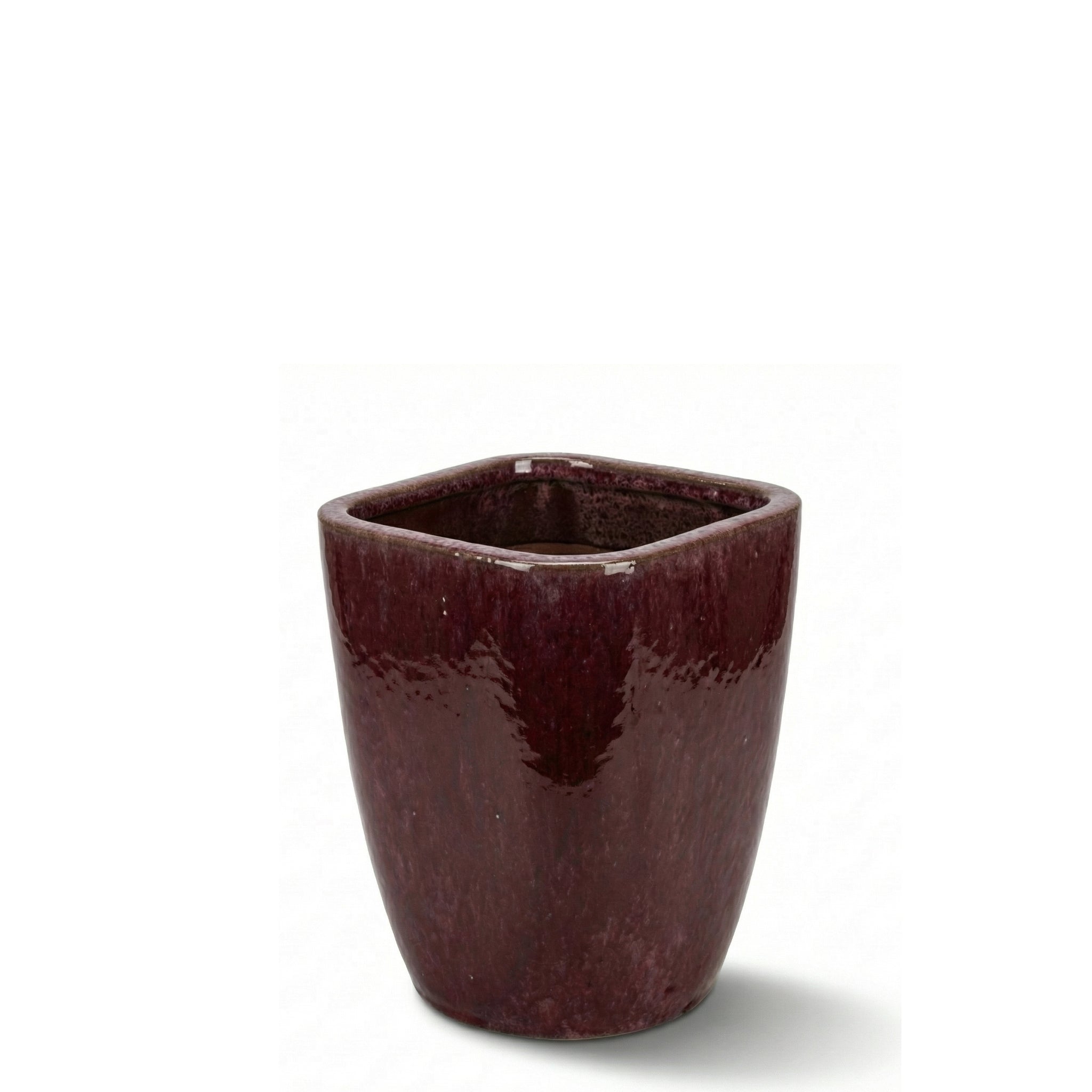
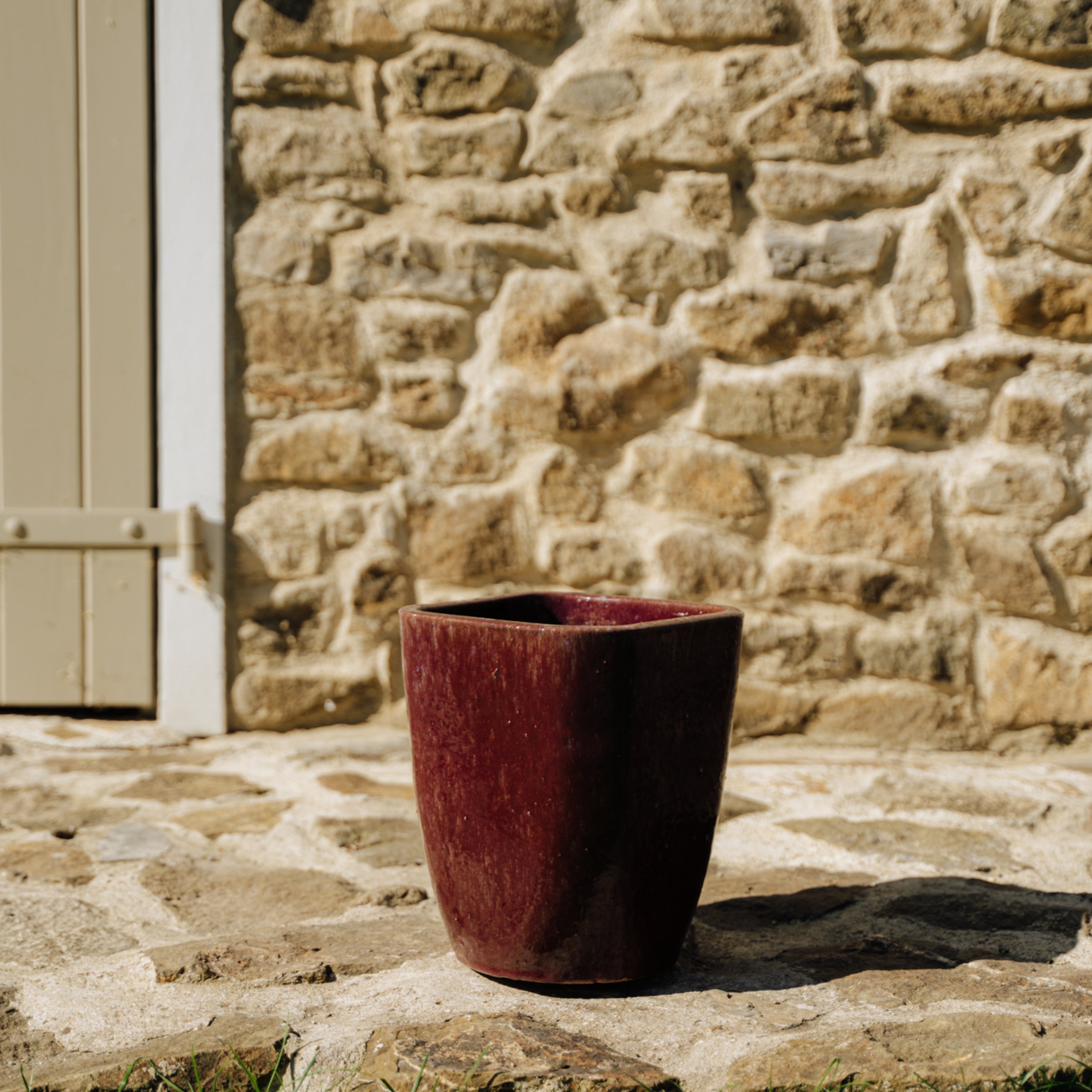
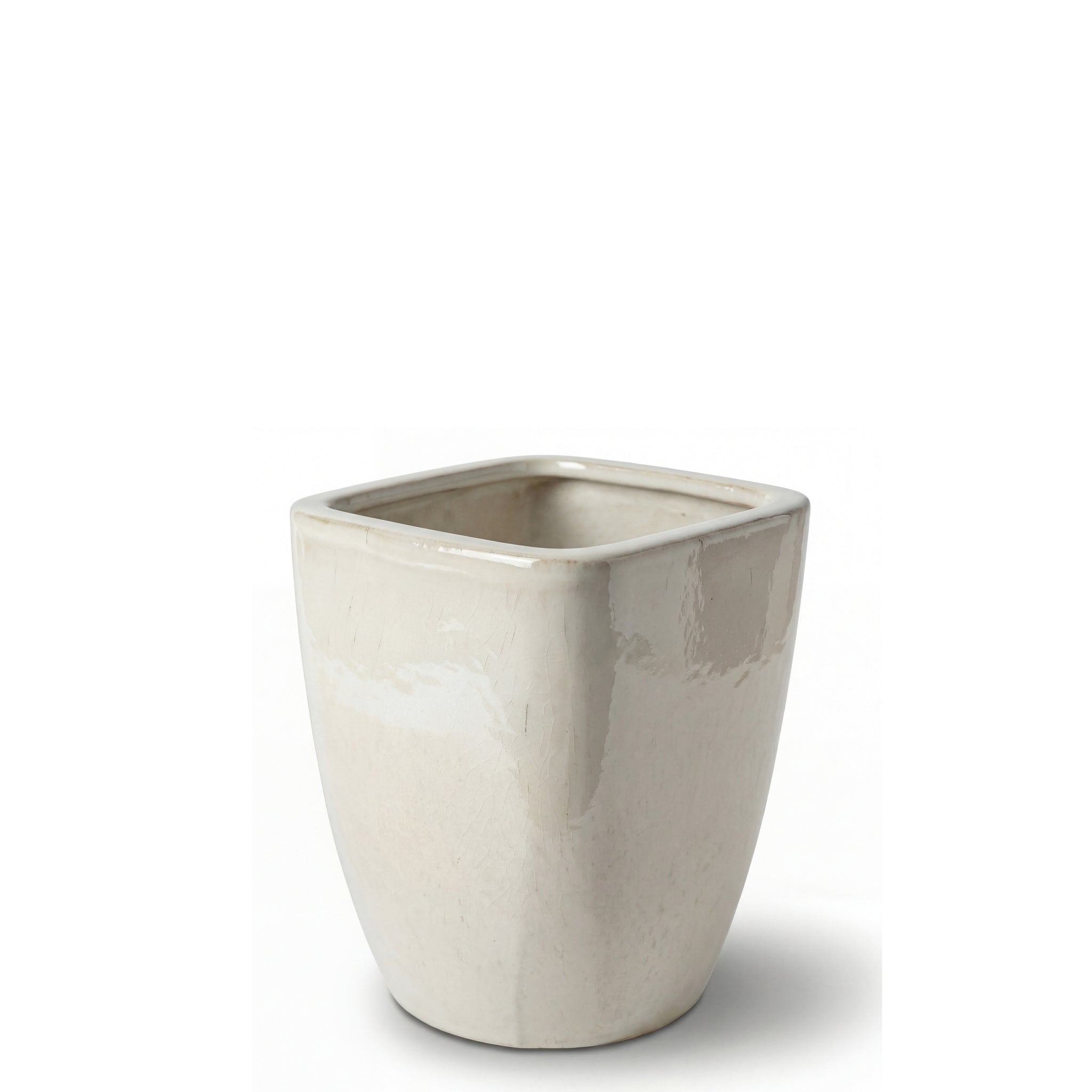
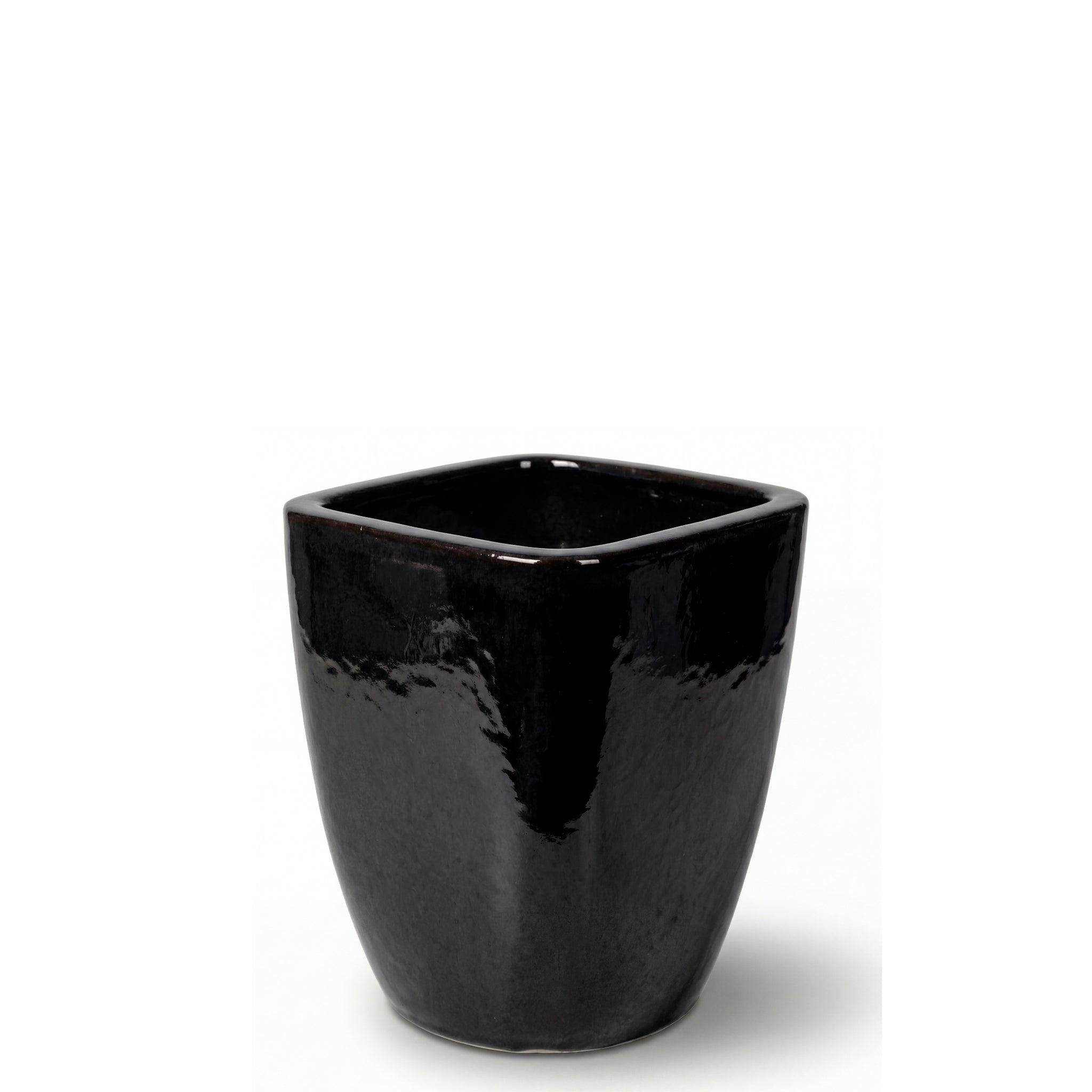
A diameter of 20 to 29 cm suits basil, rosemary, succulents and rooted cuttings. Allow 4 L of compost for a 21x19 cm pot, 6 L for a 23x23 cm. It is also the size for groups of three, lined up on a low table or a step. The LANCELOT, DIANE and VAUBAN models cover this range in several glazes.
30 cm plant pots: the upper limit of the small format
A diameter of 30 to 39 cm marks the move towards mid-size pots, around 13 L of compost. Note that a pot 30 cm across can stand over 60 cm tall, so always check the second measurement. Only models under 30 cm high appear in this category.
How many litres does a small plant pot hold?
Capacity depends on diameter, height and shape: at equal measurements, a tapered pot holds less than a cylinder. These are the volumes recorded across our models.
Size (diameter x height)Compost volumeTypical use21 x 19 cm4 Lherbs, cuttings23 x 23 cm6 Lsucculents, young house plants29 x 26 cm11 Lestablished house plant30 x 29 cm13 Lpotted shrub, dwarf citrus36 x 34 cm20 Lbeyond the small format
Above 20 L, move to our large planters.
Plant pot or cachepot: which one?
A plant pot has a drainage hole and takes the compost directly. A cachepot dresses a plastic grow pot and is not necessarily drilled. Planting straight into a sealed cachepot leaves the roots standing in water. Our cachepots are pre-drilled, so they work either way.
Which small pot for a house plant?
Choose a diameter of 20 to 29 cm for a pothos, a fern or a calathea. Glazed ceramic breathes less than bare terracotta, so space out the watering. Indoors, the matching saucer catches the drainage water and protects the furniture. Empty it twenty minutes after watering.
Small pots outdoors: frost and watering
The LONDON, MILANO, MONACO, PARIS and VERSAILLES series are not frost-resistant, so bring them indoors over winter. The other glazed ceramic series are frost-resistant and stay outside all year. A small volume of compost dries out in a day or two in full sun, so water more often than a large pot, in smaller amounts.
Frequently asked questions
What size pot should you repot a plant into?
Take 3 to 5 cm more in diameter than the current grow pot. On a small format, that means moving from a 21 cm to a 25 cm. Repot when roots come through the drainage hole, roughly every two years.
Why should you not repot into a pot that is too big?
Compost the roots have not reached stays wet for too long. Water stagnates, the roots suffocate and the plant can rot at the collar. The plant also puts its energy into roots rather than foliage.
What size is a 15-litre pot?
Roughly 30 to 32 cm in diameter for 28 to 30 cm in height. As a reference point, our ATTILA at 30x29 cm holds 13 L. A taller pot of the same diameter gains a few litres.
Can you plant straight into a cachepot?
Only if it is drilled. Without drainage, water collects at the bottom and the roots eventually rot. Our cachepots are pre-drilled, so you can plant directly or keep the grow pot inside.
What is the difference between a plant pot and a planter?
In practice the two words cover the same object. Planter tends to be used for larger or outdoor pieces, plant pot for smaller and indoor ones. Both have a drainage hole in our range.
Do small plant pots need a saucer?
Indoors, yes: it protects the surface from drainage water. Outdoors it is optional and can hold too much water in wet weather. Each saucer repeats the glaze of its matching pot.